
Afrohemian decor brings together earthy warmth, handcrafted character, natural materials, expressive patterns, and relaxed Bohemian layering. The beauty of this style is that it can feel collected rather than overly coordinated, allowing wood, woven textures, ceramics, greenery, textiles, and artwork to tell a story. For a sophisticated home, balance those rich details with clean silhouettes and plenty of breathing room. These ideas show how to create a warm, eclectic Afrohemian look that feels inviting, modern, and beautifully personal.
1. Warm Earth-Tone Living Room
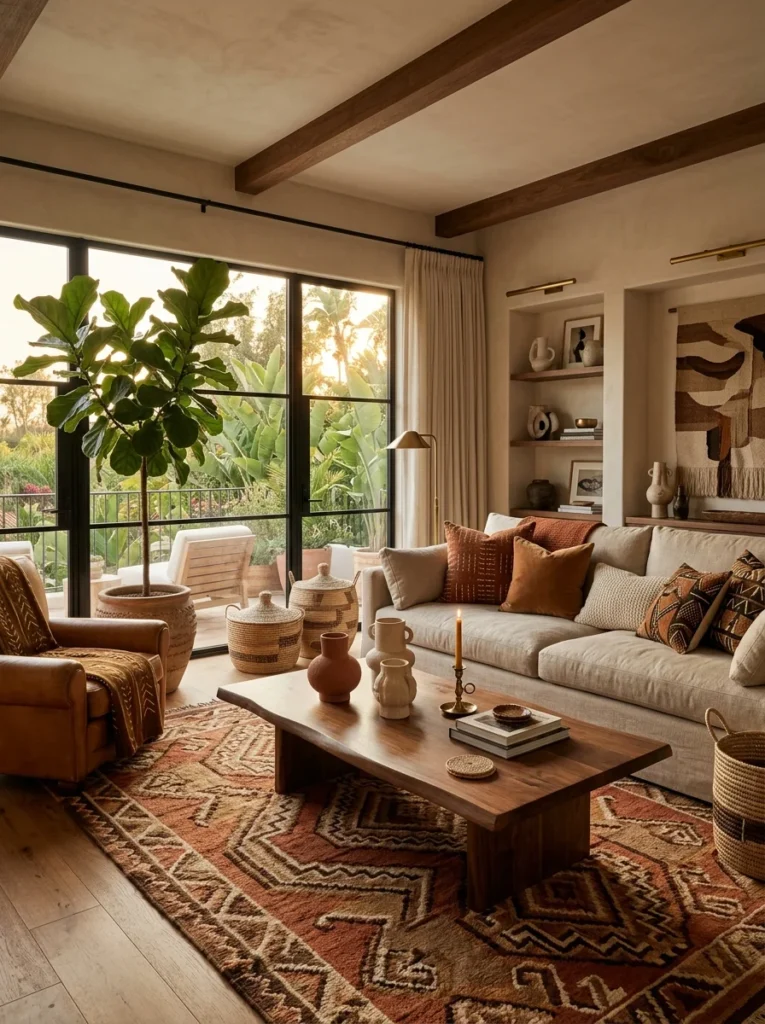
Build an inviting Afrohemian living room around a palette of terracotta, caramel, sand, cream, and deep cocoa. Start with a comfortable linen or boucle sofa and add a walnut coffee table, woven baskets, and textured cushions. A large earthy rug can visually anchor everything while keeping the room relaxed. Black accents, sculptural ceramics, and aged brass details add just enough contrast to prevent the warm palette from feeling flat.
For an elevated finish, layer several natural textures instead of adding too many decorative colors. Think chunky throws, nubby upholstery, woven baskets, carved wood objects, and linen curtains. Bring in a few oversized plants to soften the room and create height. The result should feel collected and artistic without looking cluttered. Keeping the larger furniture pieces simple allows the smaller Afrohemian-inspired details to become the visual stars.
2. Rattan and Woven Furniture
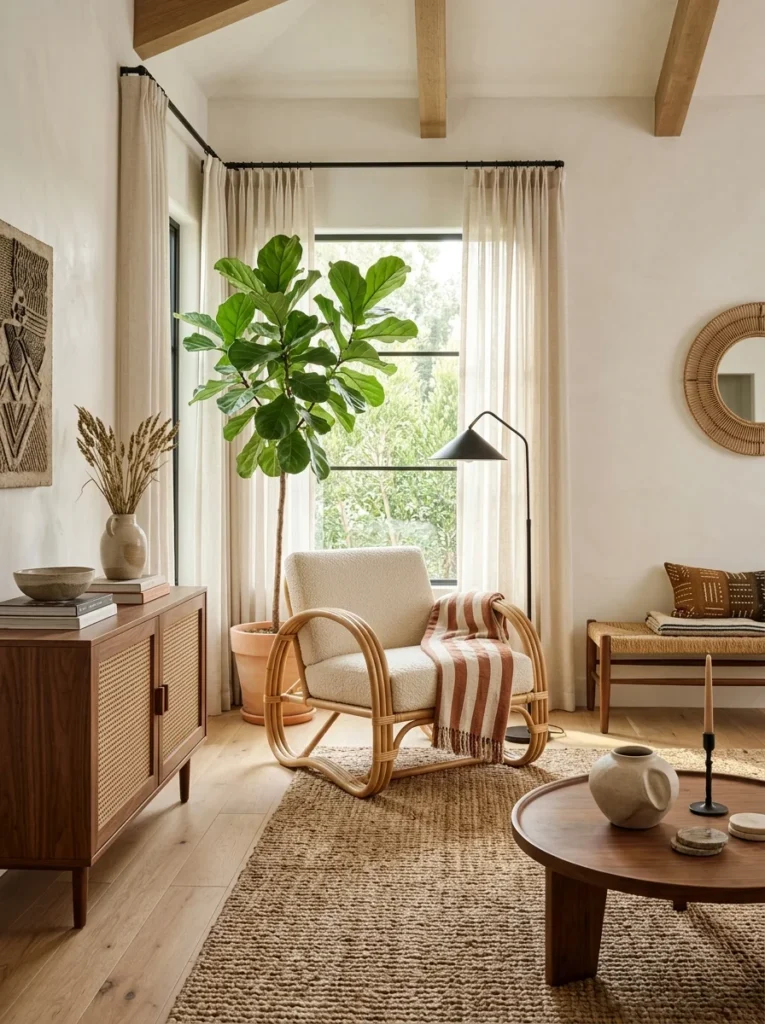
Rattan and woven furniture instantly introduce the relaxed craftsmanship that makes Afrohemian interiors so appealing. Consider a curved rattan lounge chair, cane-front cabinet, woven bench, or natural-fiber side table. Pair these pieces with warm wood and soft neutral upholstery so the room feels sophisticated rather than overly beachy. A few darker accents, such as charcoal cushions or black metal lighting, can give the natural furniture a stronger contemporary presence.
The key is to mix woven pieces with materials that have different visual weights. A substantial wood coffee table beside a lightweight rattan chair creates an interesting contrast, while linen drapes and a textured rug add softness. Keep the surrounding accessories intentionally edited so the woven furniture remains noticeable. This approach works particularly well in living rooms, bedrooms, and sunlit sitting areas where natural materials can become the foundation of the design.
3. Mudcloth-Inspired Accent Wall
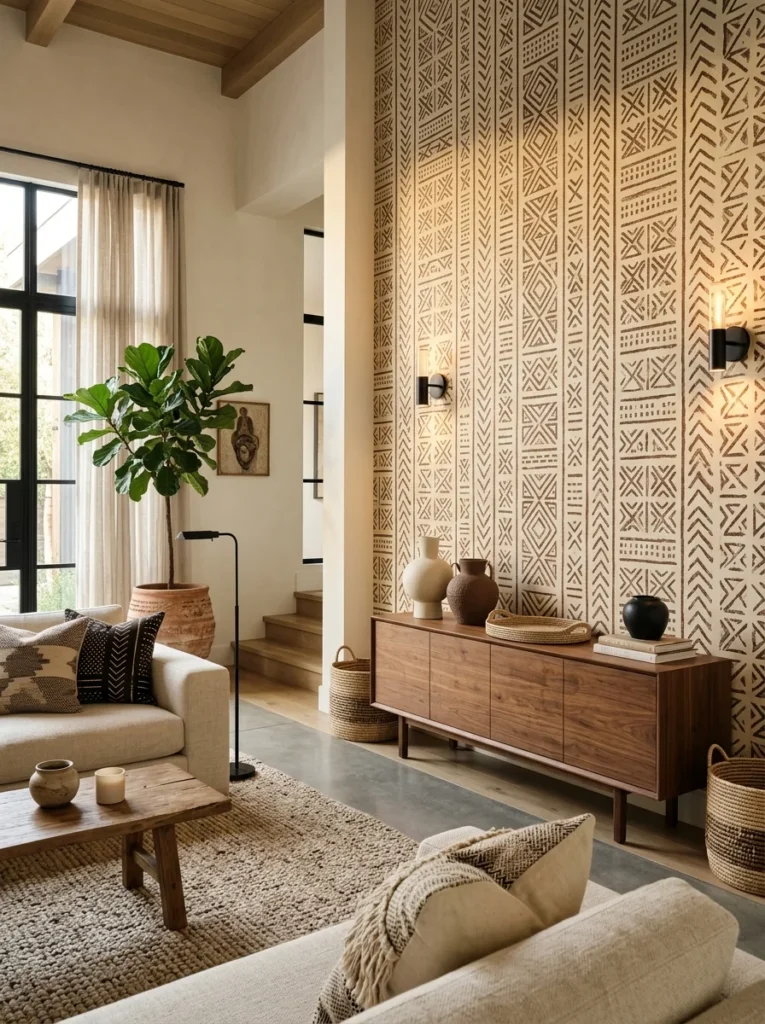
Create a dramatic focal point with a mudcloth-inspired accent wall featuring a simple geometric or hand-drawn pattern. Choose warm cream and cocoa, charcoal and sand, or clay and ivory rather than overly bright colors. The pattern can appear through wallpaper, textile panels, or a carefully painted design. Surround it with natural wood furniture and neutral upholstery to keep the overall look sophisticated and balanced.
Because the wall already provides strong visual interest, keep nearby decor relatively restrained. A low wooden console, sculptural ceramic vase, and a few woven accessories can complement the pattern without competing with it. Soft lighting will emphasize the wall’s texture and geometry in the evening. The finished space should feel artistic and layered while still maintaining the calm, polished quality that makes Afrohemian decor work beautifully in modern American homes.
4. Layered Neutral Textiles
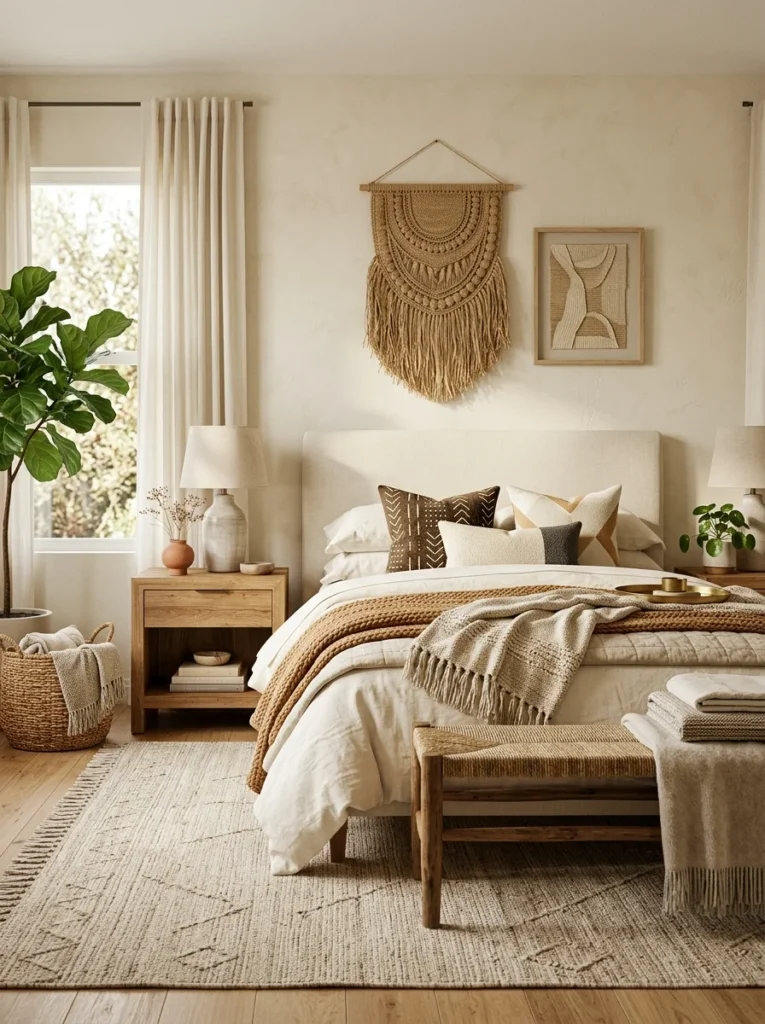
Layering neutral textiles is one of the easiest ways to achieve a warm Afrohemian atmosphere without relying on bold color. Combine ivory linen, oatmeal cotton, caramel knit, woven jute, and soft boucle across sofas, beds, and accent chairs. Subtle patterns can be introduced through cushions or throws while maintaining an overall palette of sand, cream, taupe, and warm brown.
The secret to making neutrals feel interesting is variation in texture and scale. Place a chunky woven throw beside smooth linen cushions, then introduce a patterned rug underneath. Natural light will highlight those differences throughout the day, creating depth without visual noise. Add a few handmade-looking ceramics and wooden accessories to reinforce the organic mood. This approach creates a peaceful foundation that can easily evolve as your decor collection grows.
5. Handwoven Basket Gallery
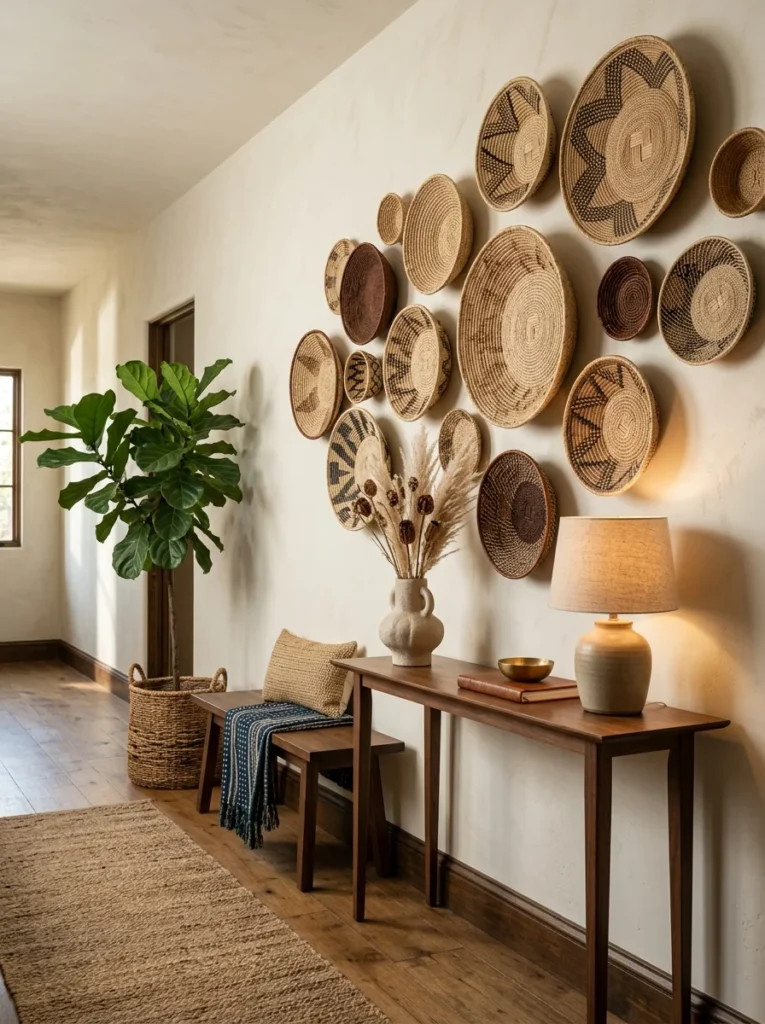
Turn a blank wall into an artistic statement with a collection of handwoven baskets arranged as a gallery. Mix circular, oval, shallow, and slightly irregular shapes to create movement. Natural straw, raffia-inspired textures, dark brown fibers, and subtle black patterns can produce a beautiful earthy composition. Keep the wall itself warm white, creamy beige, or soft clay so the woven pieces stand out naturally.
For a polished arrangement, vary the sizes while maintaining enough breathing room between each basket. You can place the gallery above a console, behind a sofa, or along a staircase wall. Pair it with a simple wooden bench and a large leafy plant for balance. The result feels handcrafted and collected rather than mass-produced, giving an otherwise ordinary wall an inviting focal point with strong Afrohemian character.
6. Carved Wood Statement Pieces
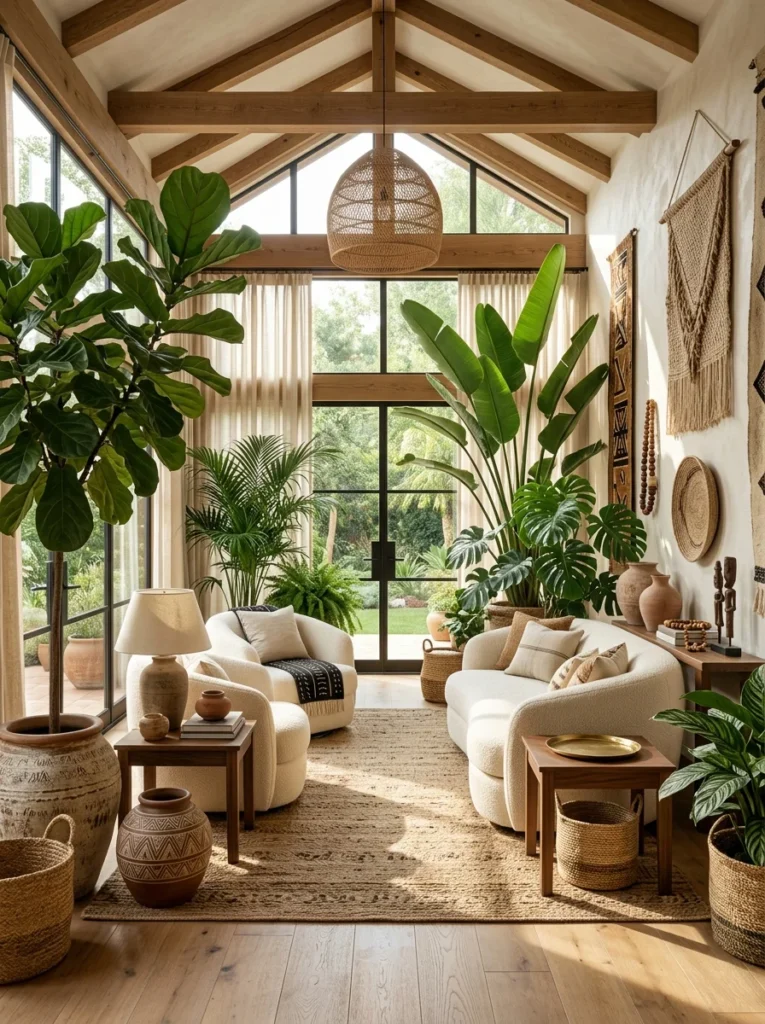
Introduce sculptural warmth with carved wood furniture or decorative objects. A chunky carved coffee table, artistic pedestal, statement stool, or textured console can immediately become the centerpiece of an Afrohemian room. Choose rich walnut, teak-inspired tones, or medium warm wood finishes that reveal natural grain. Keep the surrounding upholstery relatively simple so the craftsmanship remains the main attraction.
Carved pieces work especially well when paired with softer materials. Place a sculptural wood table over a plush neutral rug, or style a carved console with linen lampshades and handmade-looking ceramics. Avoid filling every surface with accessories. One or two distinctive objects often create more impact than a crowded collection. The combination of organic form, visible grain, and tactile texture gives the room a luxurious yet grounded personality.
7. Terracotta and Cream Palette
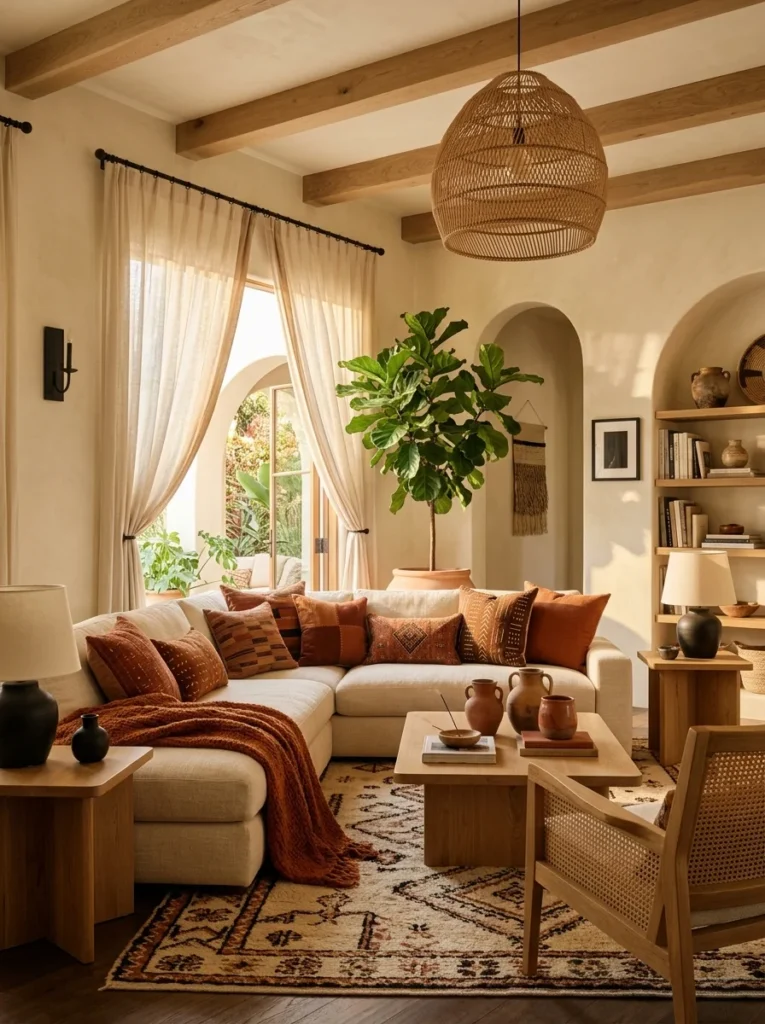
A terracotta and cream color scheme creates an instantly warm foundation for Afrohemian decor. Use creamy walls or upholstery as the backdrop, then bring in clay-toned cushions, terracotta ceramics, rust-colored throws, and earthy artwork. Natural wood furniture can bridge the two colors while black accents provide definition. The palette feels sunny and inviting without becoming overwhelmingly orange.
To make the combination feel contemporary, keep the strongest terracotta tones concentrated in smaller layers. A patterned rug, a pair of cushions, or several ceramic vessels can be enough to establish the theme. Add greenery for a fresh organic contrast and choose soft lighting in the evening. This balance creates a home that feels warm and expressive while maintaining the sophisticated restraint expected from modern luxury interiors.
8. Afrohemian Bedroom Retreat
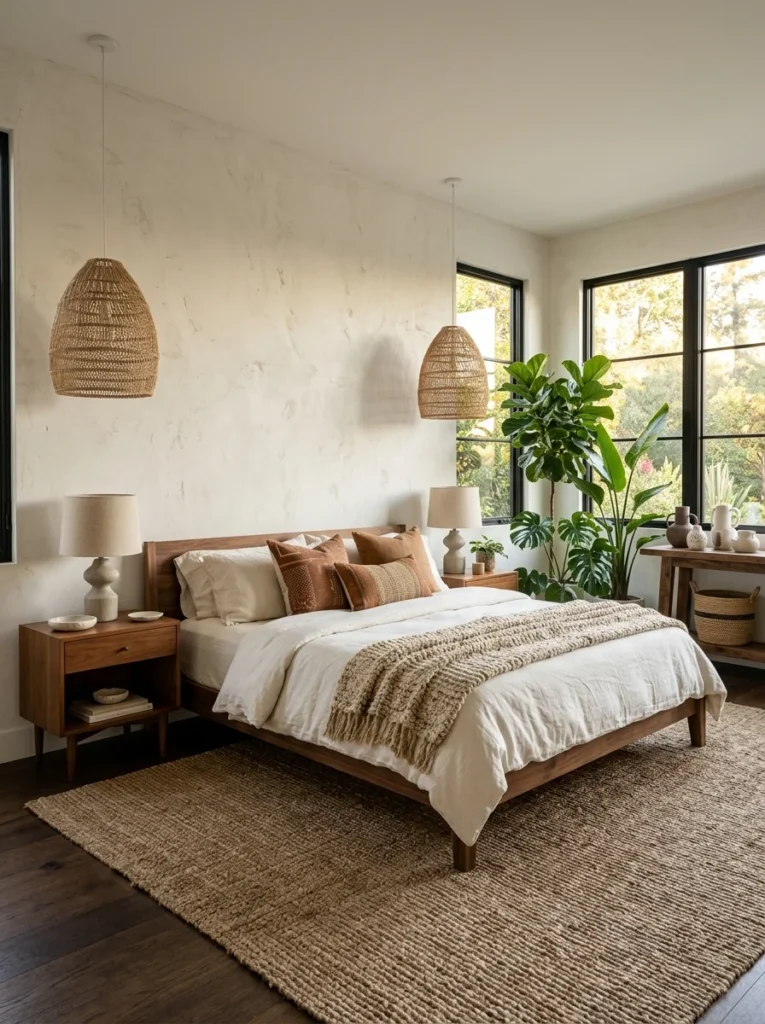
Transform the bedroom into a peaceful Afrohemian retreat with a natural wood bed, linen bedding, woven lighting, and earthy accent colors. Layer ivory sheets with clay, caramel, or olive cushions and add a textured throw across the foot of the bed. A large jute-inspired rug beneath the bed can bring warmth underfoot while making the space feel visually grounded.
Keep the atmosphere relaxed by avoiding excessive decoration around the sleeping area. A pair of woven pendants, simple ceramic lamps, and one large piece of expressive artwork can provide enough character. Add leafy plants near a window and use warm ambient lighting after sunset. The final result should feel like a calm private retreat where natural textures and earthy colors create a comfortable, sophisticated sense of escape.
9. Black and Natural Wood Contrast
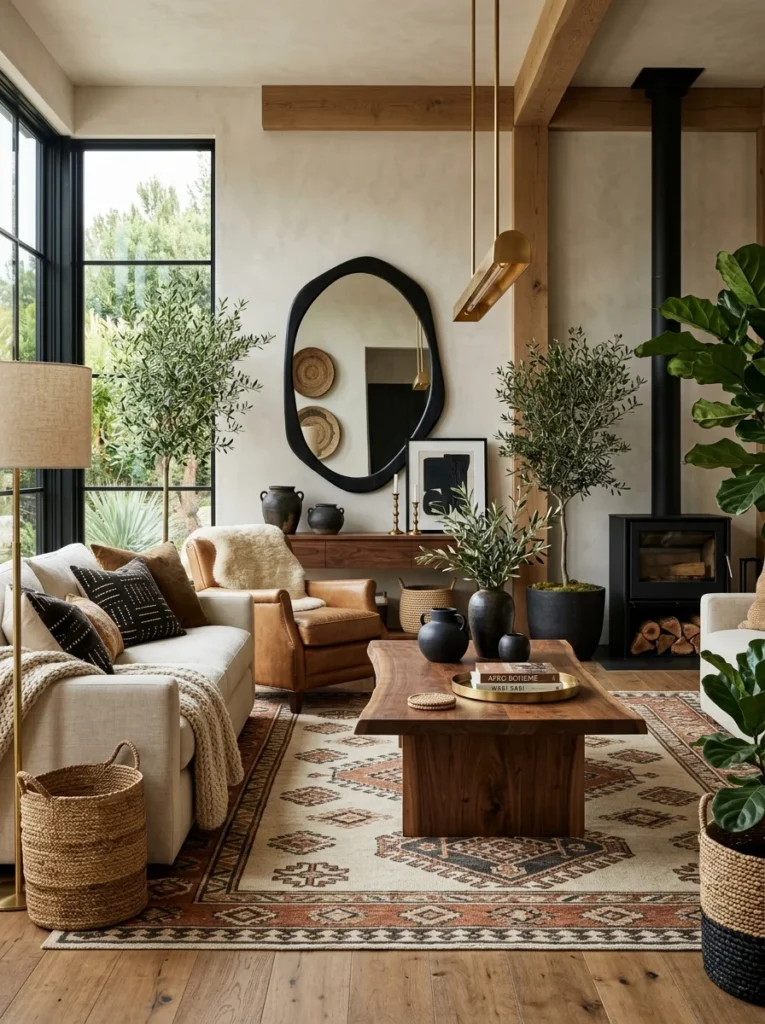
Pairing matte black accents with natural wood creates a striking Afrohemian combination that feels both earthy and contemporary. Consider black-framed mirrors, dark ceramic vessels, metal side tables, or sculptural lighting against warm oak or walnut furniture. The contrast gives the room definition while preserving the organic character of woven materials and earthy textiles.
Use black selectively rather than covering large areas with it. A few dark details repeated throughout the room will create visual rhythm without making the space feel heavy. Add cream upholstery, tan leather, woven baskets, and soft greenery to balance the darker elements. This combination works particularly well in modern living rooms and dining spaces where clean lines can coexist beautifully with handcrafted, natural-looking details.
10. Eclectic Gallery Wall
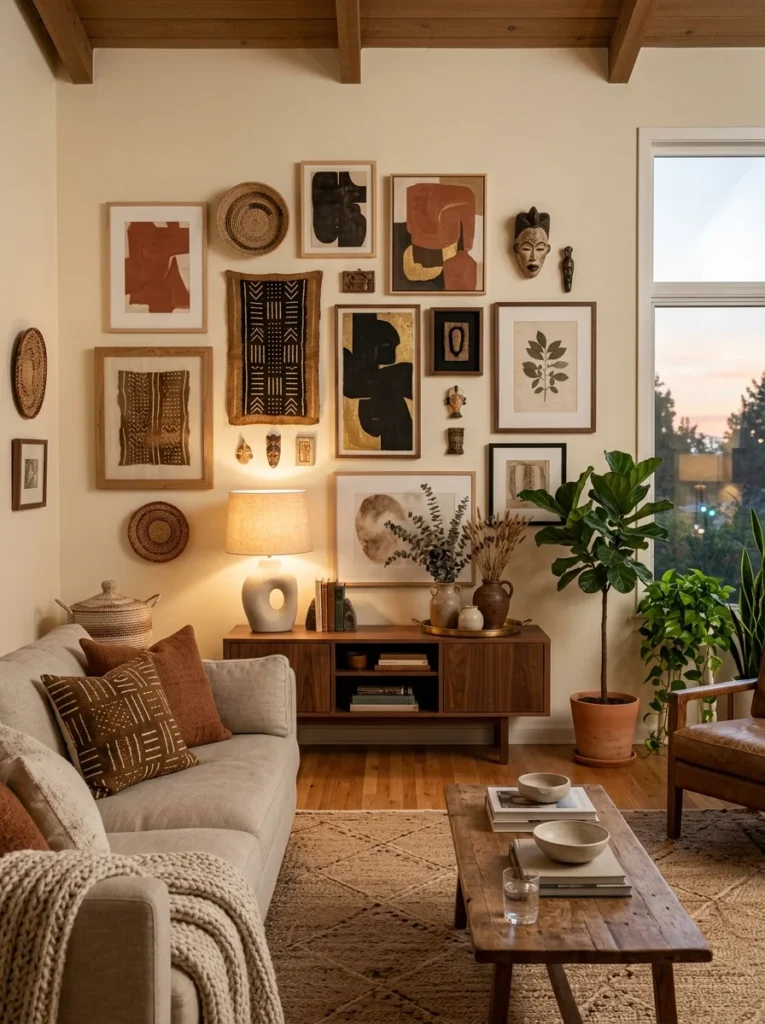
Create an expressive gallery wall by combining abstract artwork, woven pieces, carved objects, photography, and simple organic prints. Instead of matching every frame, choose a coordinated palette of warm wood, black, brass, and neutral finishes. This gives the wall a collected appearance while keeping the overall arrangement intentional. Earthy artwork with subtle geometric patterns can reinforce the Afrohemian atmosphere.
Begin with one larger central piece and build outward with smaller works. Leave varied but deliberate spaces between the frames so the wall feels curated rather than crowded. Place a simple console underneath with a ceramic lamp, sculptural bowl, and a few books. When combined with natural textures elsewhere in the room, the gallery wall becomes a personal focal point that gives the home an artistic and worldly character.
11. Oversized Greenery
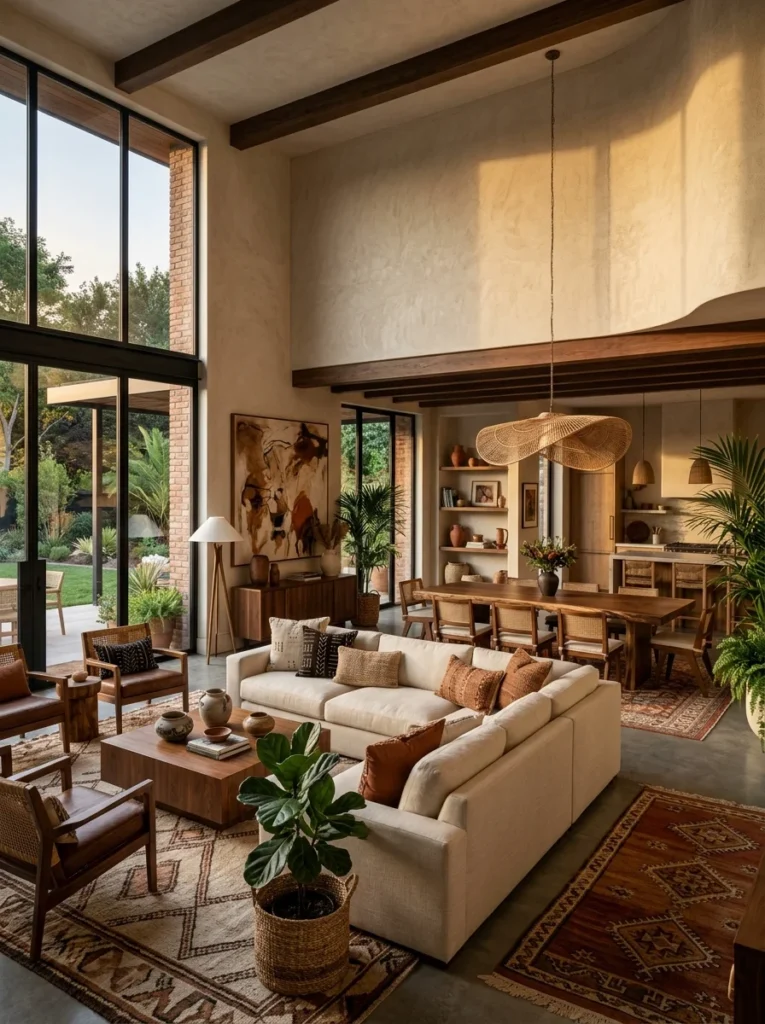
Large indoor plants can transform an Afrohemian space by adding organic movement, freshness, and height. Choose sculptural greenery with broad leaves or architectural silhouettes and place it inside textured ceramic, woven, or earthy-toned planters. A tall plant beside a sofa or near a sunny window can fill an empty vertical area without requiring numerous smaller accessories.
Use greenery as part of the room’s composition rather than treating plants as random additions. Repeat natural green tones through artwork, cushions, or small decorative objects to create cohesion. Combine plants with wood, rattan, linen, and jute-inspired materials for a naturally layered look. The contrast between lush foliage and warm earthy surfaces gives the room a relaxed, resort-like feeling while keeping the overall style sophisticated.
12. Woven Pendant Lighting
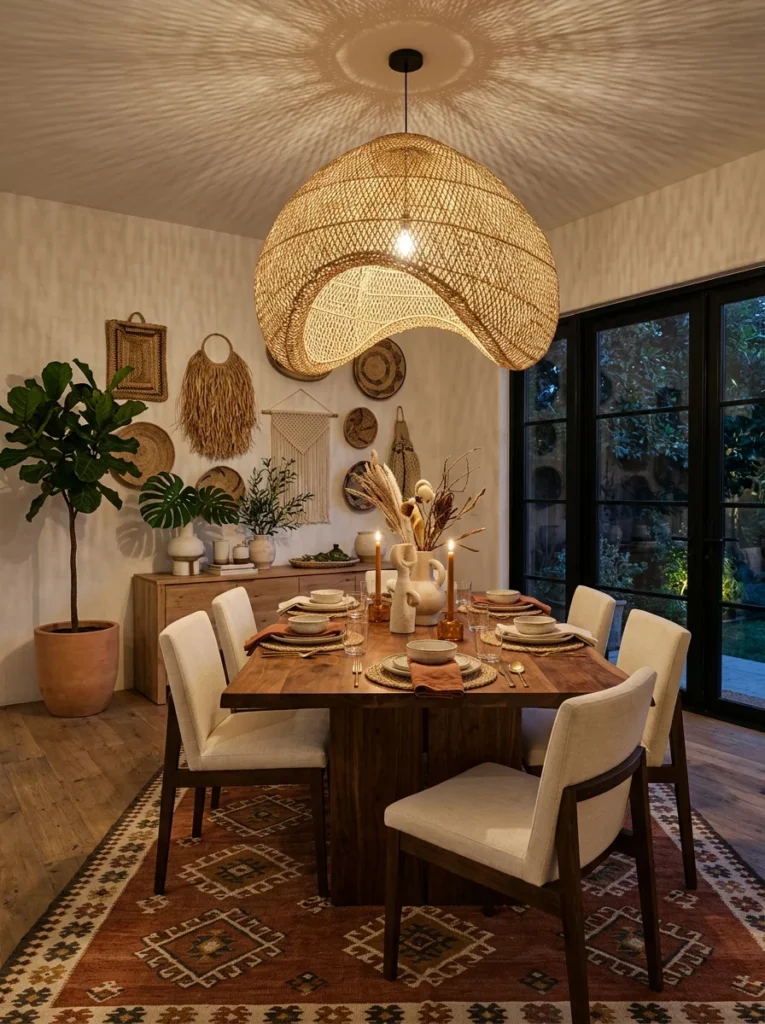
A dramatic woven pendant can become the centerpiece of an Afrohemian room while providing beautiful filtered illumination. Choose an oversized pendant made from natural fibers with an organic, slightly irregular shape. Hang it above a dining table, seating area, or bedroom nightstands where its texture and silhouette can be appreciated. Warm bulbs will create attractive shadows across nearby walls after dark.
Keep the rest of the lighting simple so the pendant remains visually important. Pair it with understated floor lamps, ceramic table lamps, or small wall lights in warm finishes. The woven shade can soften contemporary furniture and make a minimalist room feel much more inviting. This lighting choice is especially effective when combined with textured walls, natural wood, and neutral upholstery.
13. Moroccan-Afrohemian Mix
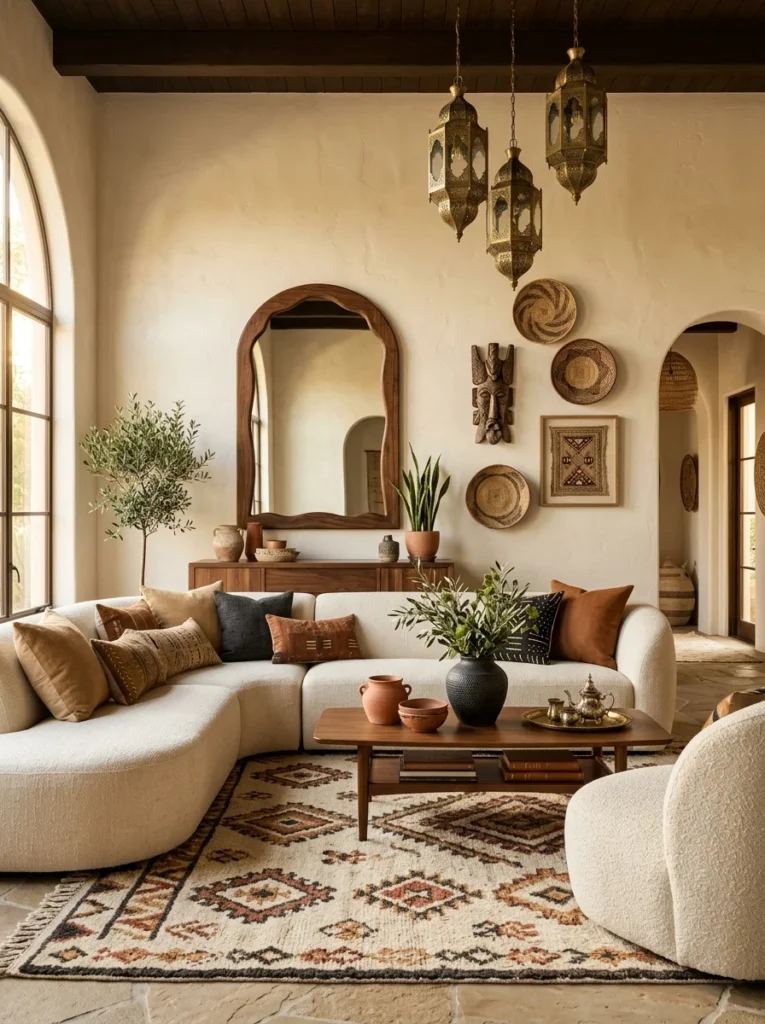
Blend Moroccan-inspired shapes with Afrohemian textures for a globally influenced room that feels layered and welcoming. Think low-profile seating, arched mirrors, patterned rugs, woven baskets, warm plaster tones, and carved wood. Keep the color palette grounded in cream, camel, rust, brown, and charcoal so the different influences feel connected rather than visually chaotic.
Use repetition to create harmony between the various materials and forms. Rounded mirrors can echo curved furniture, while geometric patterns in the rug can connect with artwork or cushions. Add brass lantern-inspired lighting and natural ceramics for extra warmth. The goal is not to recreate one specific cultural style but to create an eclectic home that thoughtfully combines global-inspired shapes, natural materials, and comfortable modern furnishings.
14. Vintage-Inspired Leather Seating
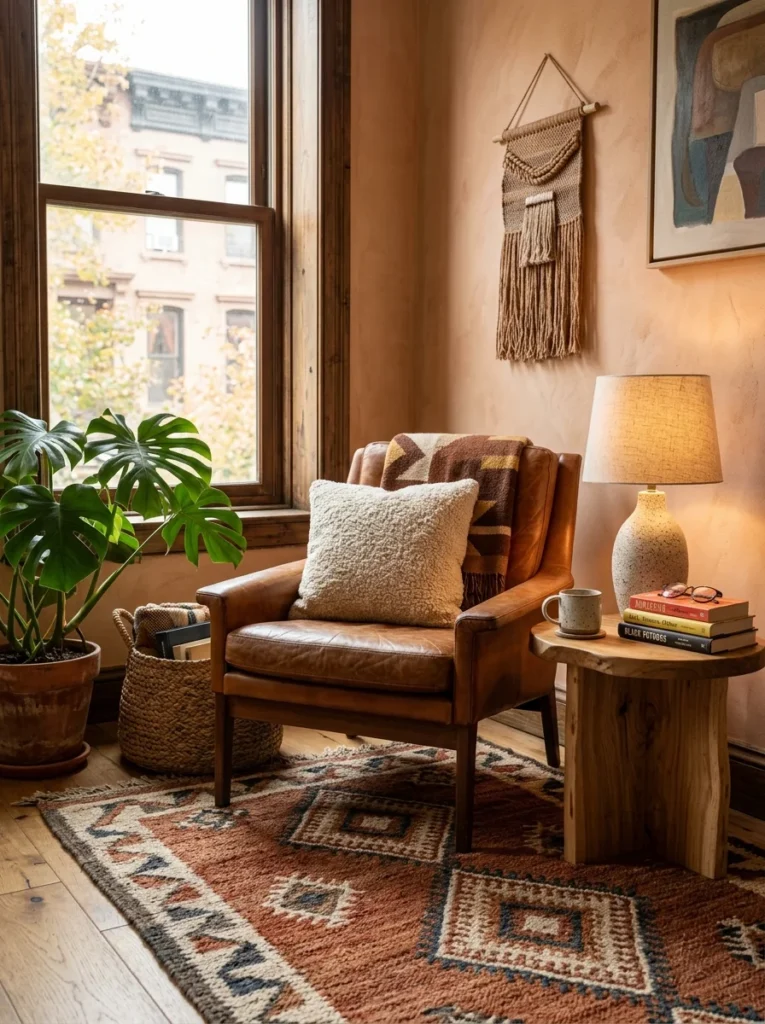
Introduce rich character with a cognac or tobacco-toned leather chair or sofa. The aged appearance of leather works beautifully with woven baskets, natural wood, earthy rugs, and handmade-looking ceramics. Choose furniture with comfortable proportions and slightly relaxed lines rather than ultra-polished silhouettes. The leather adds depth and warmth while giving the room a timeless quality.
Balance the visual weight of leather with soft textiles and greenery. A cream boucle cushion, woven throw, and large leafy plant can make a leather chair feel welcoming instead of formal. Add a small wood side table and sculptural lamp nearby to complete the corner. Over time, natural leather develops even more character, making it especially suitable for an eclectic home designed to feel collected and lived-in.
15. Earthy Patterned Rug
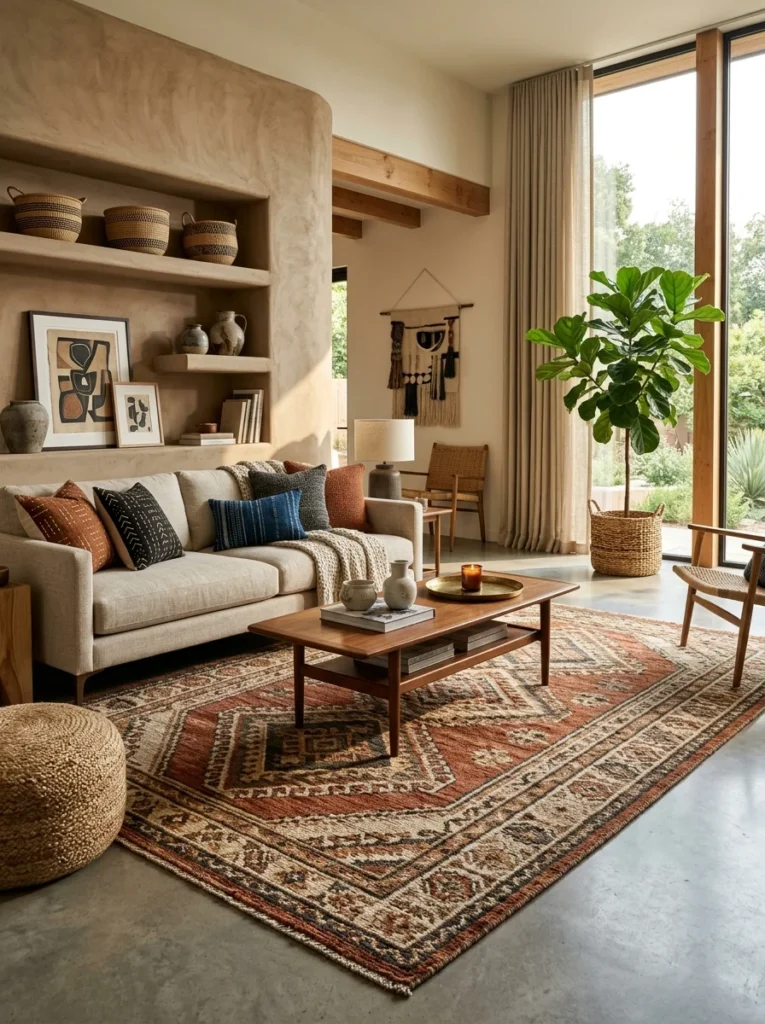
An earthy patterned rug can instantly establish the color story and personality of an Afrohemian room. Look for geometric motifs in rust, sand, cream, charcoal, cocoa, or muted olive. The pattern should have enough visual interest to anchor the room without overwhelming the furniture. A generously sized rug placed beneath the main seating arrangement will make the entire space feel more connected.
Once the rug is selected, repeat two or three of its subtle colors elsewhere in the room. Bring rust into a cushion, charcoal into a lamp, or olive into a ceramic vase. Keep the larger furniture pieces relatively quiet so the rug can act as the foundation. Layering it over natural flooring also adds softness and creates the relaxed, collected atmosphere associated with Afrohemian interiors.
16. Handmade Ceramic Collection
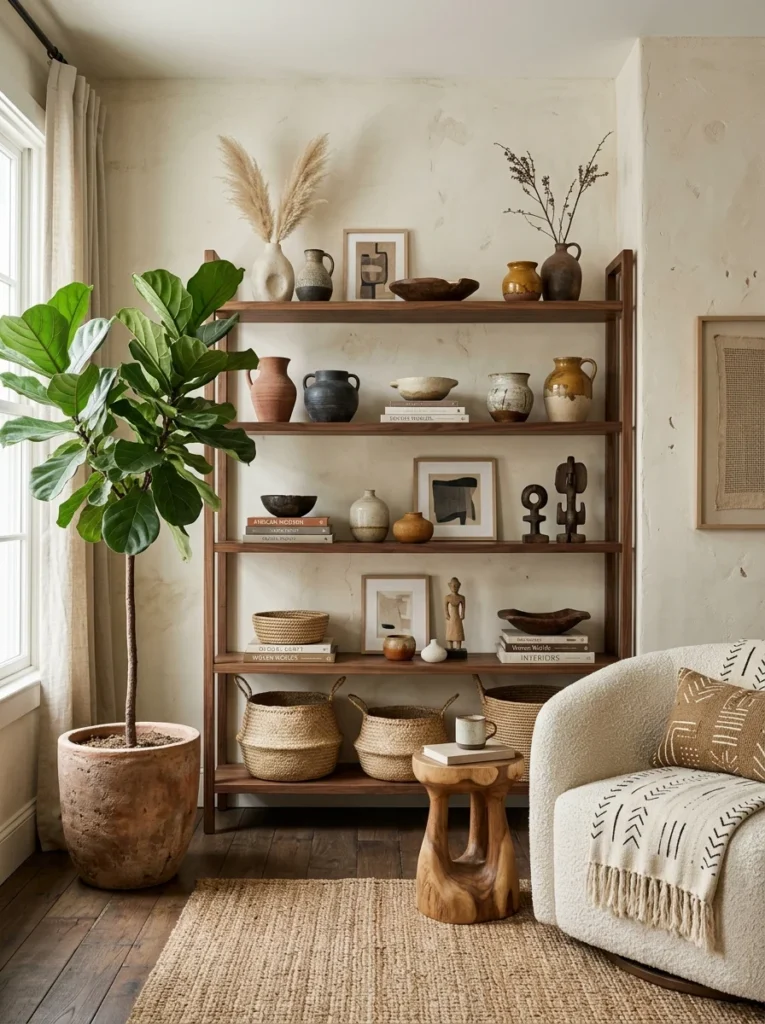
A carefully arranged collection of handmade-looking ceramics can bring subtle artistry to shelves, consoles, and coffee tables. Choose vessels with imperfect curves, matte surfaces, earthy glazes, and organic silhouettes. Terracotta, ivory, charcoal, clay, and warm brown finishes work especially well with Afrohemian palettes. Group several pieces at different heights instead of spreading them evenly around the room.
Avoid turning every surface into a display area. Choose one intentional vignette and allow surrounding furniture to breathe. A large ceramic vessel beside a smaller bowl and sculptural object can create a simple but compelling arrangement. Natural wood and woven textures will enhance the handmade quality. These pieces add personality without requiring bold color, making them ideal for a sophisticated home that values craftsmanship and organic beauty.
17. Cane Cabinet Styling
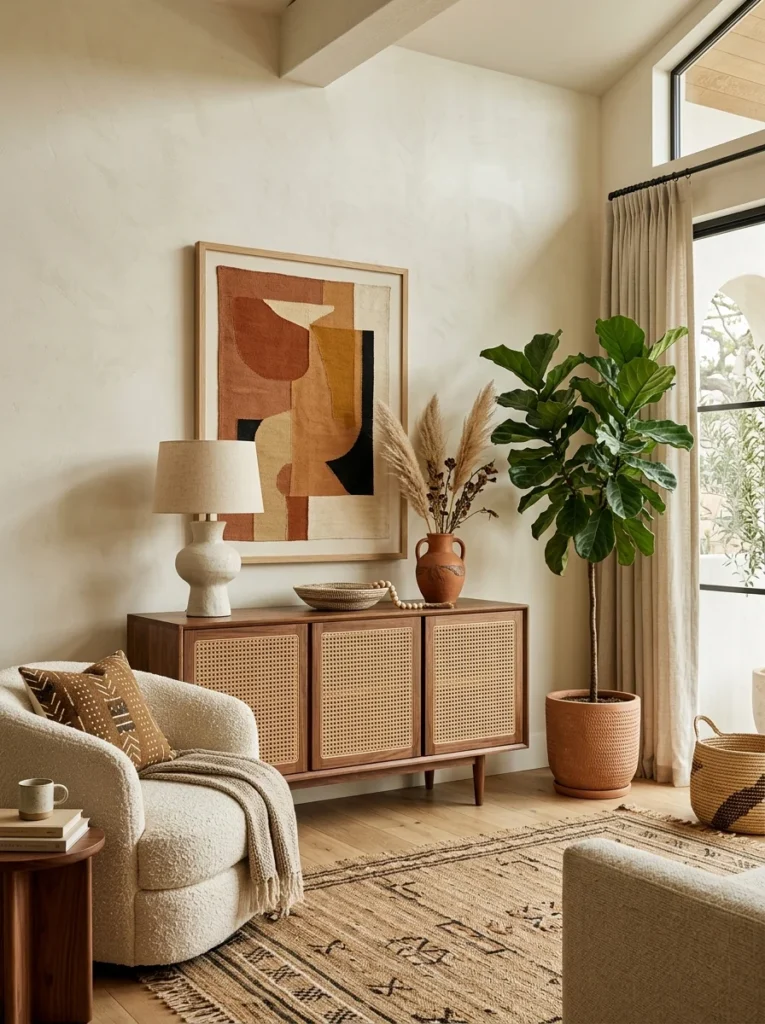
A cane-front cabinet offers the perfect blend of practical storage and warm texture. Choose a cabinet in natural oak, walnut, or another warm wood tone with woven cane panels. It can work beautifully in a living room, dining room, bedroom, or hallway. The textured doors add dimension while the enclosed storage keeps the space visually calm.
Style the top with just a few carefully selected pieces, such as a sculptural lamp, ceramic vase, framed artwork, and small woven bowl. Place a leafy plant nearby to soften the furniture’s straight lines. If the cabinet sits against a light wall, the combination of wood and cane becomes a subtle focal point. This approach creates a polished Afrohemian look while keeping everyday clutter hidden.
18. Deep Chocolate and Rust Palette
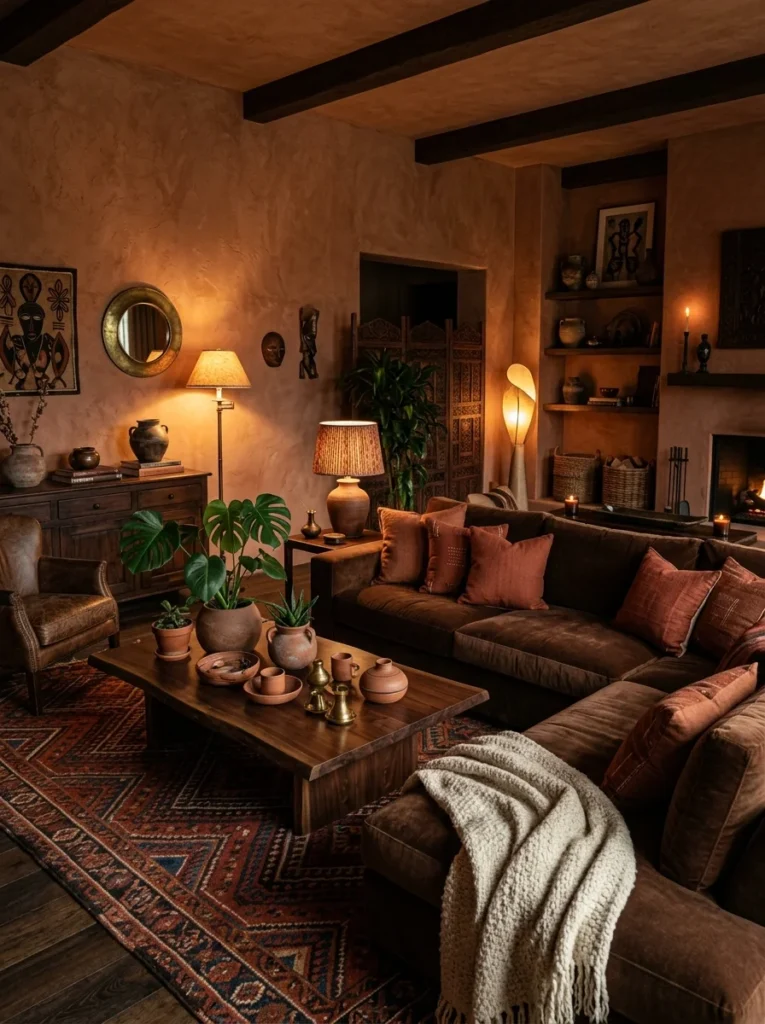
For a richer Afrohemian atmosphere, combine deep chocolate brown with rust, cream, and muted clay. Chocolate upholstery, dark wood, or painted cabinetry can provide a dramatic foundation, while rust cushions and terracotta ceramics add warmth. Cream textiles keep the room from becoming too dark and create a soft contrast against the deeper shades.
Use lighting carefully to bring out the richness of the palette. Warm wall lights, table lamps, and soft pendant illumination can make chocolate and rust feel incredibly cozy in the evening. Add brass or aged-metal accents for a subtle touch of luxury. With natural wood and woven accessories completing the composition, this color scheme creates a sophisticated room that feels intimate, grounded, and inviting.
19. Cozy Boho Reading Nook
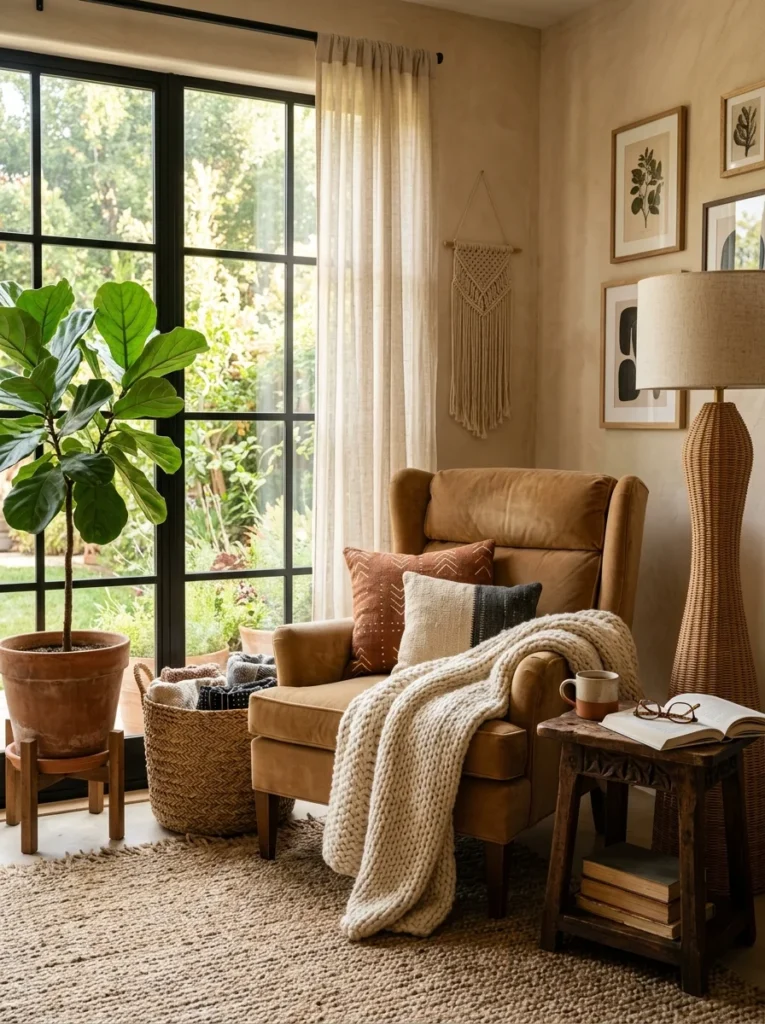
Create a dedicated reading nook with a comfortable lounge chair, small wood side table, woven floor lamp, and textured rug. Choose a chair in cream, camel, warm gray, or natural leather and surround it with a few tactile textiles. A nearby basket can hold extra blankets, while a small stack of books adds a lived-in touch without creating clutter.
Place the nook near a window whenever possible so daylight becomes part of the design. Add a large plant behind or beside the chair to create a natural backdrop. In the evening, use a warm floor lamp to establish a cozy glow. This small corner does not require a large budget or much space, yet it can bring the entire Afrohemian mood into an otherwise simple room.
20. African-Inspired Abstract Art
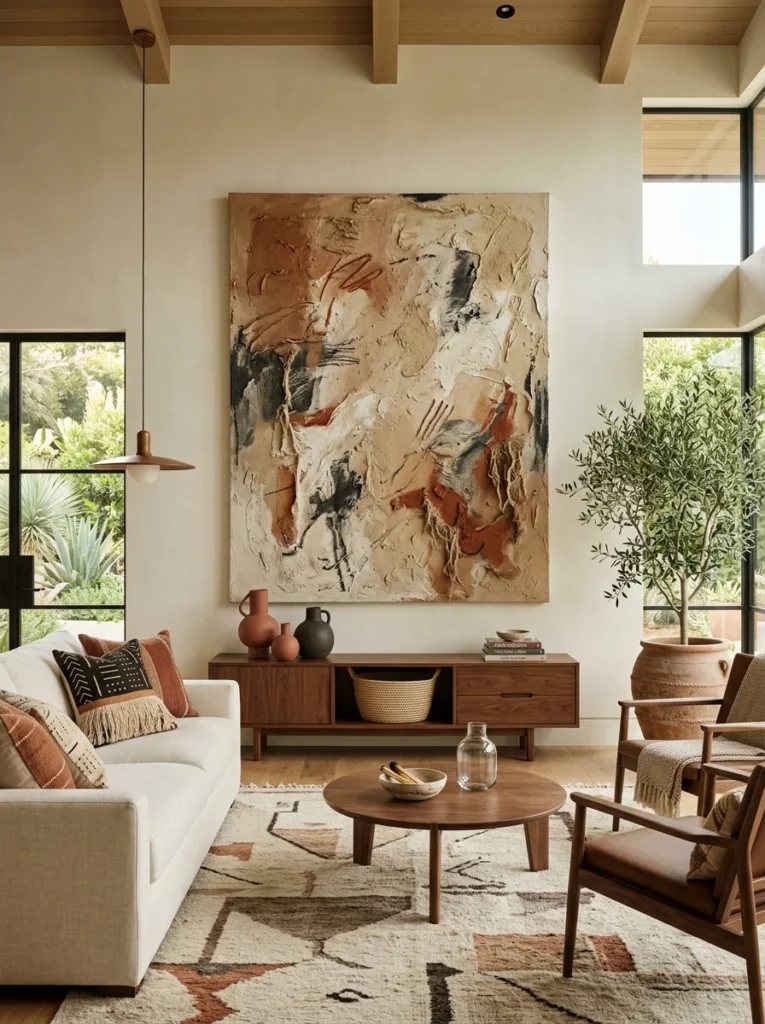
Bring personality to your walls with abstract artwork influenced by earthy landscapes, organic forms, expressive lines, or geometric compositions. Look for pieces using clay, sand, cream, charcoal, rust, and brown tones. Rather than choosing artwork solely because it matches the room, select pieces with visual movement that create a genuine focal point.
Give statement artwork enough surrounding space to be appreciated. A large canvas above a low sofa or console can establish the room’s entire visual direction. Repeat one or two colors from the artwork through cushions or ceramics to create subtle cohesion. Natural wood frames and textured walls can make the artwork feel integrated rather than decorative. The result is expressive, modern, and richly layered without becoming visually overwhelming.
21. Layered Throw Pillows
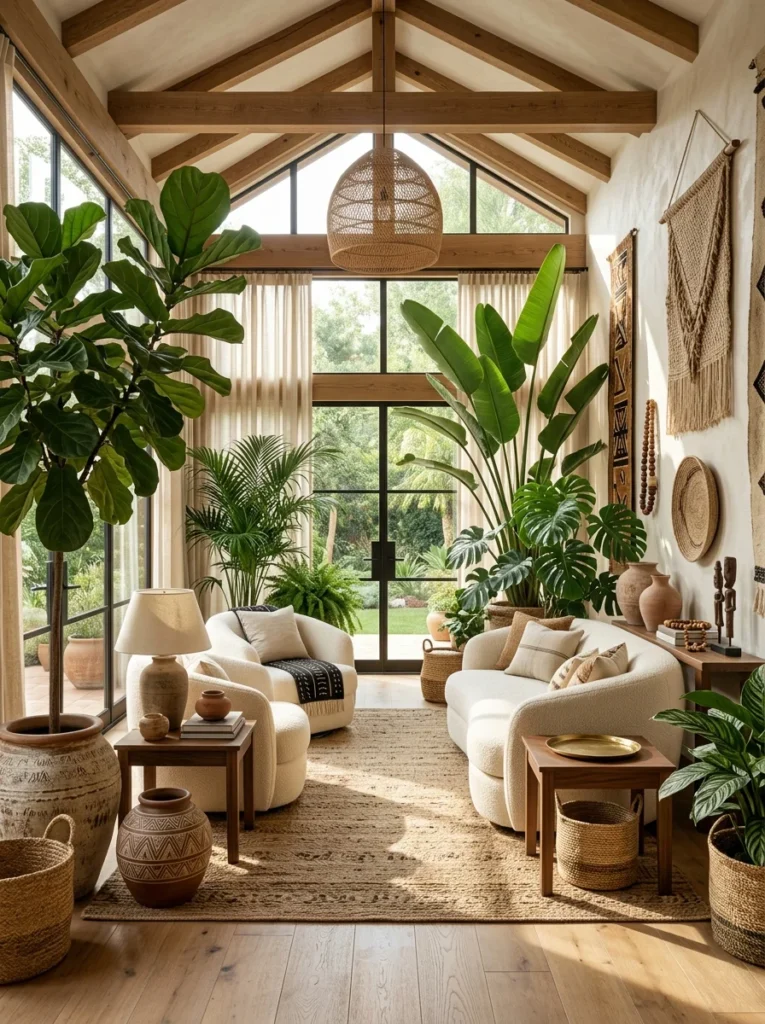
Throw pillows are an easy way to introduce Afrohemian patterns, color, and texture without committing to major furniture changes. Combine solid linen pillows with woven textures, subtle geometric motifs, earthy stripes, and tactile fabrics. Use a base of cream and camel, then introduce small amounts of rust, olive, cocoa, or charcoal for depth.
Varying pillow sizes creates a more relaxed and luxurious arrangement. Place larger neutral cushions at the back, followed by medium textured pillows and one or two patterned accents. Avoid making every pillow identical in pattern or color. The slightly mismatched appearance is part of the charm. This simple layering technique can make a basic sofa or bed feel much more curated and instantly warmer.
22. Organic Coffee Table Styling
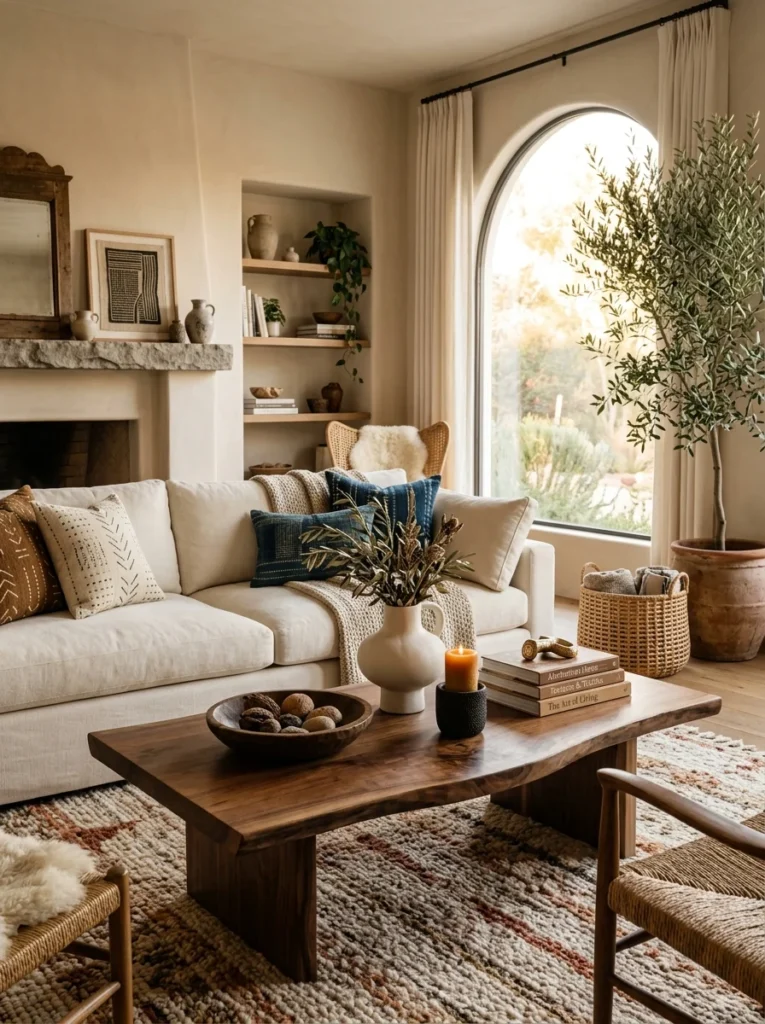
Style the coffee table with a combination of organic shapes, natural materials, and a restrained number of objects. A shallow wooden bowl, textured ceramic vessel, sculptural candleholder, and a few design books can create an effortless centerpiece. Choose pieces with rounded forms or imperfect surfaces to soften the straight lines of contemporary furniture.
Keep enough empty surface visible so the table remains functional. A woven tray can organize smaller objects while making the arrangement easy to move when needed. Pair the vignette with a large earthy rug beneath the table and soft seating around it. This creates a balanced composition where every object contributes texture or shape without making the living room feel overdecorated.
23. Sculptural Floor Lamps
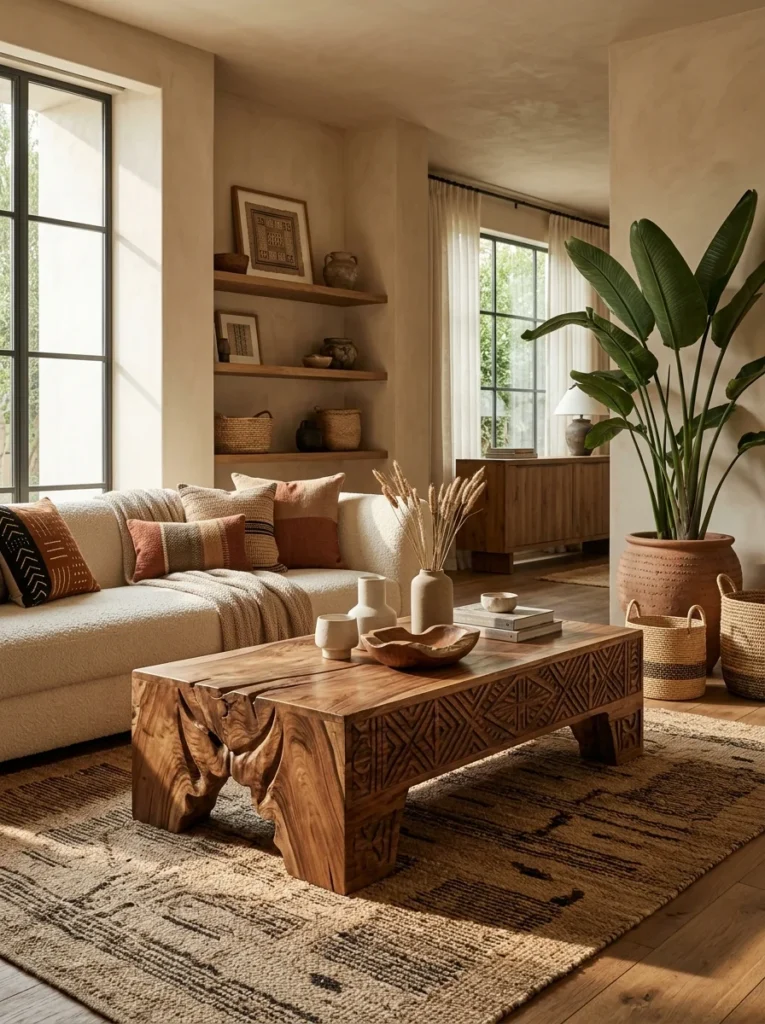
A sculptural floor lamp can provide both useful illumination and an artistic focal point. Look for a lamp with a curved silhouette, woven shade, textured base, or aged brass finish. Place it beside a sofa, reading chair, or console where the full shape can be seen. The right lamp can make an otherwise ordinary corner feel intentionally designed.
Choose warm lighting rather than cool white illumination to complement the earthy colors of an Afrohemian room. Pair the lamp with a textured chair, small wood table, and oversized plant for a complete corner. When the light comes on at night, the surrounding textures become more pronounced. This creates a cozy atmosphere while allowing the lighting fixture itself to function almost like a piece of sculpture.
24. Olive Green and Clay Accents
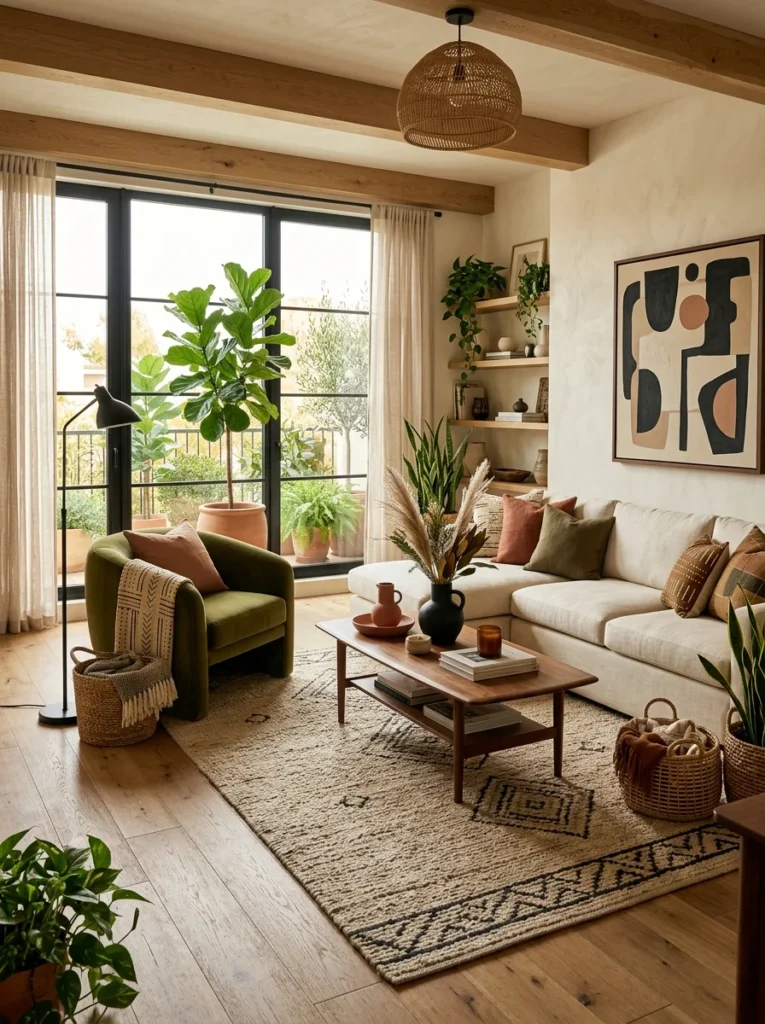
Olive green and clay make an unexpectedly beautiful combination for a warm eclectic home. Use olive through cushions, velvet seating, artwork, or greenery-inspired accessories, then introduce clay tones through ceramics, rugs, and textiles. Cream and natural wood should remain the visual foundation, allowing these deeper accents to create controlled bursts of color.
The combination works especially well because both shades have an earthy quality. They feel colorful without becoming overly bright or playful. Repeat the colors in small amounts throughout the room rather than concentrating them in one area. Add woven baskets and matte ceramics to reinforce the natural mood. The finished space feels grounded, cozy, and sophisticated while still having plenty of personality.
25. Open-Shelf Artisan Display
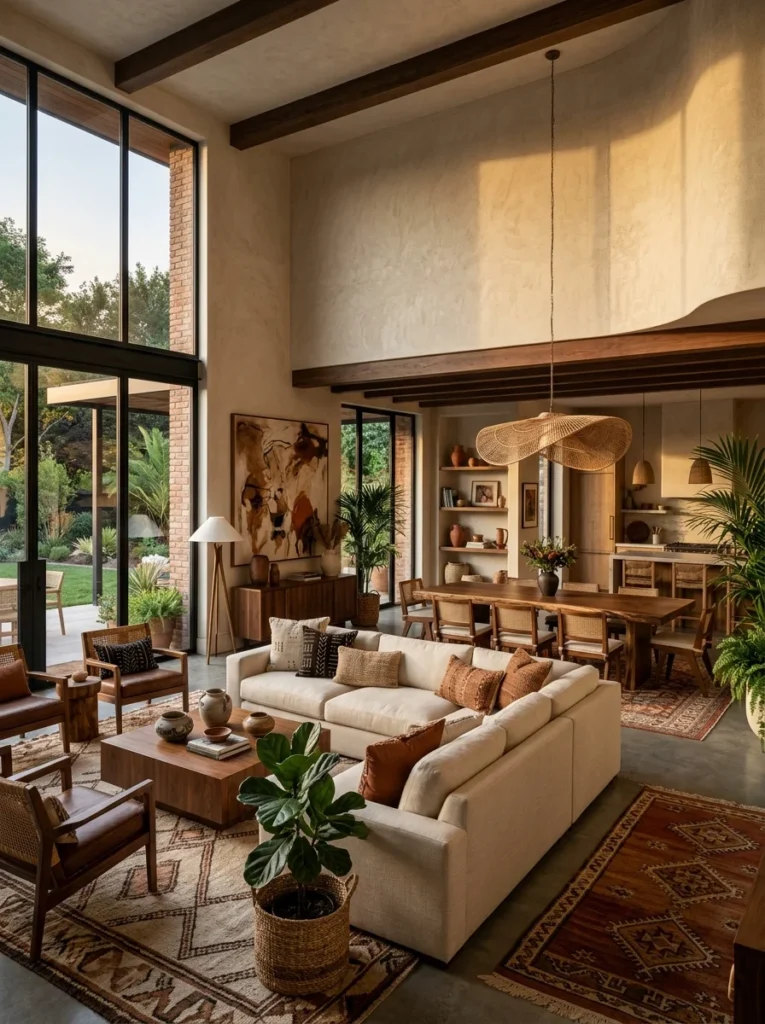
Use open shelving to create a curated display of ceramics, baskets, books, carved wood objects, and small pieces of artwork. Choose shelves in warm walnut or natural oak to establish a rich backdrop. Instead of filling every shelf completely, leave generous areas of empty space between groups of objects. This keeps the display visually light and allows individual pieces to stand out.
Create balance by mixing horizontal and vertical objects. Stack a few books beneath a ceramic bowl, place a tall vase on another shelf, and add a small framed artwork nearby. Introduce woven textures at different levels to connect the display with the rest of the room. The result feels like a personal collection rather than a showroom, which is essential to the relaxed spirit of Afrohemian decor.
26. Luxe Afrohemian Dining Space
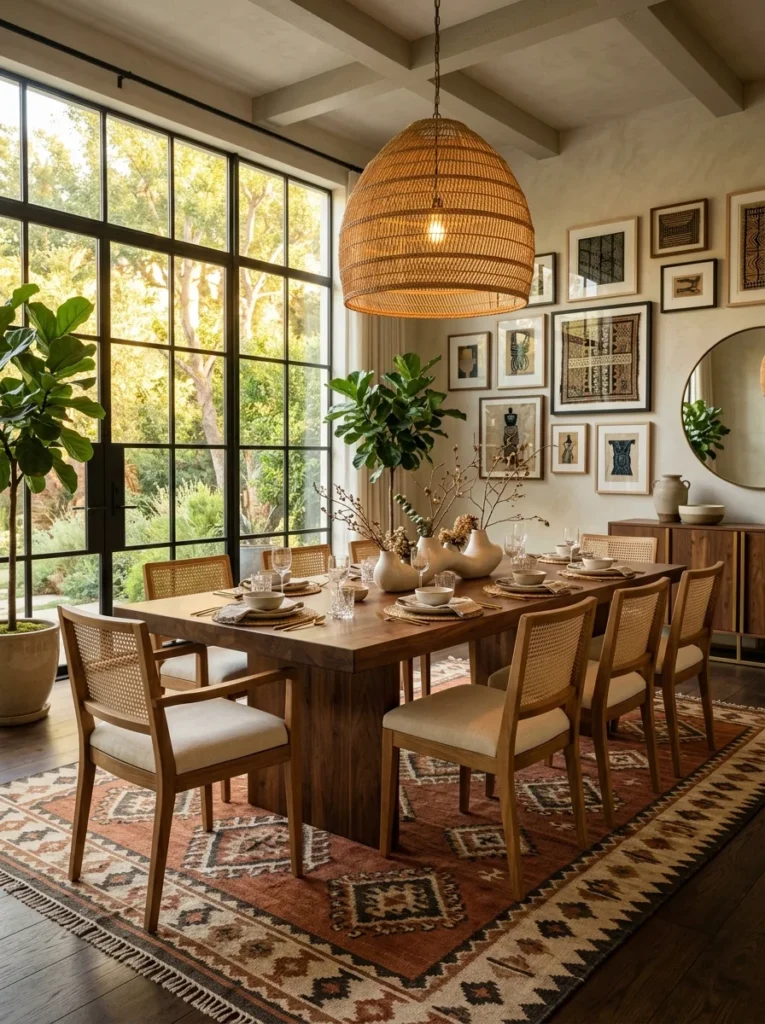
Create an elevated dining room by combining a substantial natural wood table with comfortable upholstered or woven dining chairs. Add a dramatic woven pendant overhead and place a large earthy rug beneath the table. Cream, camel, rust, and deep brown can form the color palette, while aged brass details add a quiet touch of luxury.
Keep the dining table centerpiece organic and uncomplicated. A long ceramic vessel filled with sculptural branches or greenery can create height without obstructing conversation. Add textured wall art or a large woven installation nearby to reinforce the theme. When natural materials are combined with sophisticated lighting and clean furniture silhouettes, the dining room feels warm, stylish, and welcoming for both everyday meals and special gatherings.
27. Minimal Afrohemian Entryway
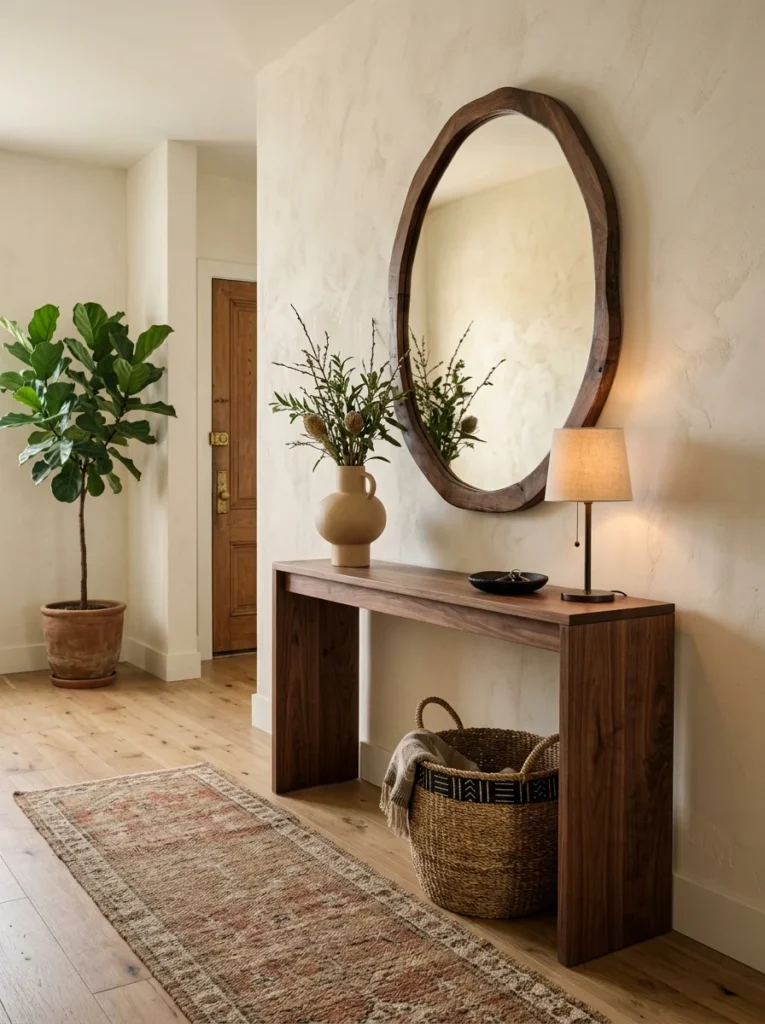
A minimal Afrohemian entryway can make a strong first impression without relying on excessive decoration. Begin with a slim wood console, oversized organic mirror, woven basket, and one sculptural ceramic piece. Keep the color palette centered on cream, tan, walnut, and charcoal. A textured runner can introduce subtle pattern while visually connecting the entryway with the rest of the home.
Because the entryway is usually a smaller space, editing is especially important. Choose only a few meaningful pieces and allow the natural materials to provide most of the visual interest. A warm wall light or small table lamp can add a welcoming glow in the evening. The result feels calm, intentional, and effortlessly stylish rather than crowded with decorative objects.
28. Ultimate Warm Eclectic Afrohemian Home
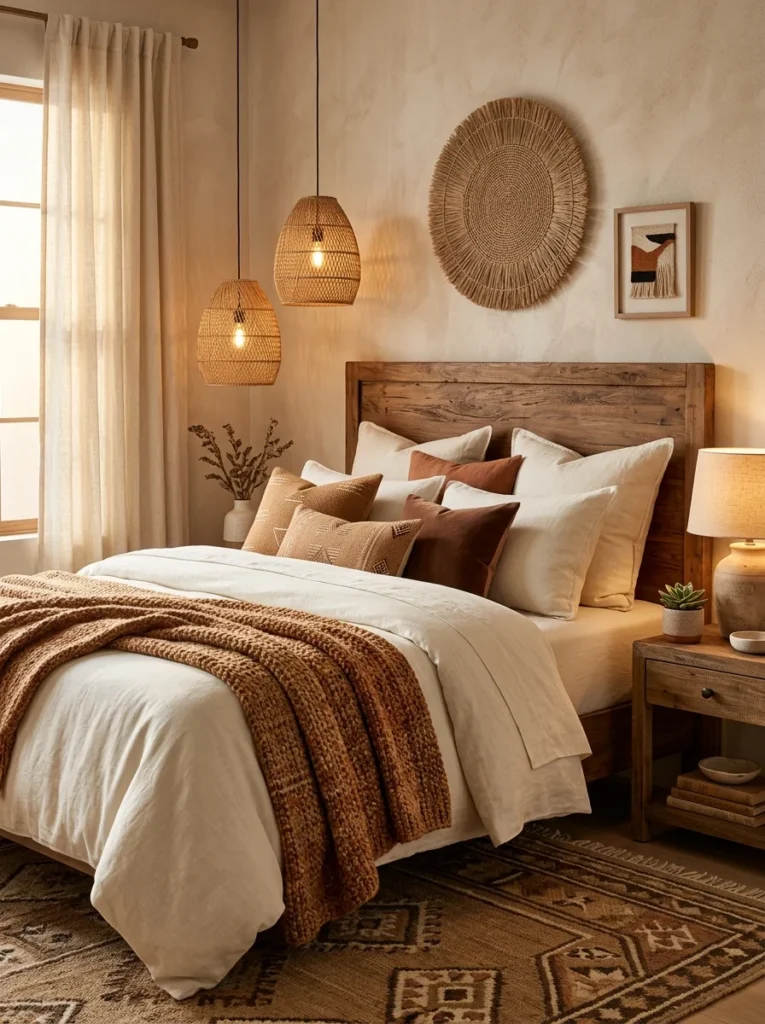
Bring the entire style together by layering the strongest Afrohemian elements throughout the home rather than concentrating everything in one room. Repeat warm wood, woven textures, earthy ceramics, natural fibers, expressive artwork, and selected patterns across living areas, bedrooms, dining spaces, and hallways. Keep the overall palette connected through cream, caramel, terracotta, cocoa, olive, and charcoal.
The most successful Afrohemian homes feel collected over time rather than decorated all at once. Mix contemporary furniture with vintage-inspired pieces, handcrafted-looking accessories, organic greenery, and meaningful artwork. Leave enough negative space for every beautiful detail to breathe. By balancing texture with simplicity and pattern with calm neutrals, you can create a warm eclectic home that feels luxurious, personal, welcoming, and timeless.