
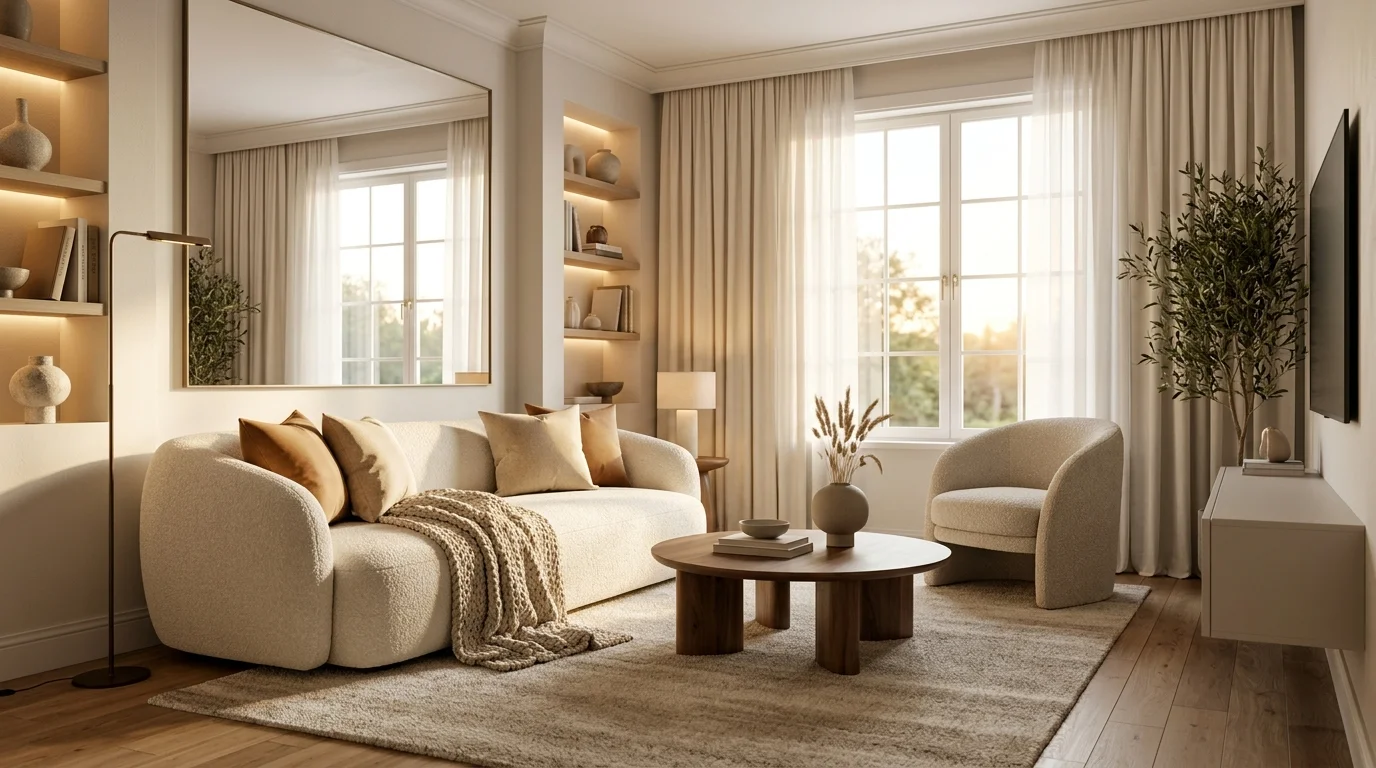
A small living room can feel surprisingly spacious, stylish, and inviting when every detail is chosen with intention. The secret is not simply adding less furniture—it is creating better flow, using smart proportions, and layering warmth without overwhelming the room. From multifunctional furniture and clever storage to elegant lighting and cozy textures, these small living room ideas can help transform a compact space into a beautiful retreat that feels polished, comfortable, and distinctly personal.
1. Light Neutral Color Palette
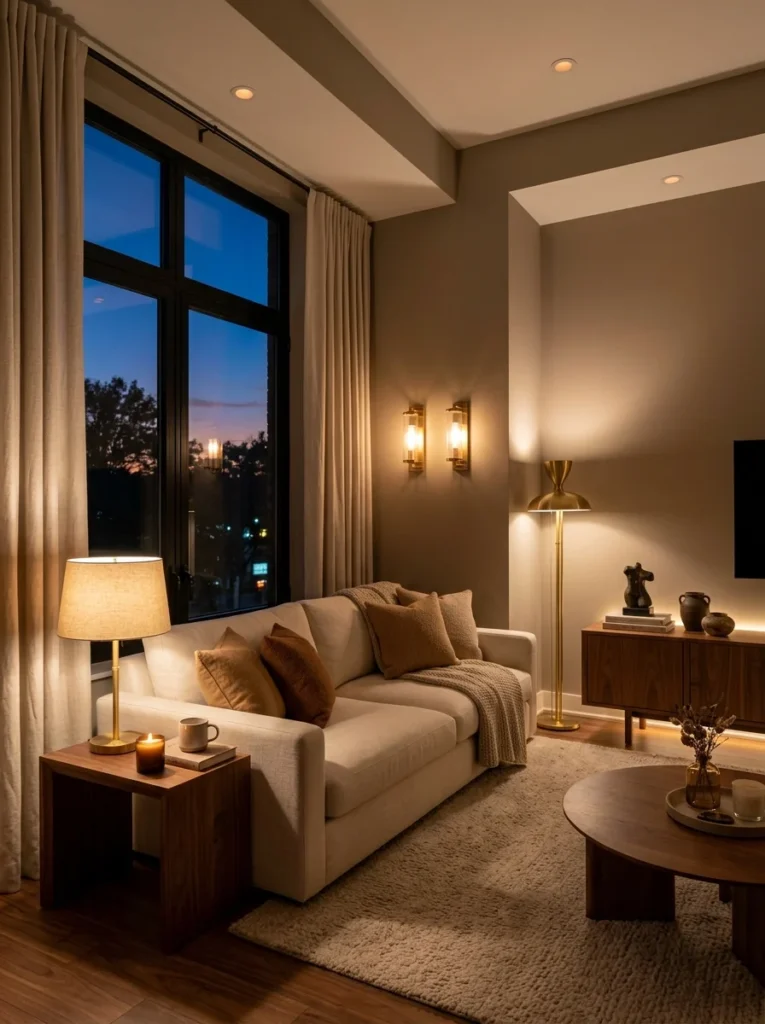
Use a soft palette of warm white, cream, beige, and light taupe to make a compact living room feel brighter and more open. Keep the walls and larger furniture pieces within similar tones so the eye can move smoothly around the space. Subtle texture from boucle upholstery, linen cushions, and a woven rug prevents the neutral scheme from feeling flat.
Add warmth through natural oak furniture, small ceramic accessories, and soft brass lighting. Instead of filling every surface with décor, choose a few beautiful pieces with plenty of breathing room around them. Large windows dressed in lightweight curtains can further enhance the airy feeling while maintaining a comfortable, sophisticated atmosphere.
2. Compact Sectional Sofa
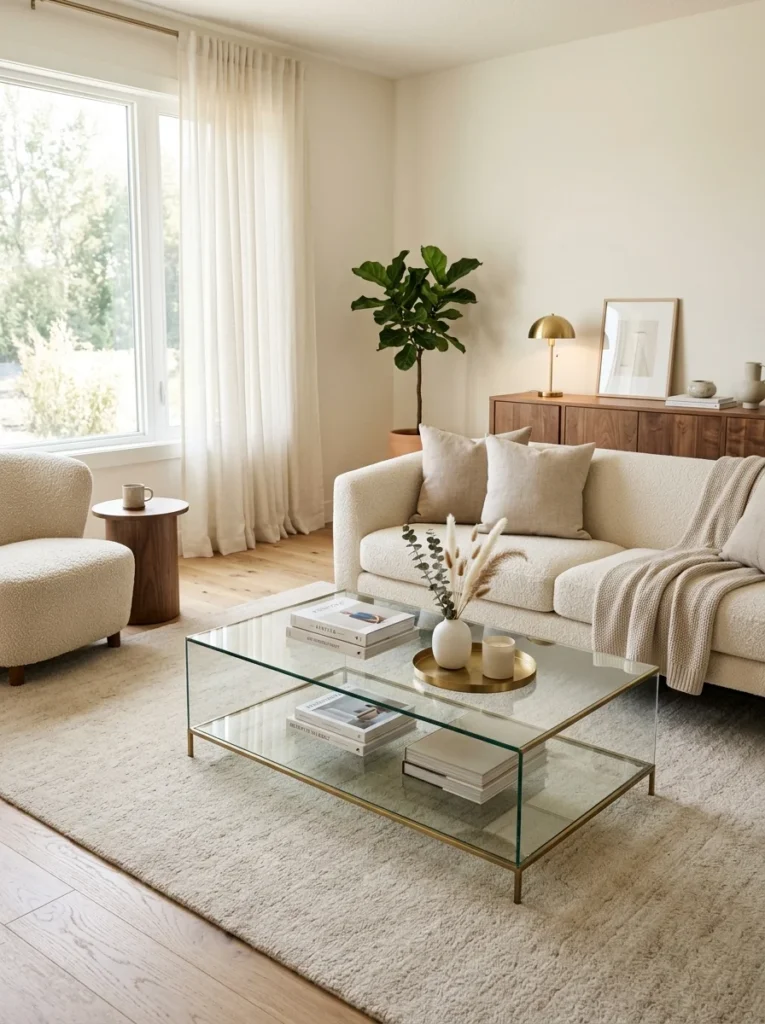
A compact sectional can make excellent use of limited floor space while providing plenty of comfortable seating. Choose a streamlined L-shaped design that fits neatly into a corner, preferably with raised legs that allow more flooring to remain visible underneath. A warm cream, oatmeal, or light gray upholstery keeps the room visually light.
Complete the sectional with a small round coffee table and one lightweight accent chair. Avoid bulky side tables that interrupt circulation. Layer a few textured cushions and a soft throw over the sofa to introduce warmth while maintaining the clean, organized appearance that makes a small room feel more spacious.
3. Round Coffee Table
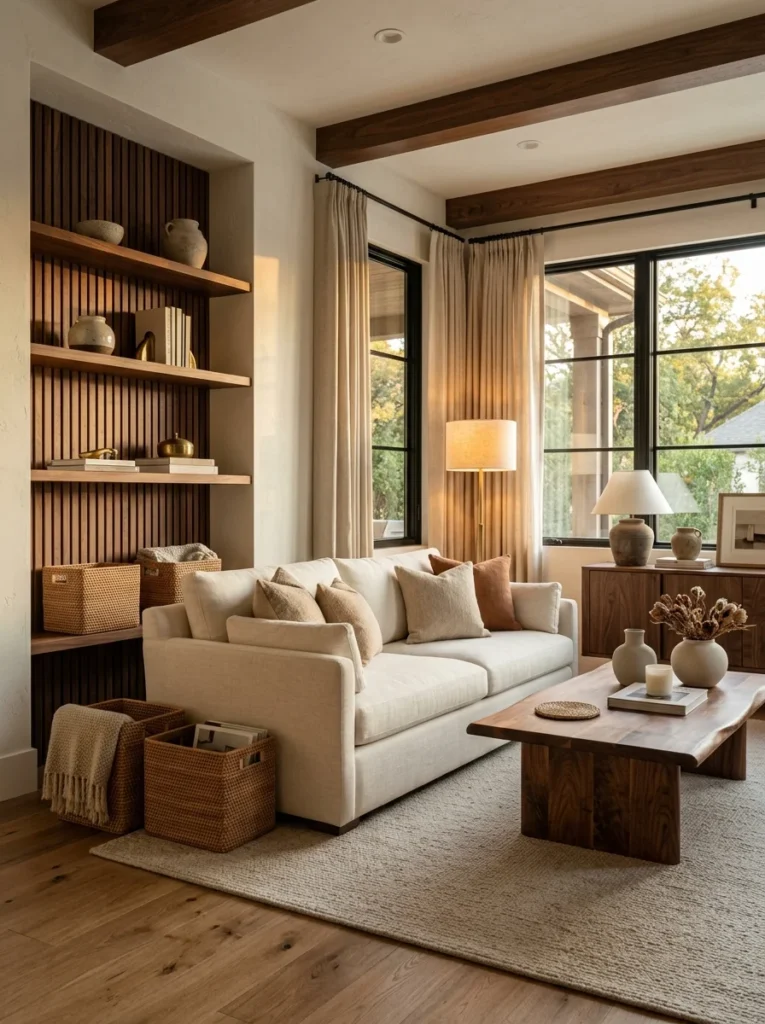
A round coffee table can dramatically improve the flow of a compact living room because it eliminates sharp corners and creates easier pathways around the seating area. Choose a sculptural wood, stone, or glass design that provides function without visually dominating the room.
Place the table centrally in front of the sofa and leave comfortable walking space around it. A small tray can organize candles, a ceramic vase, or a coffee-table book. Pairing a round table with a streamlined sofa creates a softer, more fluid layout that feels both practical and sophisticated.
4. Wall-Mounted TV
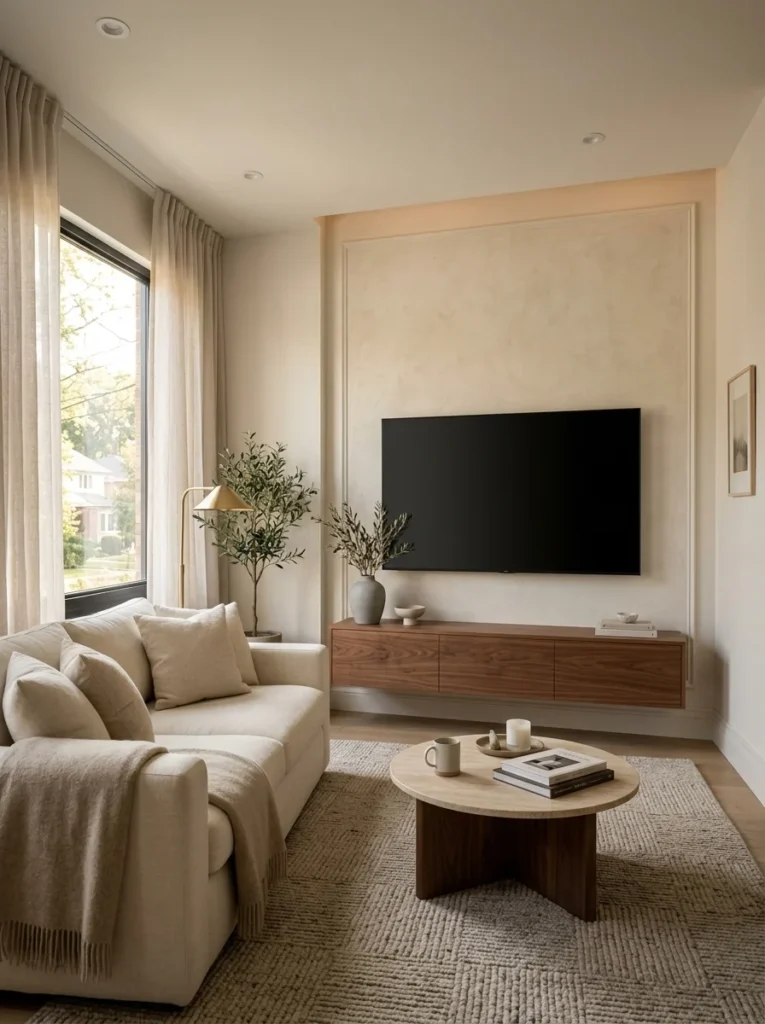
Free up valuable floor space by mounting the television directly onto the wall. This approach eliminates the need for a large entertainment cabinet and gives the room a cleaner, more contemporary appearance. A slim floating console beneath the television can still provide discreet storage for electronics and accessories.
Frame the television area with warm wood paneling, textured plaster, or a simple gallery arrangement to make it feel intentional. Keep the surrounding décor minimal so the wall does not become visually crowded. Hidden cable management is especially important because a clean wall instantly makes a small living room feel more polished.
5. Built-In Storage
Built-in storage can turn awkward walls into highly functional features without consuming additional floor space. Consider custom shelving around the television, a combination of closed cabinets and open niches, or low built-ins beneath windows. Matching the cabinetry to the wall color can make the entire installation feel seamless.
Use open shelves for a curated selection of books, ceramics, artwork, and greenery while keeping everyday clutter behind closed doors. Incorporate warm wood or subtle brass hardware to add personality. The result is a living room that feels organized and sophisticated rather than cramped by visible belongings.
6. Slim Furniture
Choosing furniture with a slim silhouette is one of the easiest ways to make a small living room feel larger. Look for sofas with narrow arms, lightweight accent chairs, slender-legged tables, and compact consoles. Furniture that sits slightly above the floor can also create a stronger sense of openness.
Avoid oversized pieces that technically fit but make movement difficult. Instead, prioritize comfortable proportions that leave visible pathways around the room. A few carefully selected pieces can create a much more luxurious impression than a crowded arrangement filled with furniture that competes for attention.
7. Floor-to-Ceiling Curtains
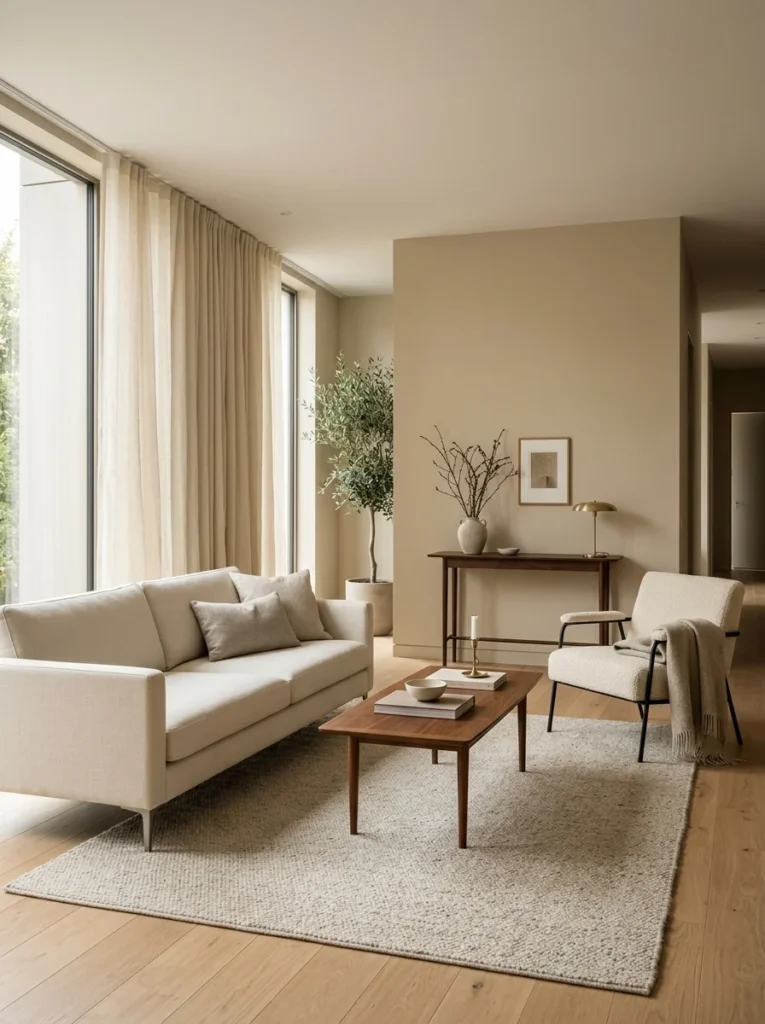
Floor-to-ceiling curtains can visually stretch a small living room upward, making the ceiling appear taller and the windows more dramatic. Hang the curtain rod slightly above the window frame and extend it wider than the glass so the curtains frame the window rather than covering it.
Choose soft linen or lightweight textured fabric in cream, warm white, or beige. When natural sunlight passes through the material, it creates a beautiful diffused glow. The combination of vertical fabric and abundant daylight can make even a compact living room feel elegant, airy, and substantially more inviting.
8. Cozy Corner Sofa
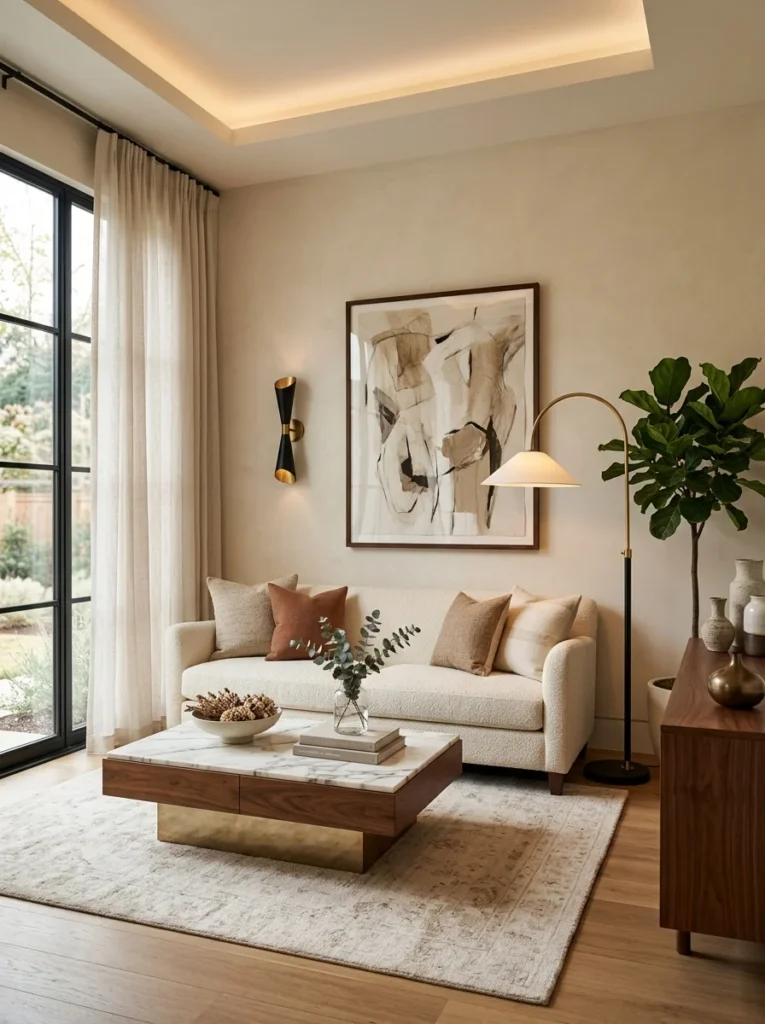
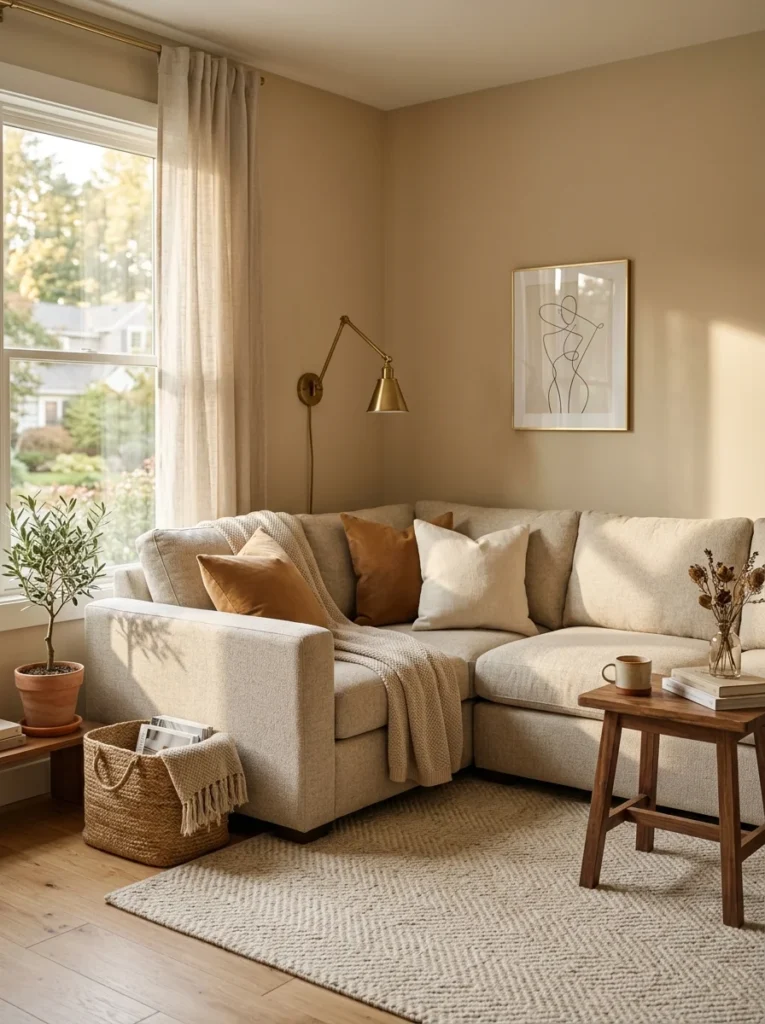
Make an unused corner work harder by placing a compact sofa or loveseat directly against two walls. This arrangement creates a dedicated conversation area while preserving valuable central floor space. Choose a plush but streamlined silhouette in warm neutral upholstery for a comfortable yet polished appearance.
Add a narrow side table and wall-mounted lamp rather than bulky furniture beside the sofa. A textured rug can anchor the seating area without overwhelming the room. Finish with layered cushions in cream, caramel, and muted earthy tones for a cozy atmosphere that still feels visually organized.
9. Large Mirror
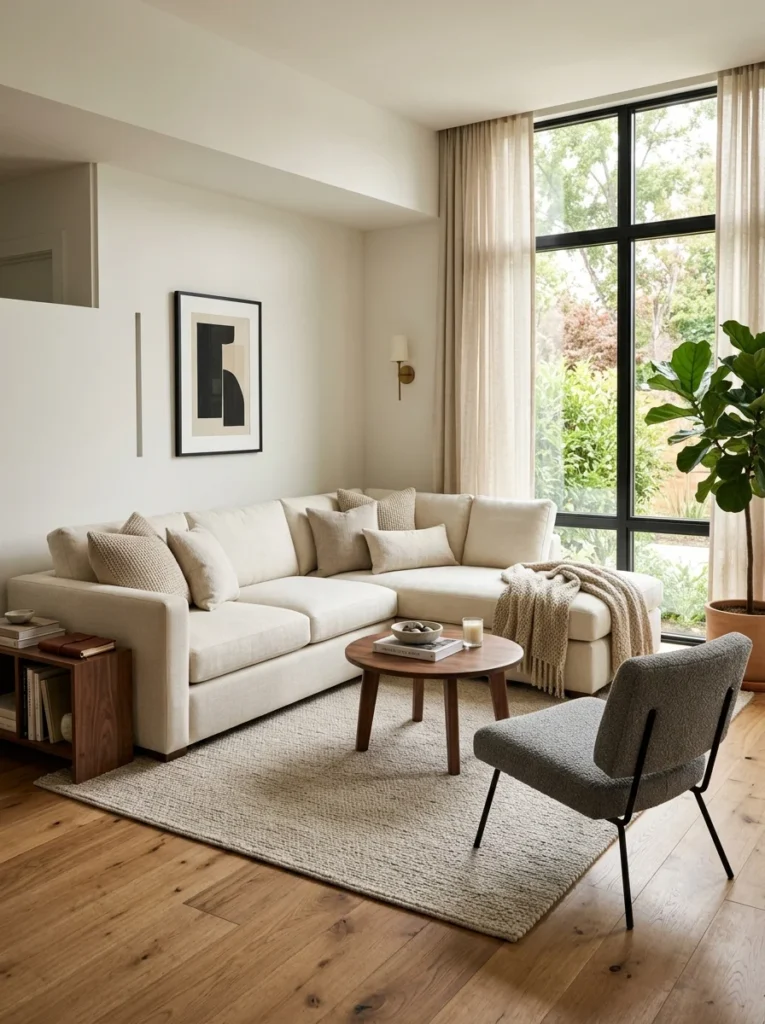
A strategically positioned oversized mirror can make a small living room feel considerably brighter and more open. Place it opposite a window when possible so it reflects natural light and visually doubles some of the room’s brightness. Choose a thin-framed design in aged brass, natural wood, or matte black.
Instead of using several small mirrors, let one substantial piece become the room’s focal point. Position a slim console beneath it with only a few decorative objects. This creates a sophisticated vignette while maximizing the reflective quality that helps a compact space feel more expansive.
10. Floating Shelves
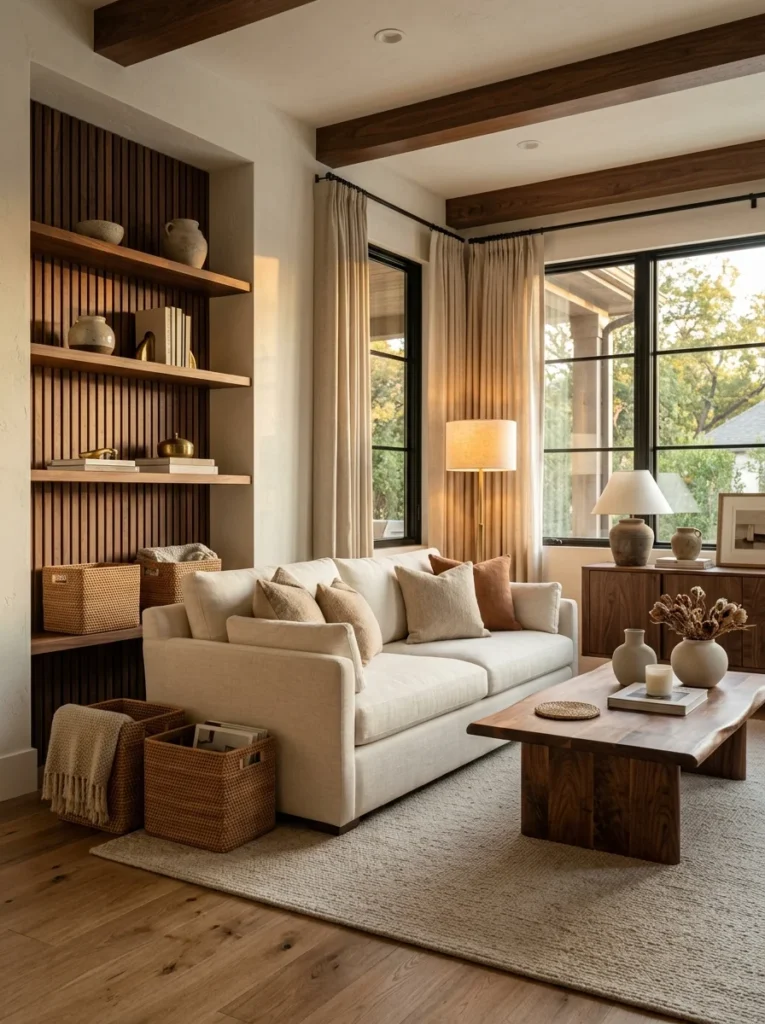
Floating shelves provide useful display and storage without taking up valuable floor area. Install two or three streamlined shelves on an empty wall and style them with books, small framed artwork, ceramics, and a few plants. Keep some areas intentionally empty so the display does not feel overcrowded.
Choose shelf materials that complement the room’s existing furniture. Warm oak works beautifully with neutral upholstery, while dark walnut adds contrast to lighter walls. Use baskets or decorative boxes for smaller items that need to remain accessible but visually contained.
11. Hidden Storage Ottoman
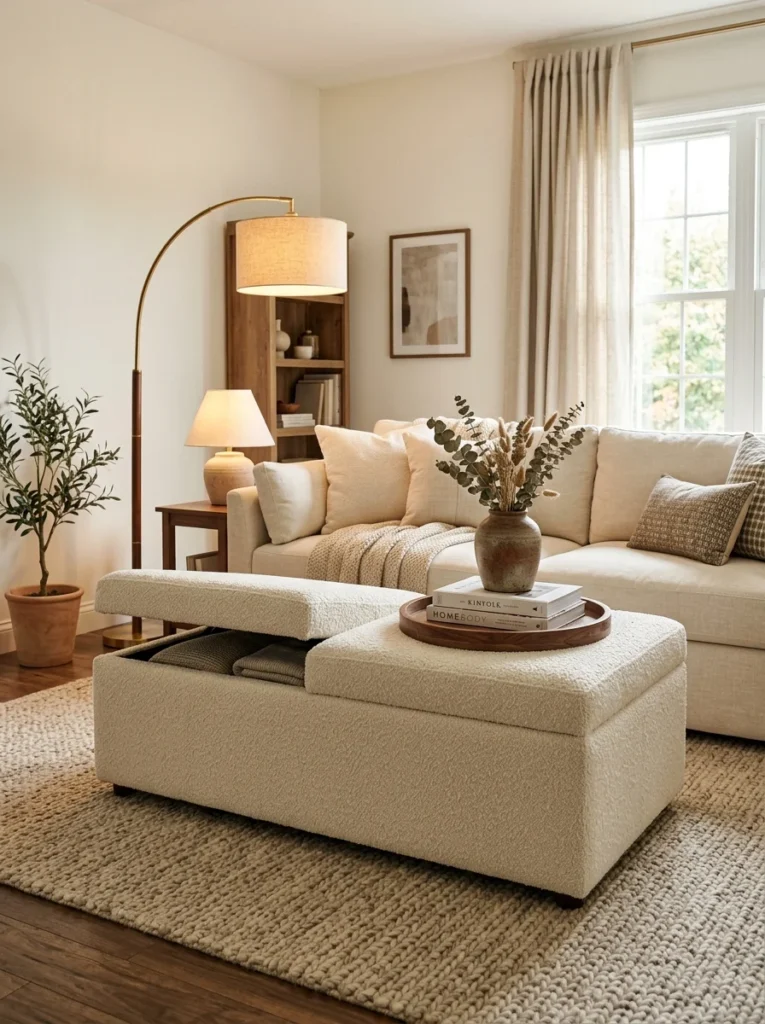
A storage ottoman can serve as seating, a footrest, a coffee table, and a secret place to hide blankets or everyday clutter. Choose a compact upholstered design that coordinates with the sofa and place a decorative tray on top when you need a stable surface.
Look for soft fabrics such as boucle, velvet, or textured linen to introduce another tactile element. This multifunctional piece is especially valuable in a small room because it reduces the number of separate furniture items needed while keeping the space comfortable and flexible.
12. Warm Wood Accents
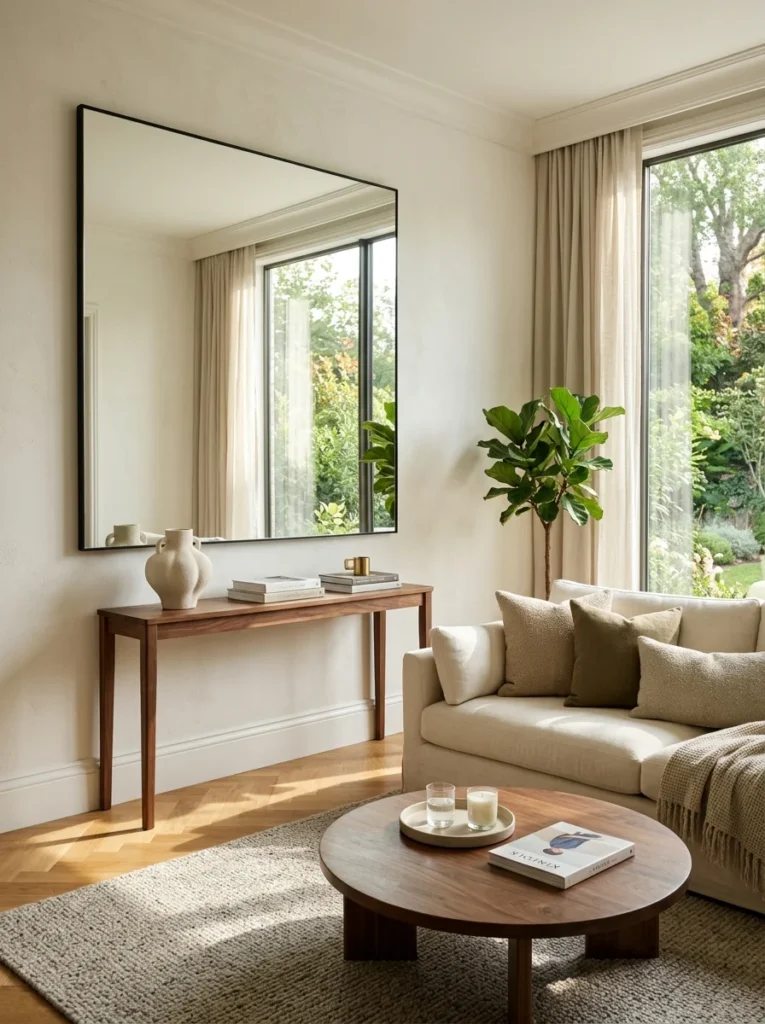
Natural wood can instantly make a small living room feel warmer and more sophisticated. Introduce walnut, oak, or warm-toned ash through a coffee table, floating shelves, media console, or accent chair. Keeping the wood tones consistent creates visual continuity and makes the room feel intentionally designed.
Balance the wood with creamy upholstery and soft textiles so the space does not become visually heavy. Add woven baskets, ceramic décor, and warm lighting for additional texture. The combination of natural materials creates a cozy atmosphere that feels timeless rather than overly decorated.
13. Small Living Room With Fireplace
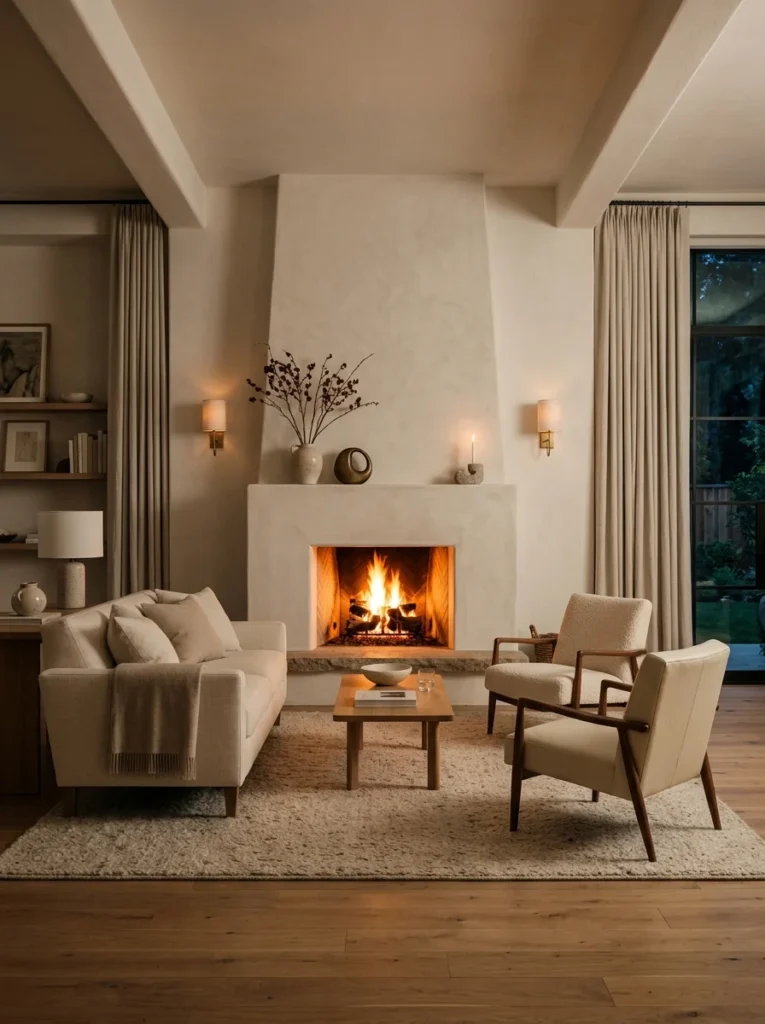
If your compact living room includes a fireplace, make it the primary architectural focal point. A simple plaster, stone, or painted fireplace can anchor the entire seating arrangement while eliminating the need for excessive decorative features. Position a compact sofa and two lightweight chairs around it to encourage conversation.
Keep the mantel styling restrained with a sculptural vase, framed artwork, or a few candles. A textured rug can visually connect the furniture while soft lighting emphasizes the fireplace after sunset. The result is an intimate living room that feels luxurious despite its limited footprint.
14. Accent Wall
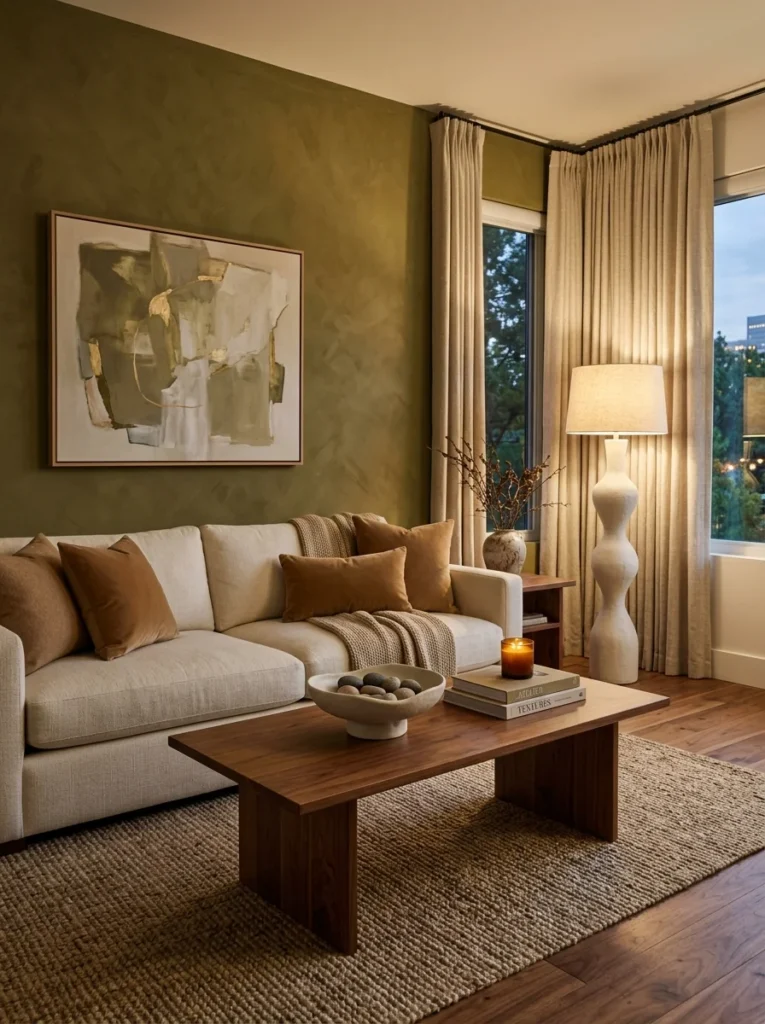
An accent wall can add personality and depth without requiring additional furniture. Consider warm limewash, muted olive paint, textured beige wallpaper, or vertical wood paneling behind the sofa. The feature creates a visual focal point while keeping the rest of the room relatively simple.
Coordinate the accent wall with cushions, artwork, and accessories rather than introducing completely unrelated colors. A cohesive palette helps the room feel intentional. Add soft lighting directed toward the wall to emphasize its texture and create a warm evening atmosphere.
15. Minimalist Gallery Wall
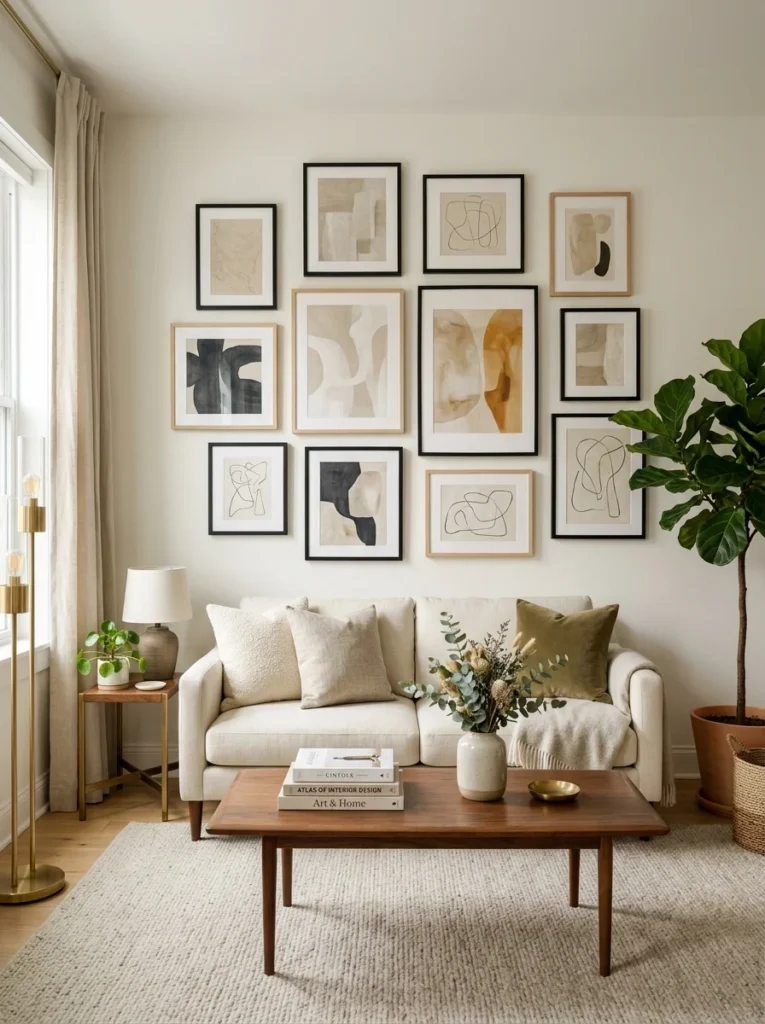
A carefully edited gallery wall can add character to a small living room without consuming any floor space. Select a handful of artwork pieces with related colors, frames, or visual themes. Instead of covering the entire wall, create a balanced arrangement above the sofa or console.
Use warm neutrals, abstract forms, photography, or subtle botanical artwork for a sophisticated appearance. Keep the surrounding furniture simple so the gallery remains visually important. This approach adds personality and makes the room feel finished without creating the clutter that can overwhelm compact spaces.
16. Layered Area Rugs
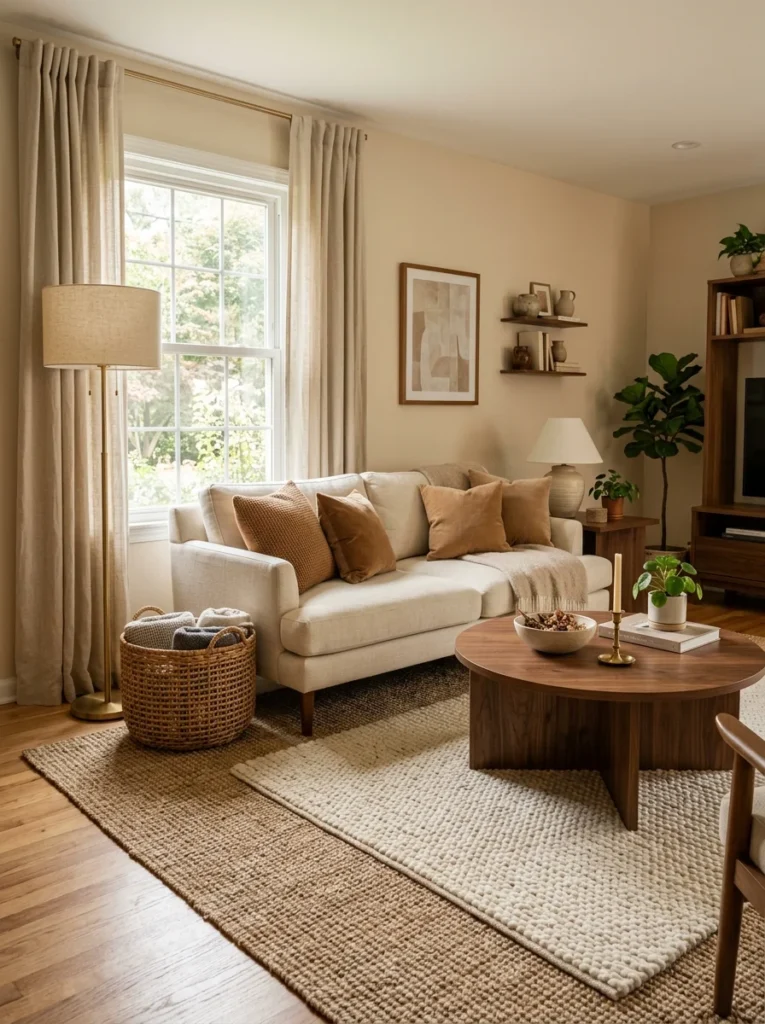
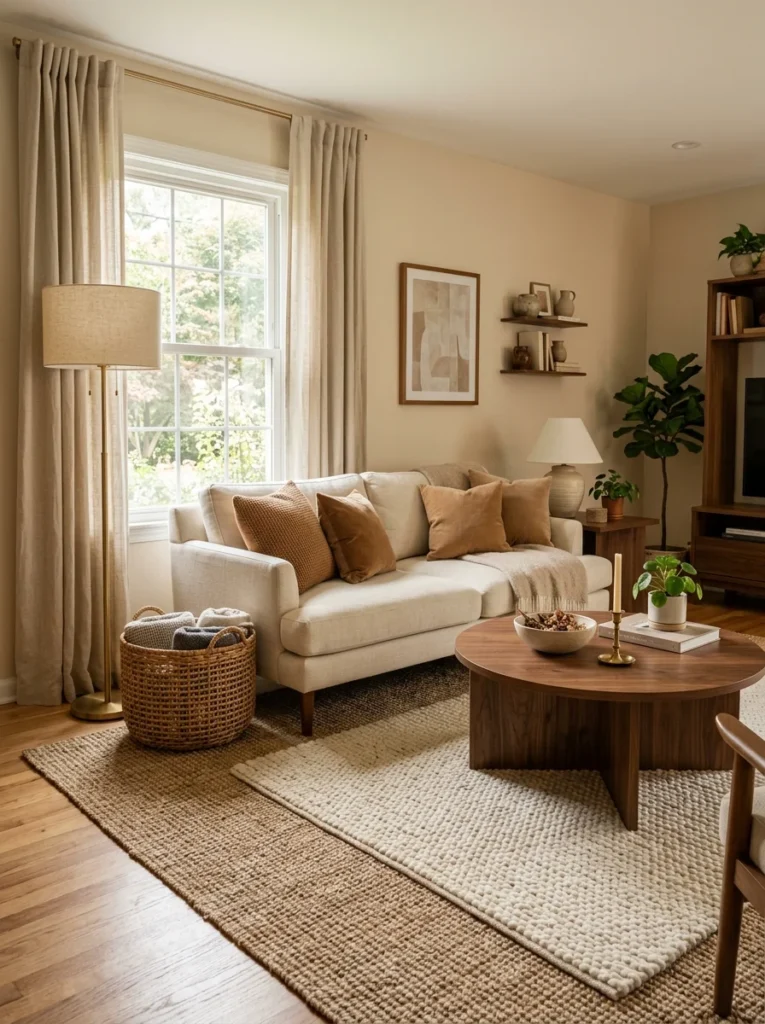
Layering rugs can give a small living room greater warmth and visual depth. Start with a larger neutral base rug and place a smaller textured or patterned rug beneath the coffee table or seating area. This technique can help define zones while adding softness underfoot.
Keep the colors related so the layered look feels intentional rather than chaotic. Natural fibers, wool, and subtle geometric patterns work especially well. Combine the rugs with linen upholstery and warm wood furniture to create a cozy, elevated living room with plenty of tactile interest.
17. Statement Floor Lamp
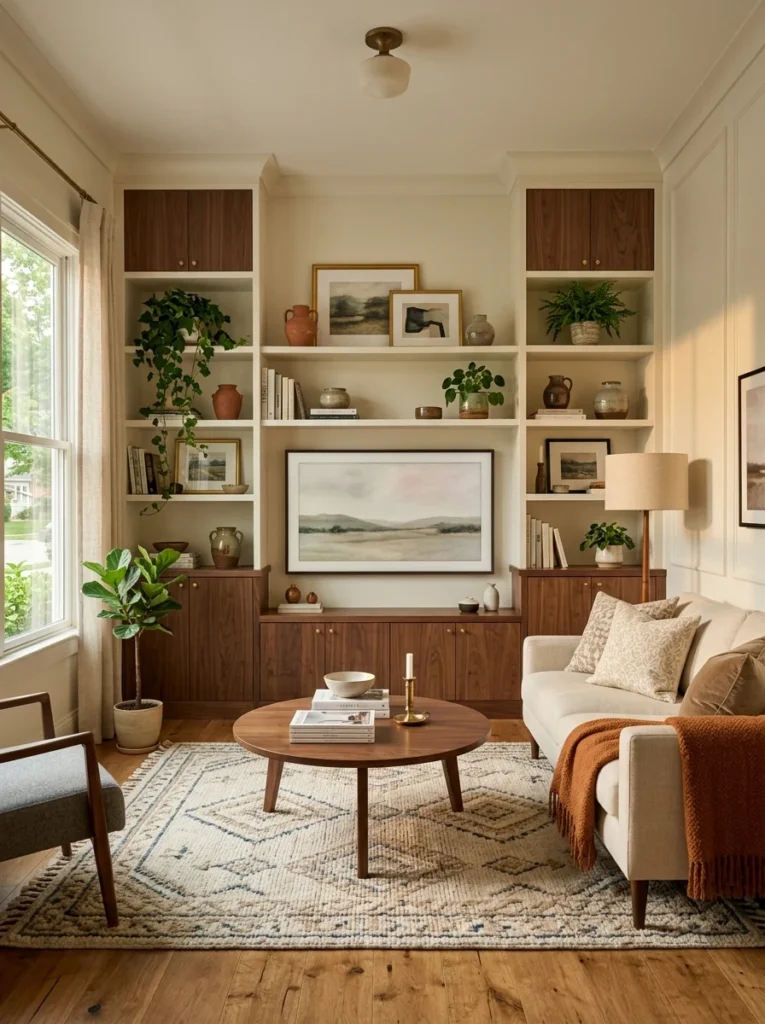
A sculptural floor lamp can provide both lighting and personality without taking up much visual space. Choose a slim arched design, elegant tripod silhouette, or minimalist vertical lamp that fits beside the sofa or in an unused corner.
Use warm illumination to create a cozy atmosphere in the evening. Because the lamp doubles as décor, there is no need to fill the room with additional accessories. Pair it with a small table lamp for layered lighting that makes the space feel intimate and sophisticated.
18. Glass Furniture
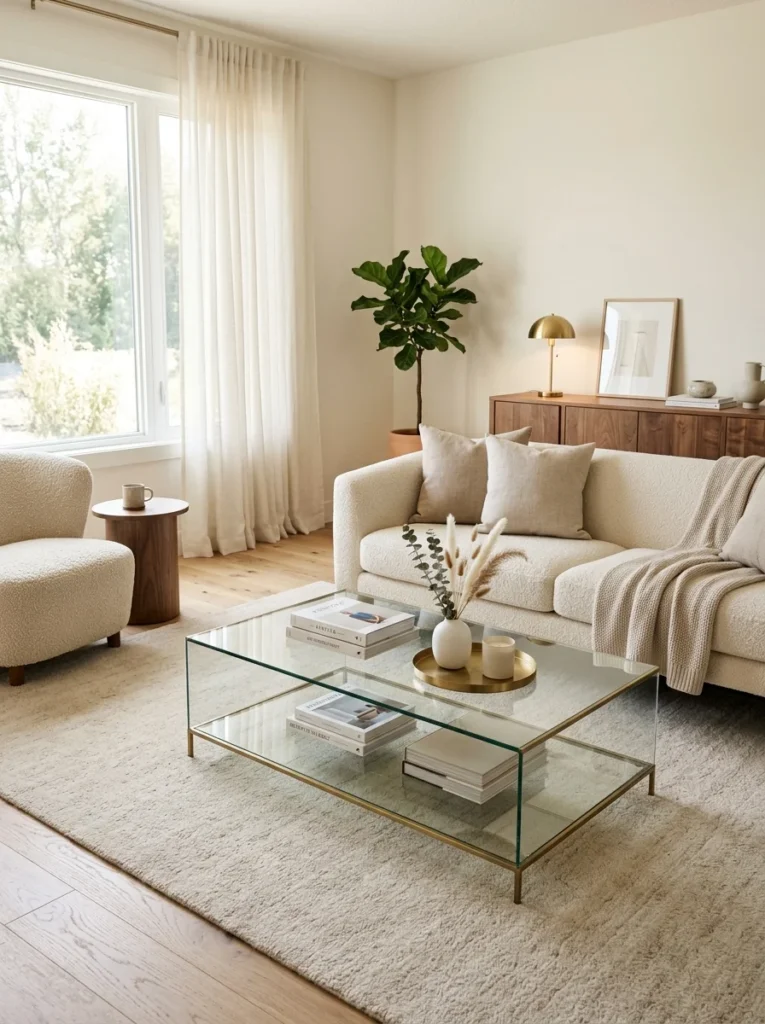
Transparent glass furniture can be an excellent choice when you want a small living room to feel visually lighter. A glass coffee table allows the flooring and rug beneath it to remain visible, creating the impression of more open space.
Pair the glass with warm wood, soft upholstery, and textured textiles so the room still feels comfortable. Avoid using too many transparent pieces because the goal is balance rather than a completely minimal aesthetic. One carefully chosen glass table can provide function while keeping the overall composition airy.
19. Multi-Functional Furniture
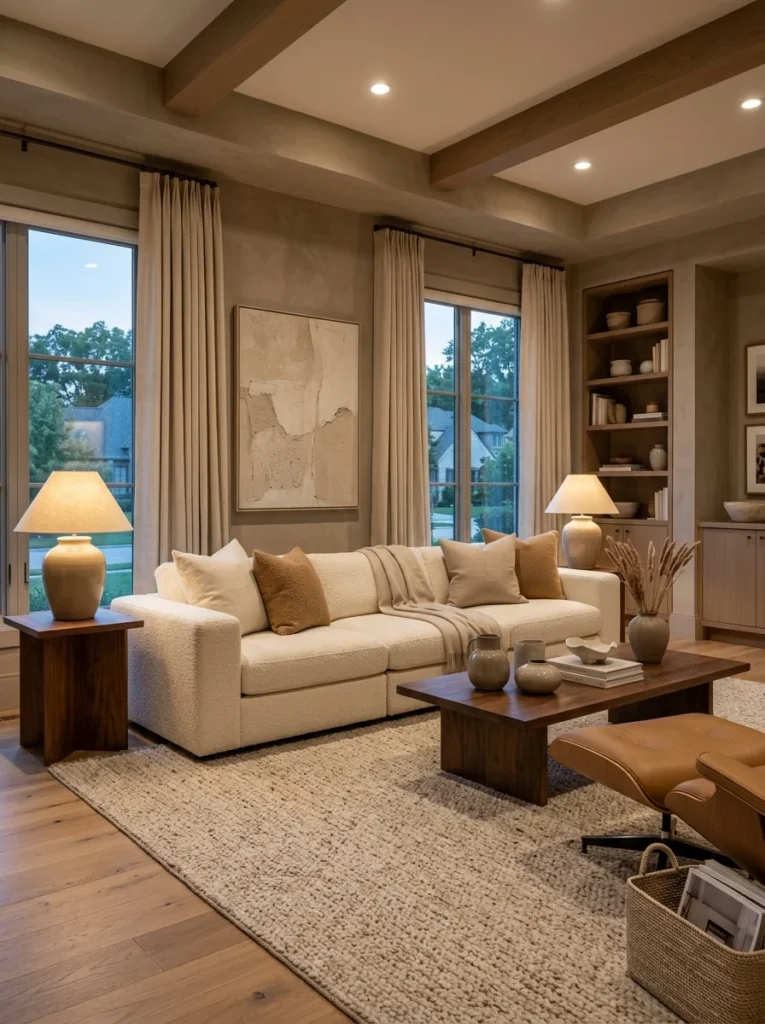
Every piece of furniture in a small living room can serve more than one purpose. Choose nesting tables, a sleeper sofa, storage benches, extendable coffee tables, or ottomans with hidden compartments. Flexible furniture allows the room to adapt easily for relaxing, entertaining, or working.
Keep multifunctional pieces visually sophisticated so the room does not feel purely utilitarian. Warm fabrics, natural wood, and elegant hardware can elevate practical designs. When furniture performs multiple jobs without looking bulky, a small living room becomes considerably easier to organize and enjoy.
20. Cozy Beige Living Room
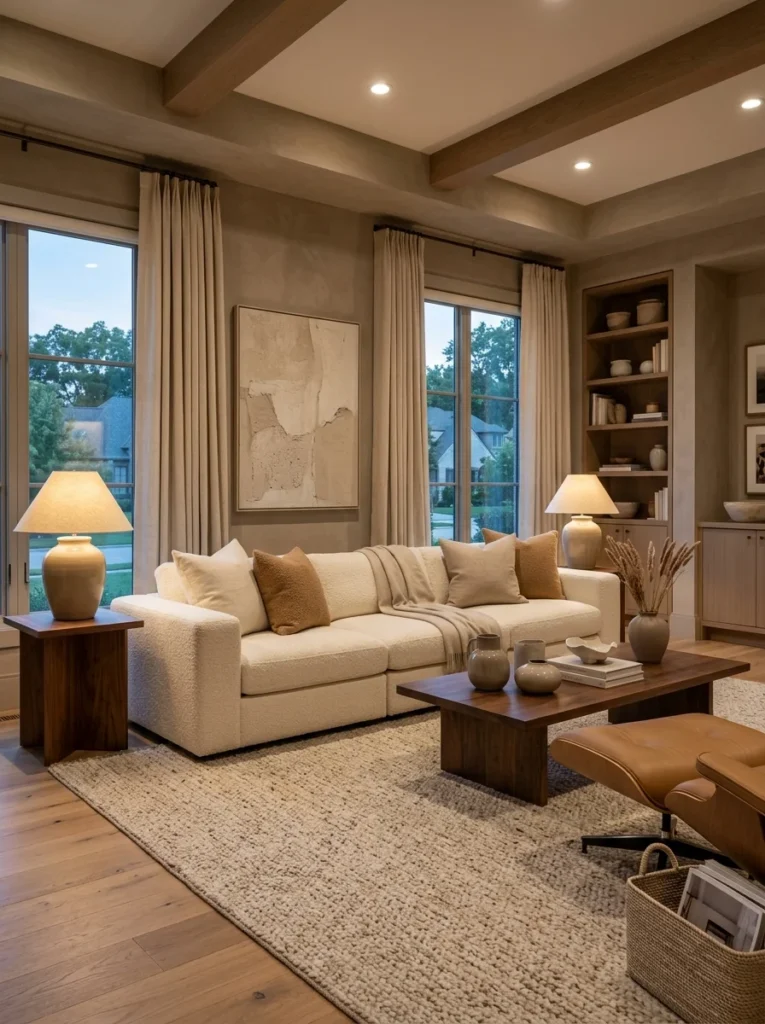
Create a calming retreat using different shades of beige, from creamy ivory to warm sand and mushroom taupe. Keep the sofa, rug, curtains, and walls within the same tonal family while varying their textures. This monochromatic approach makes the room feel cohesive and visually expansive.
Add warmth with walnut furniture, woven accessories, ceramic lamps, and caramel cushions. Soft ambient lighting can bring out the subtle variations between each beige tone after sunset. The result is a sophisticated neutral living room that feels cozy, modern, and timeless.
21. Plants for a Fresh Look
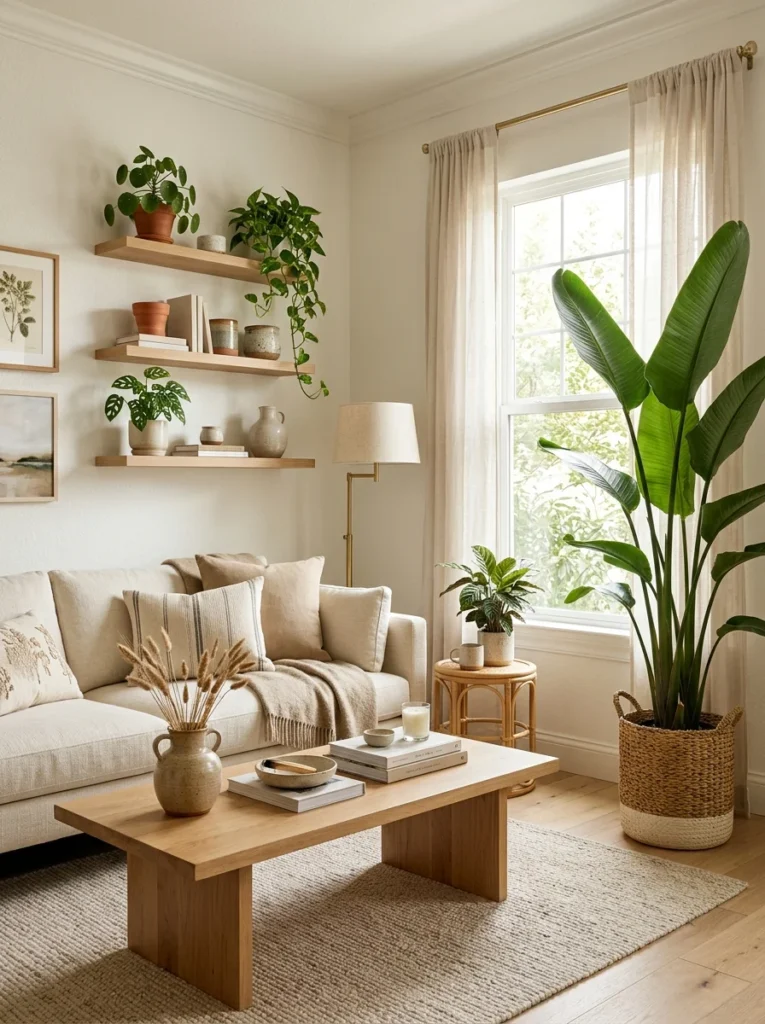
A few strategically placed plants can bring life and natural texture into a compact living room. Instead of filling every corner with greenery, choose one tall plant near a window and several smaller plants on shelves or a console. This creates visual height without consuming excessive floor space.
Use attractive ceramic or woven planters that complement the room’s palette. Green foliage looks especially beautiful against cream walls and warm wood. Keep the arrangement edited so the plants enhance the room’s cozy atmosphere rather than making the limited space feel crowded.
22. Cozy Window Seating
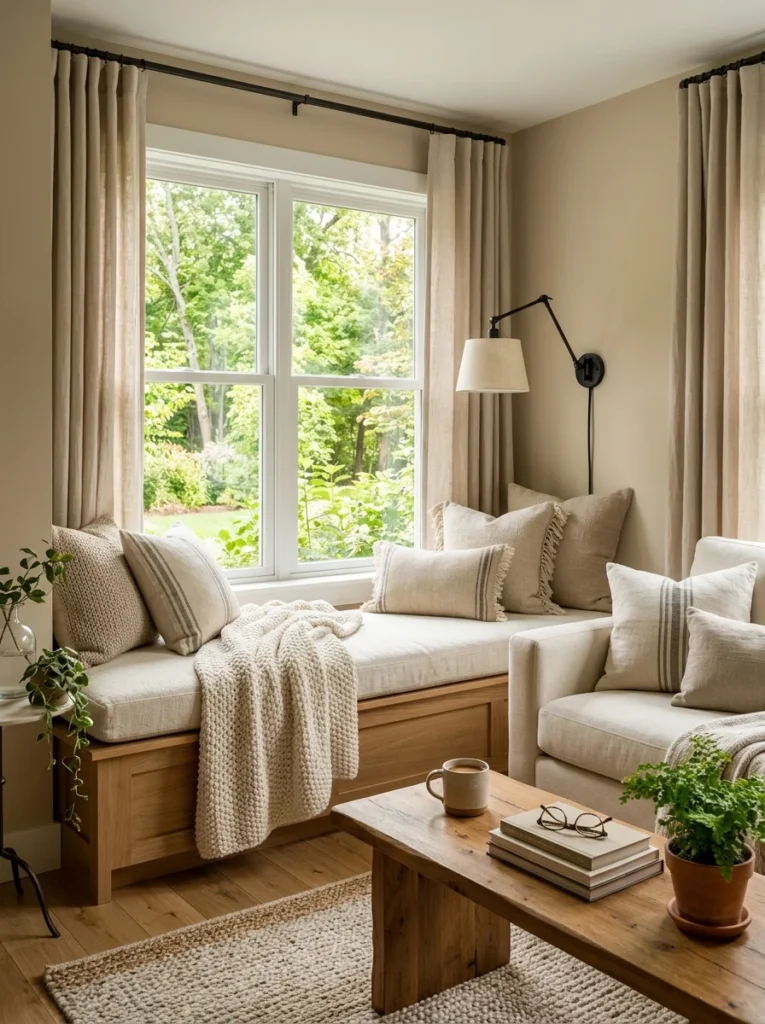
If your living room has a deep window or unused area beside a window, create a compact window seating nook. A custom cushion, two plush pillows, and a soft throw can transform the area into a comfortable reading or relaxing spot without requiring a conventional armchair.
Add a small wall-mounted light or slim side table to make the nook practical. Keep the surrounding furniture streamlined so the window remains visually prominent. Natural daylight, soft textiles, and a beautiful outdoor view can make this tiny corner one of the most appealing parts of the room.
23. Soft Ambient Lighting
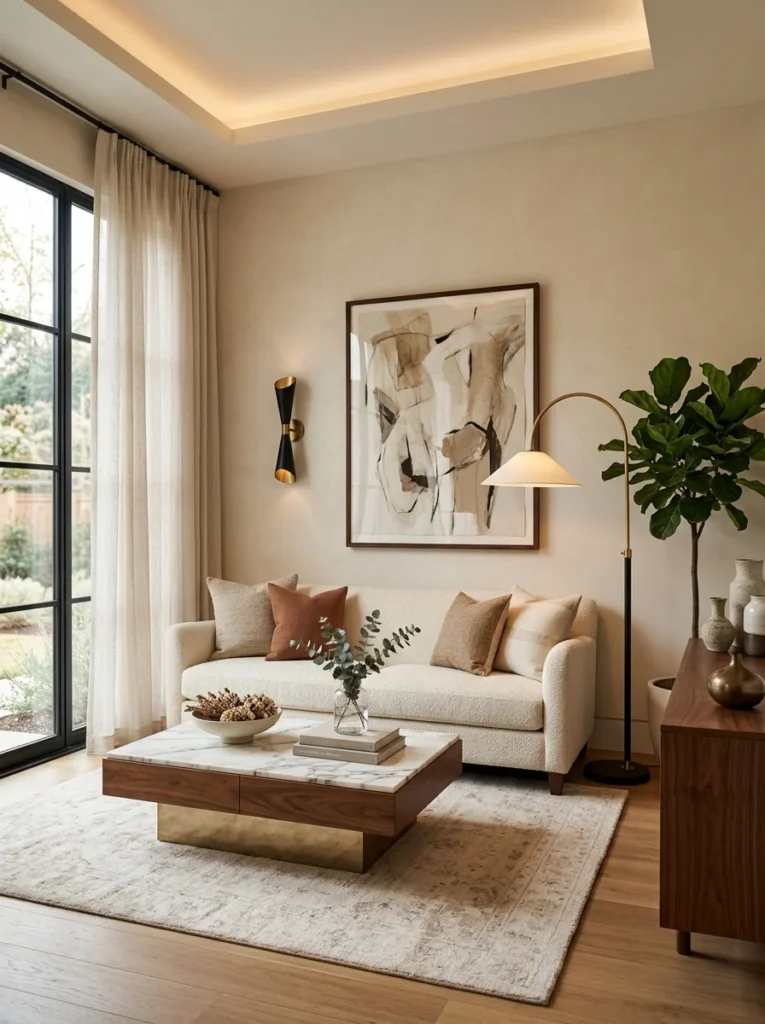
Lighting has an enormous impact on how spacious and comfortable a small living room feels. Combine ceiling lighting with table lamps, wall sconces, and subtle accent lighting instead of depending on one bright overhead fixture. Multiple warm light sources create depth and visually separate different areas.
Choose fixtures with elegant silhouettes that complement the furniture. A softly illuminated wall, glowing lamp beside the sofa, and subtle cabinet lighting can make the room feel layered and luxurious. Dimmable warm lighting is especially useful for shifting the atmosphere from daytime functionality to evening relaxation.
24. Scandinavian-Inspired Style
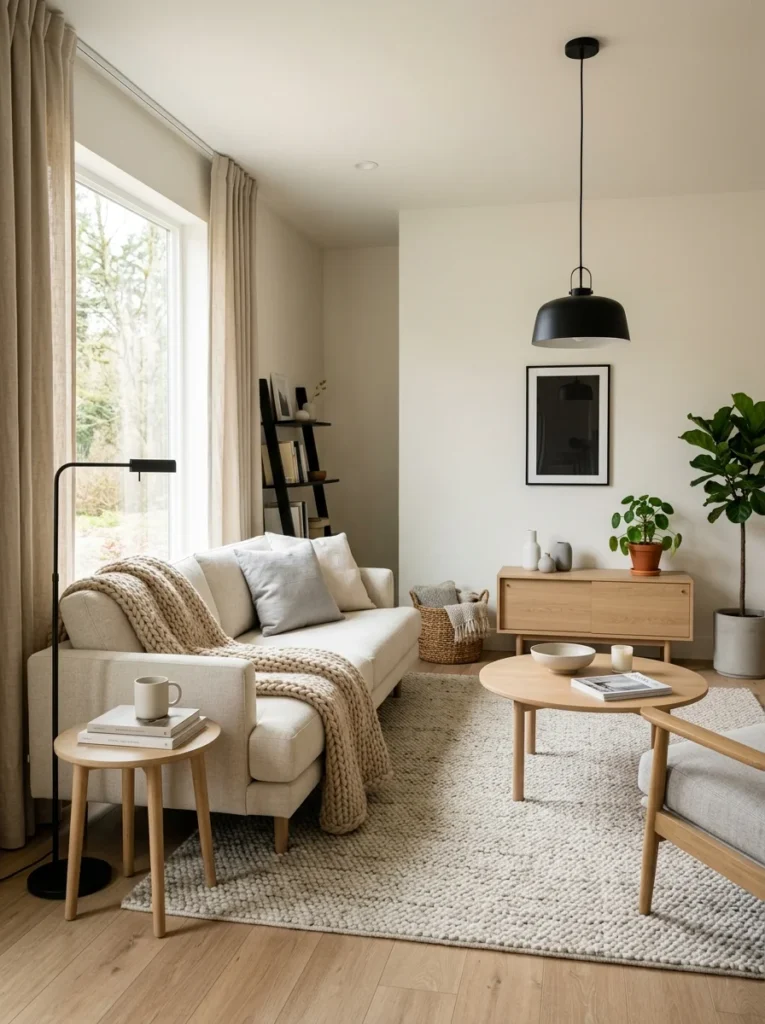
Scandinavian design works beautifully in small living rooms because it combines simplicity, functionality, and warmth. Use a light neutral palette, pale wood furniture, streamlined seating, and minimal décor. Keep the room uncluttered while introducing comfort through knitted throws, wool rugs, and soft cushions.
Add a few black or charcoal accents for definition without overwhelming the light palette. Natural daylight should remain central to the design, while warm lamps provide coziness after sunset. The finished room should feel clean and airy but never sterile or impersonal.
25. Luxe Small Living Room
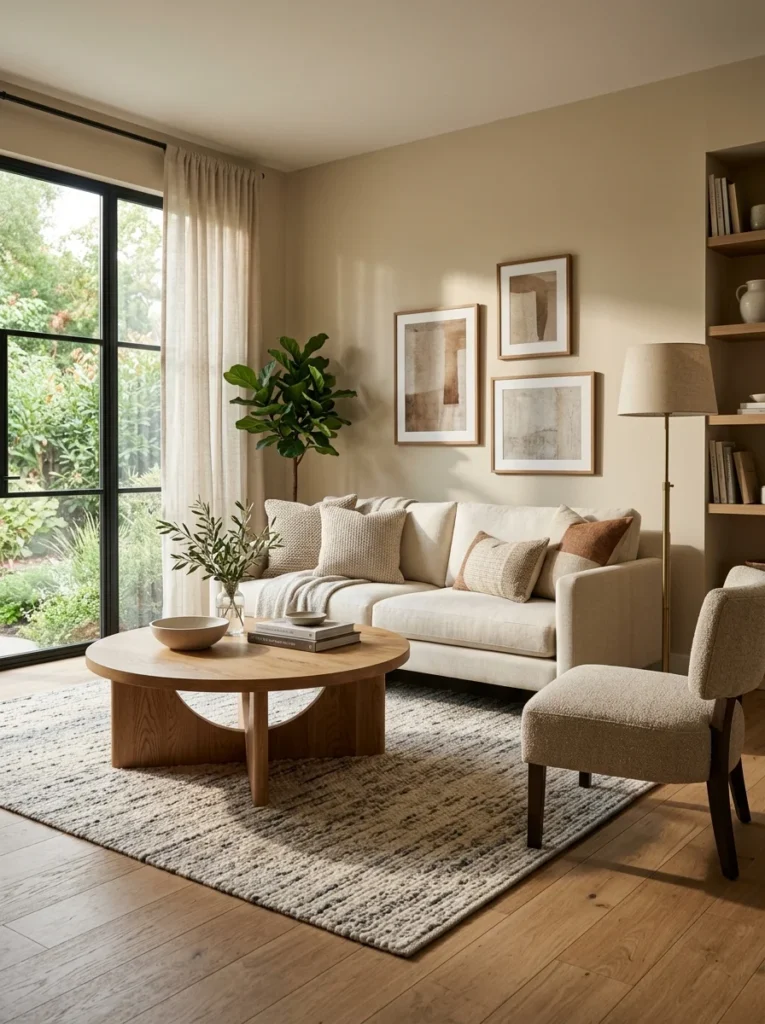
A small living room can still feel luxurious when you focus on quality, proportion, and carefully selected details. Choose a refined cream sofa, sculptural coffee table, elegant area rug, warm walnut accents, sophisticated artwork, and beautiful lighting. Avoid excessive furniture so each element has room to make an impact.
Introduce luxury through texture rather than clutter. Boucle, velvet, linen, marble, brass, and natural wood can create a rich sensory experience without requiring a large footprint. Finish with subtle greenery and warm ambient lighting to create a compact living room that feels polished, cozy, expensive, and effortlessly stylish.