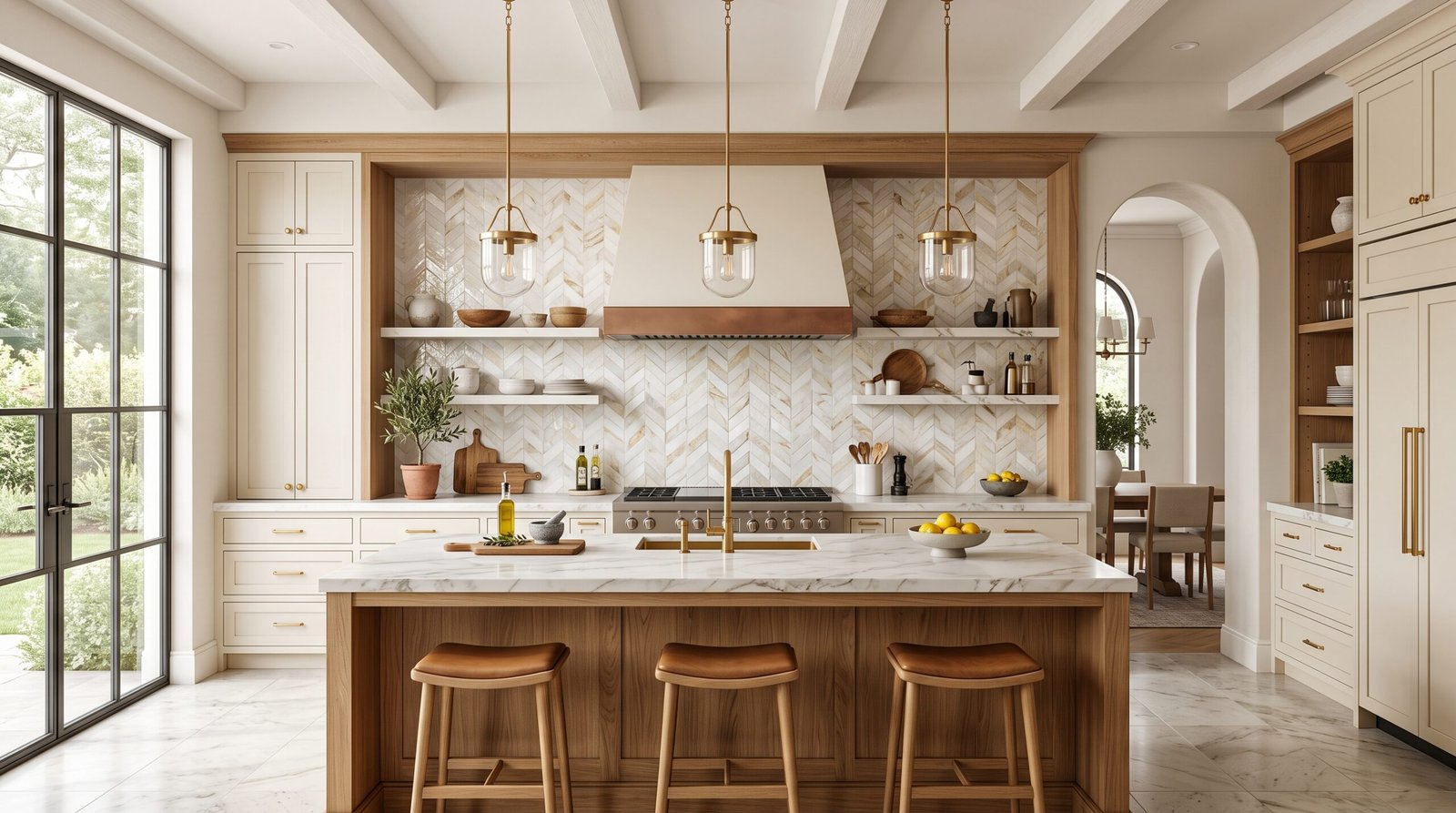
A backsplash can completely change the personality of a kitchen. It protects the walls, of course, but the right design can also bring together your cabinets, countertops, lighting, and hardware in a way that makes the entire room feel more intentional.
The best backsplash ideas aren’t always the loudest. Sometimes a softly veined stone creates quiet luxury, while a handmade tile adds character or a dramatic slab turns an ordinary cooking area into a true focal point. These 29 backsplash designs offer plenty of inspiration for creating a kitchen that feels stylish, warm, and beautifully finished.
1. Warm White Marble Backsplash
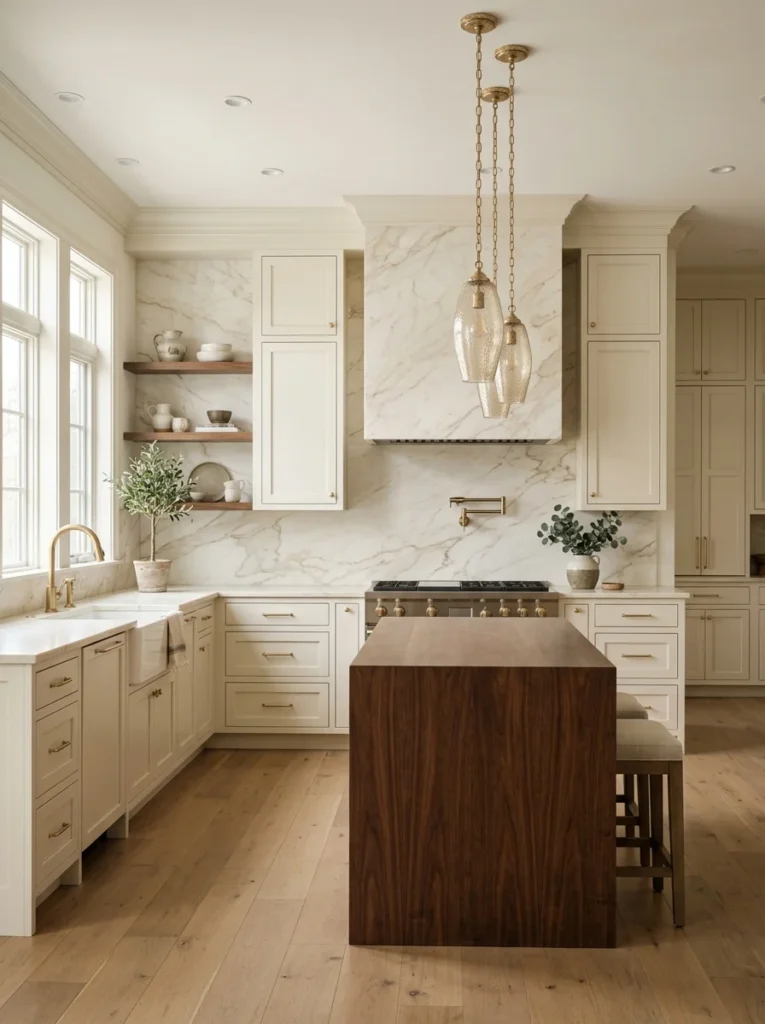
Warm white marble is a timeless choice when you want a kitchen to feel elegant without looking overly formal. Look for subtle beige or gray veining that works naturally with your cabinet color.
Pair it with warm wood, champagne-brass hardware, and creamy countertops. The result is sophisticated enough for a luxury kitchen while remaining comfortable for everyday family life.
2. Handmade Zellige Tile
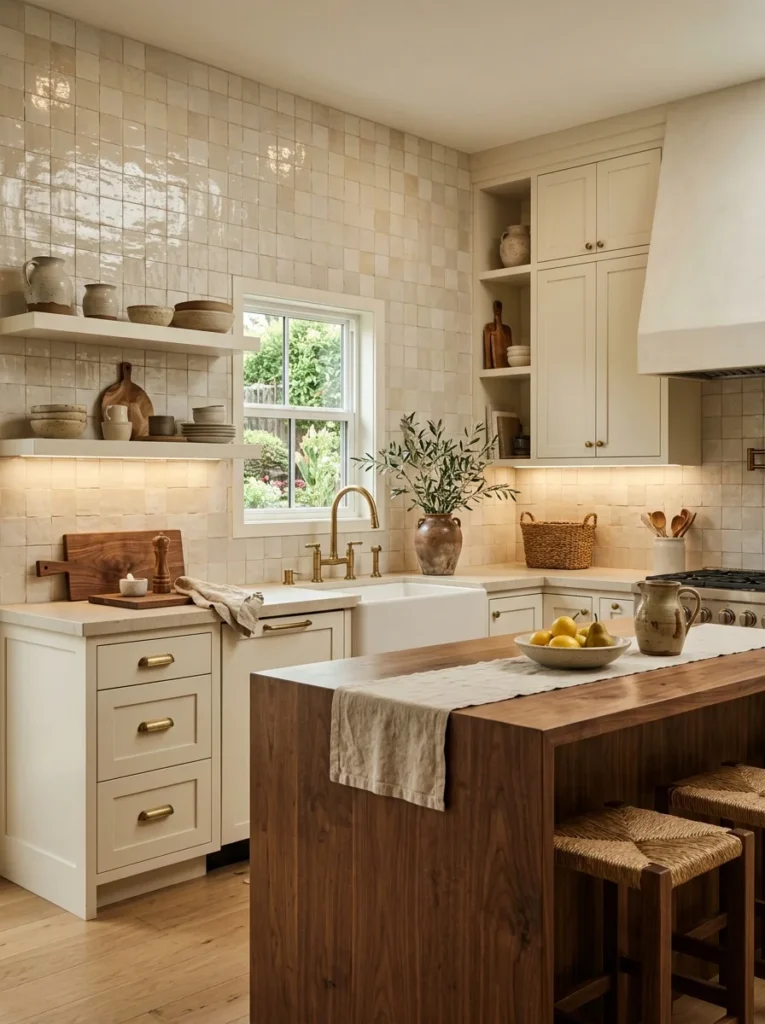
Handmade zellige tile brings character through its slight variations in color, texture, and surface. Even a simple white or cream version can create a beautifully layered backdrop.
Use it behind the range or across the entire countertop wall. Warm lighting will highlight the imperfect surfaces and give the kitchen a relaxed, artisan-inspired personality.
3. Dramatic Marble Slab
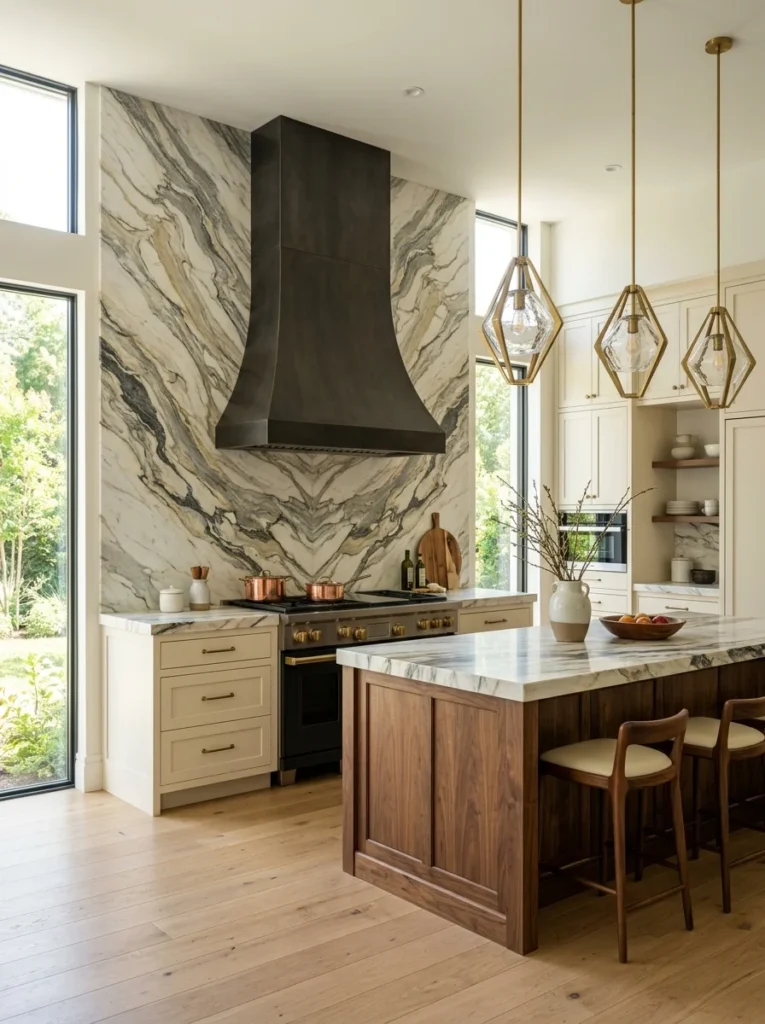
For maximum visual impact, extend a dramatic marble slab from the countertop up the wall. Strong natural veining can instantly turn the cooking area into the room’s centerpiece.
Keep cabinetry and accessories relatively restrained. This lets the stone provide the drama without making the kitchen feel visually crowded.
4. Soft Beige Subway Tile
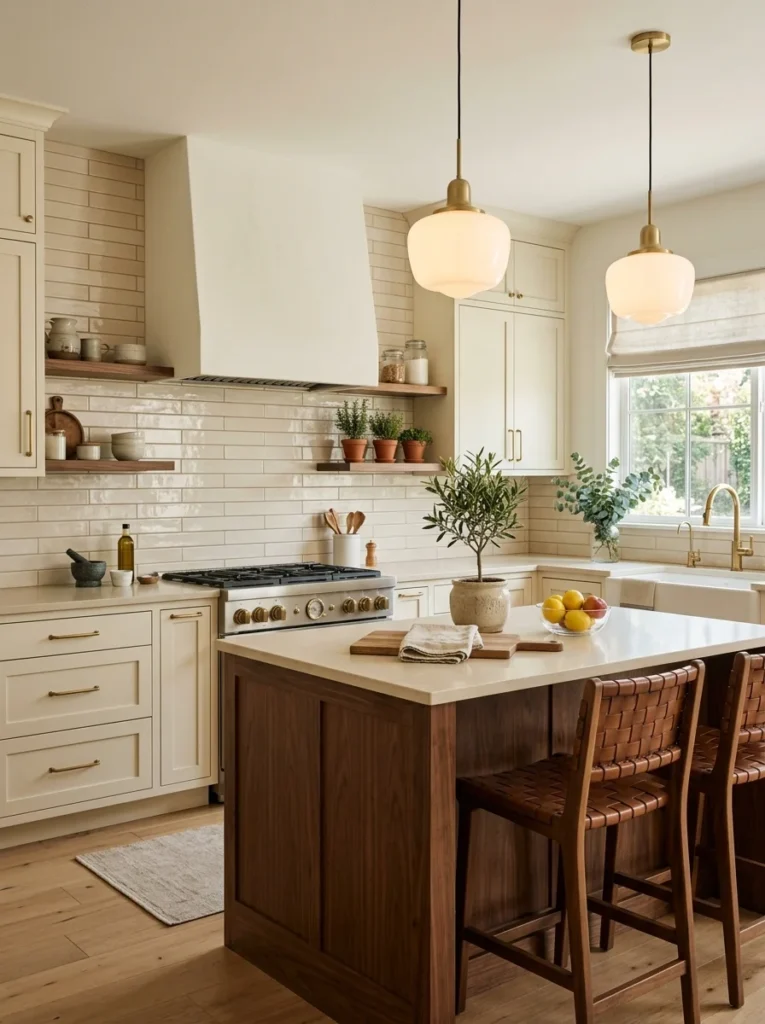
Subway tile becomes much more sophisticated when you move beyond bright white. A warm beige or creamy version can create a softer connection between cabinetry and countertops.
Try a slightly elongated shape and a coordinating grout color. Add brass hardware and natural wood for a cozy, updated appearance.
5. Green Tile Backsplash
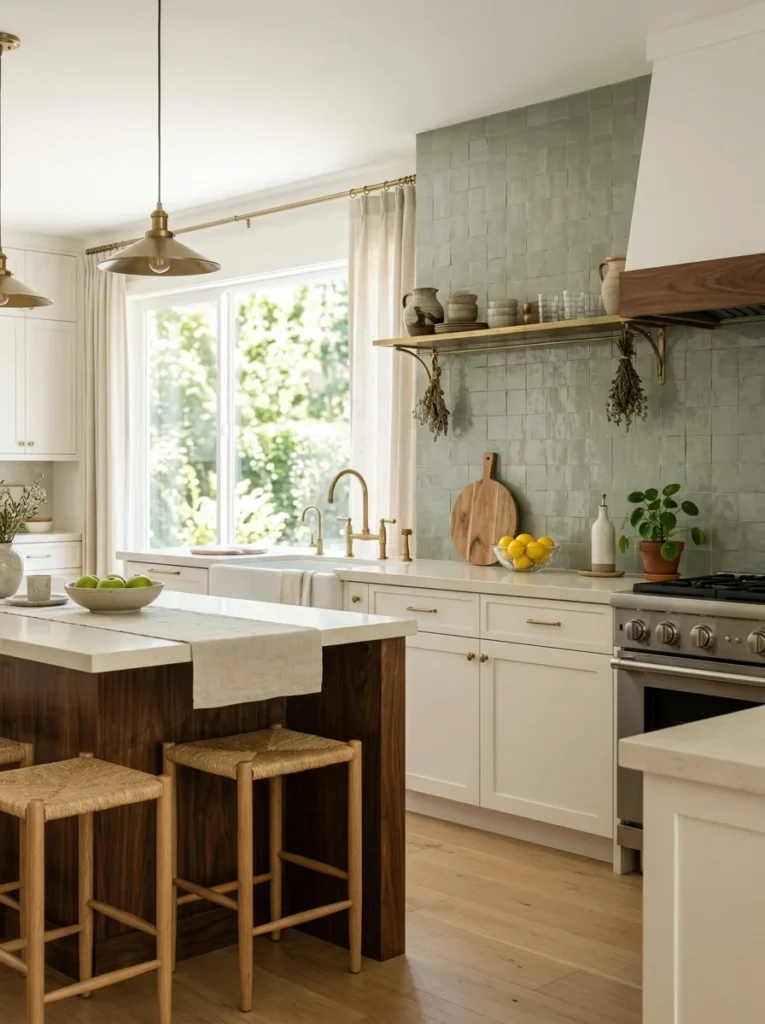
Muted green tile can bring a refreshing natural quality into the kitchen. Sage, olive, and dusty eucalyptus shades are particularly versatile.
Pair green tile with warm white cabinetry, walnut accents, and brass hardware. The combination feels inviting rather than overly colorful and works beautifully with natural light.
6. Full-Height Stone Backsplash
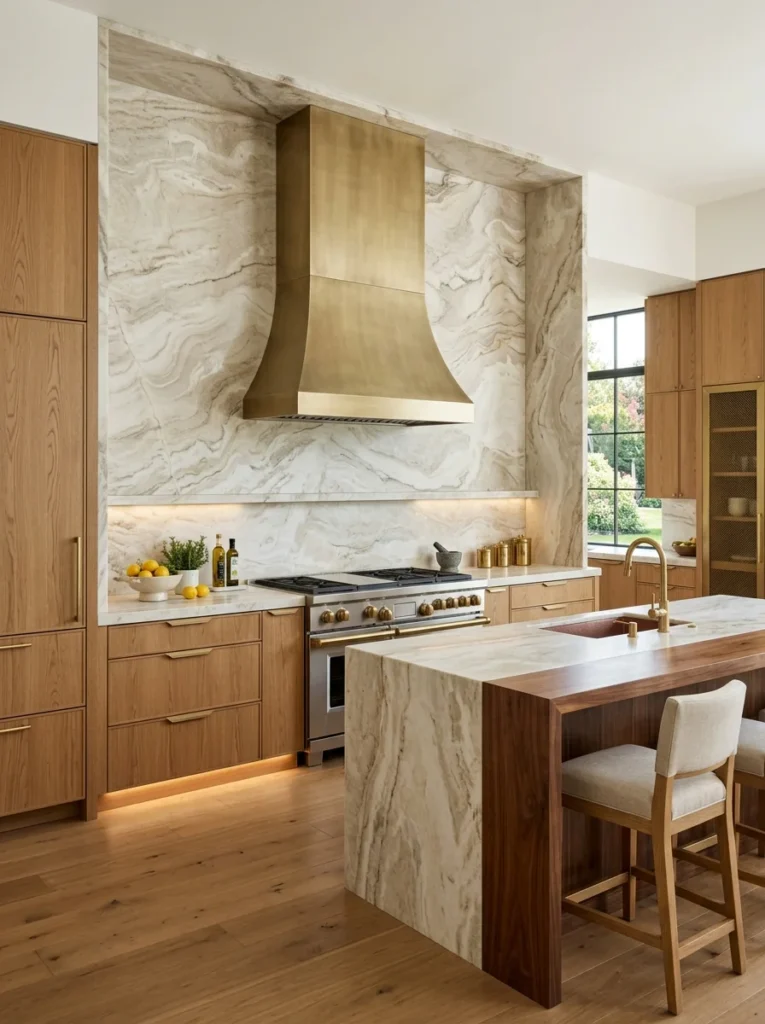
Taking the backsplash all the way from countertop to ceiling creates a strong architectural statement. This approach works especially well behind a range or on a wall with minimal upper cabinetry.
Use limestone, marble, quartzite, or another durable stone with attractive natural movement. Keep surrounding finishes simple so the wall remains the focal point.
7. Creamy Travertine Backsplash
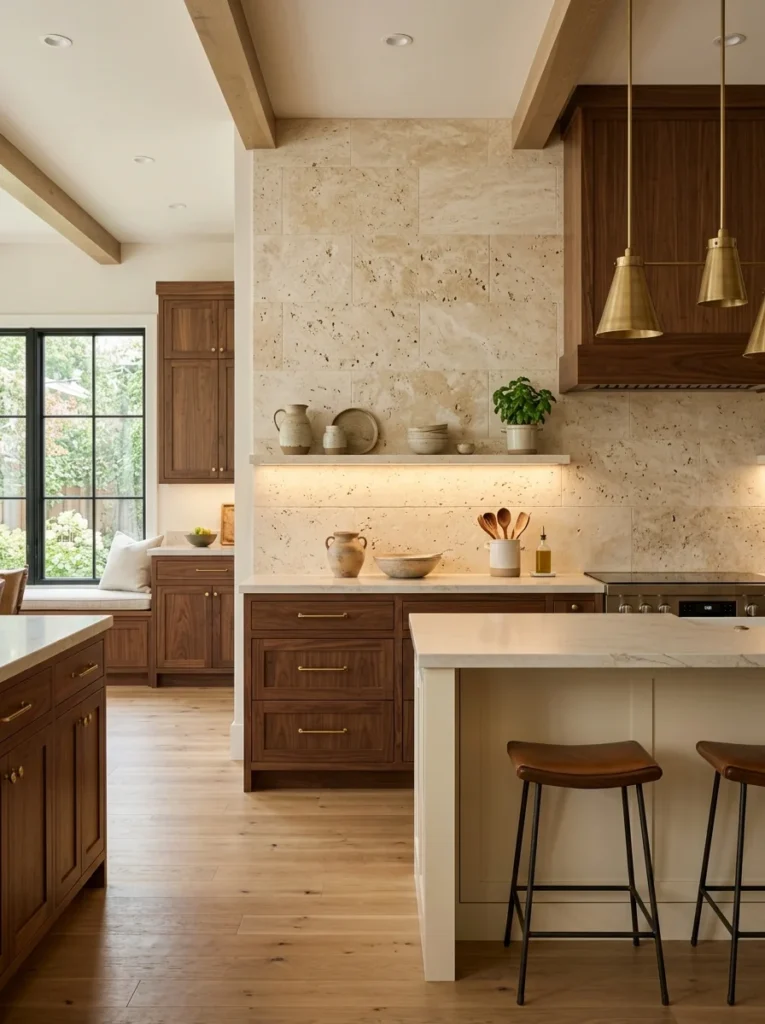
Travertine adds warmth and natural texture to a kitchen. Its soft beige variations pair especially well with walnut, oak, and cream cabinetry.
Choose larger pieces for a contemporary appearance or smaller formats for a more traditional feel. Warm under-cabinet lighting can beautifully emphasize the stone’s natural texture.
8. Black and White Checkerboard
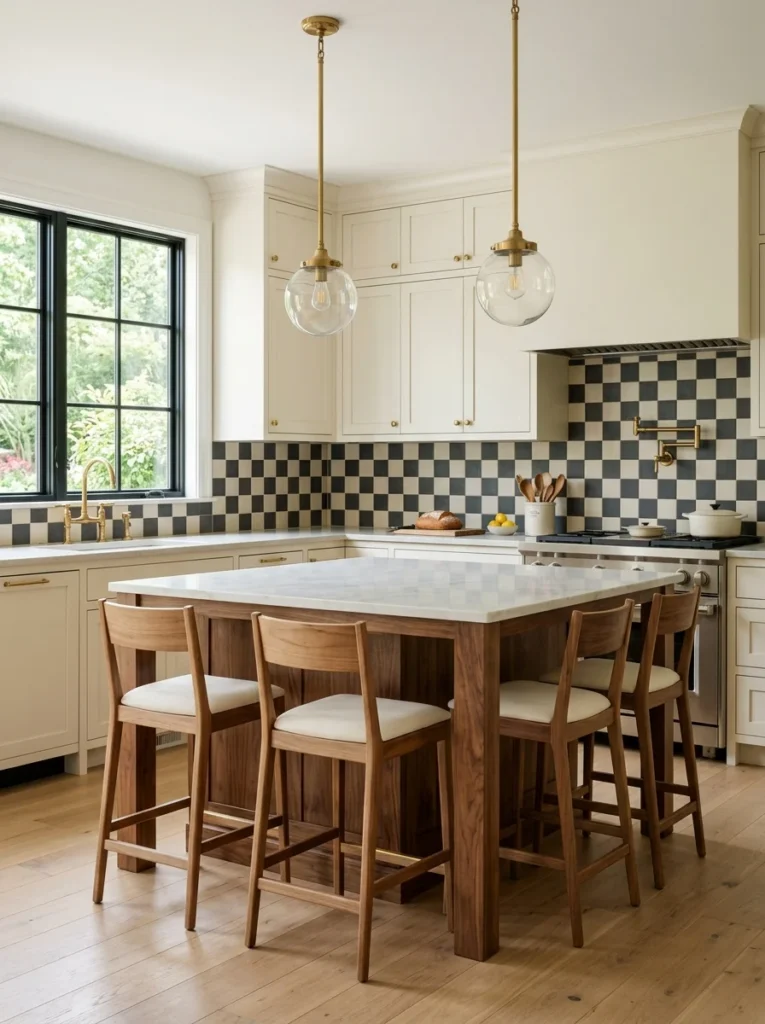
A checkerboard backsplash can give a kitchen personality without requiring complicated patterns. Use muted black and warm white rather than stark contrasts for a more sophisticated result.
Keep the cabinetry simple and introduce natural wood to soften the graphic pattern. The finished kitchen can feel both classic and surprisingly current.
9. Fish Scale Tile
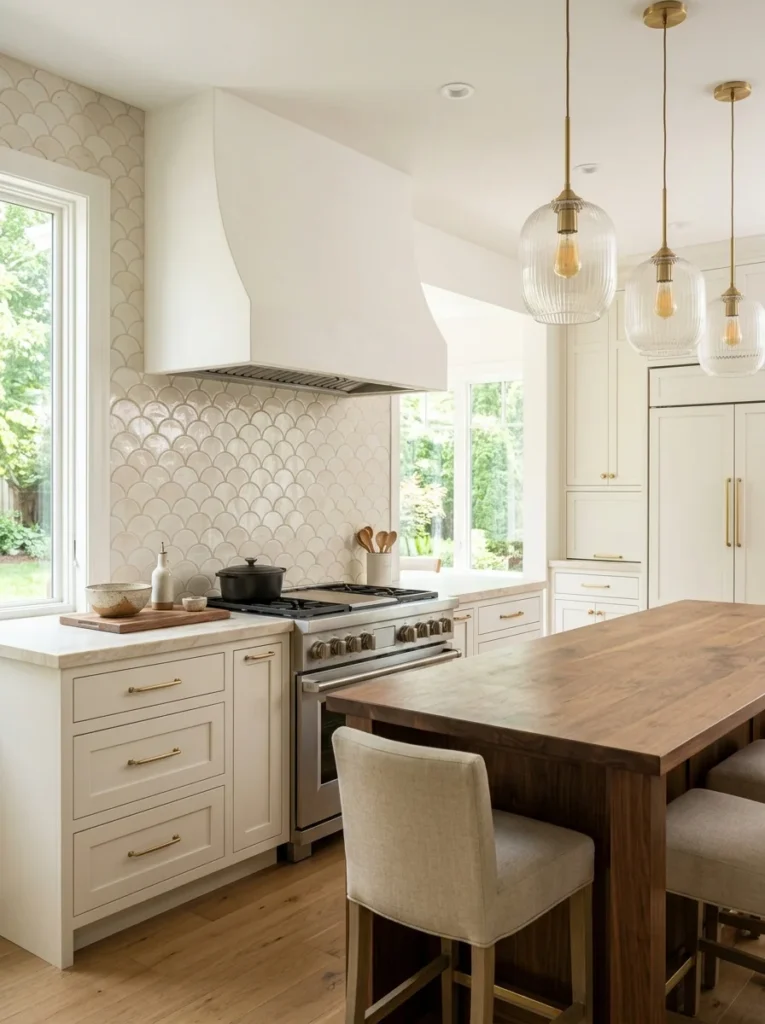
Fish scale tile introduces a graceful curved pattern that can soften a kitchen filled with straight lines. Use it behind the range or sink for a focused decorative moment.
Cream, pale blue, sage, or warm gray can all work beautifully. Keep the surrounding surfaces quiet so the tile remains easy on the eyes.
10. Herringbone Tile
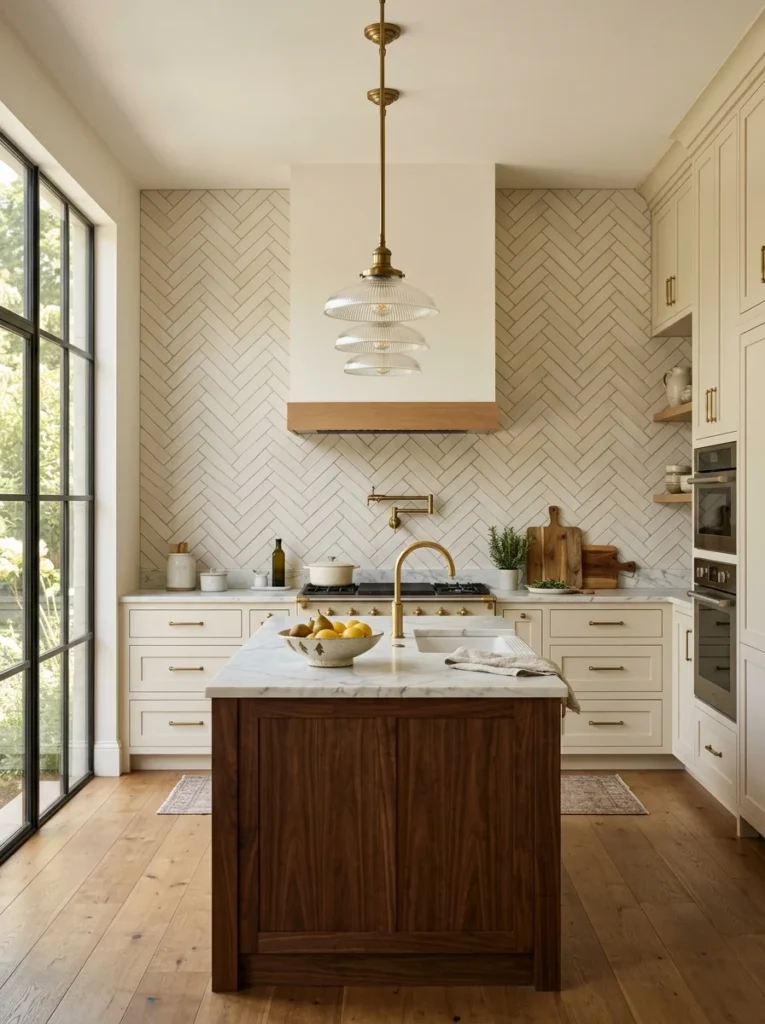
Herringbone adds movement without becoming overly decorative. A neutral tile arranged in this pattern can make an otherwise simple backsplash feel custom.
Choose elongated tiles for a more contemporary interpretation. Matching grout creates a seamless appearance, while contrasting grout makes the pattern more noticeable.
11. Warm Gray Stone Backsplash
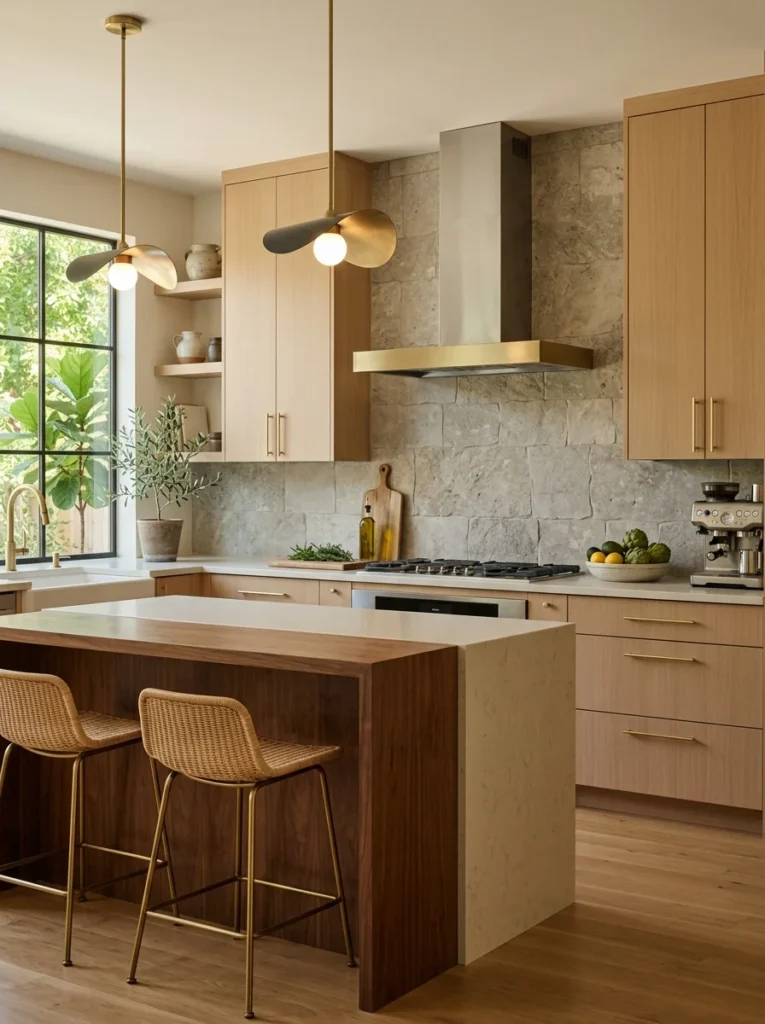
Warm gray stone can create a sophisticated middle ground between bright white and dramatic black. Choose a material with subtle variation for depth.
Pair it with light oak cabinets, creamy countertops, and brushed-metal hardware. The result feels modern but grounded.
12. Blue and White Tile
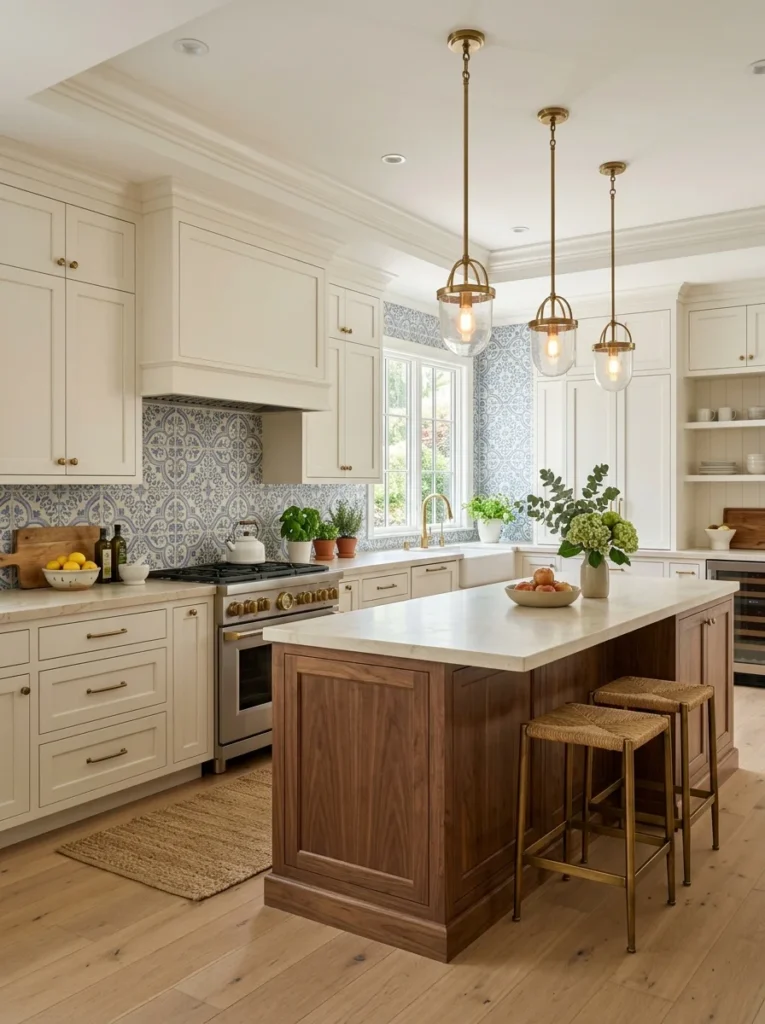
Blue and white remain a classic kitchen combination for good reason. Soft navy, dusty blue, or muted cobalt can add personality while maintaining a timeless feel.
Use white cabinetry and natural wood to balance the color. Brass hardware adds warmth and keeps the design from feeling too cool.
13. Textured Plaster Backsplash
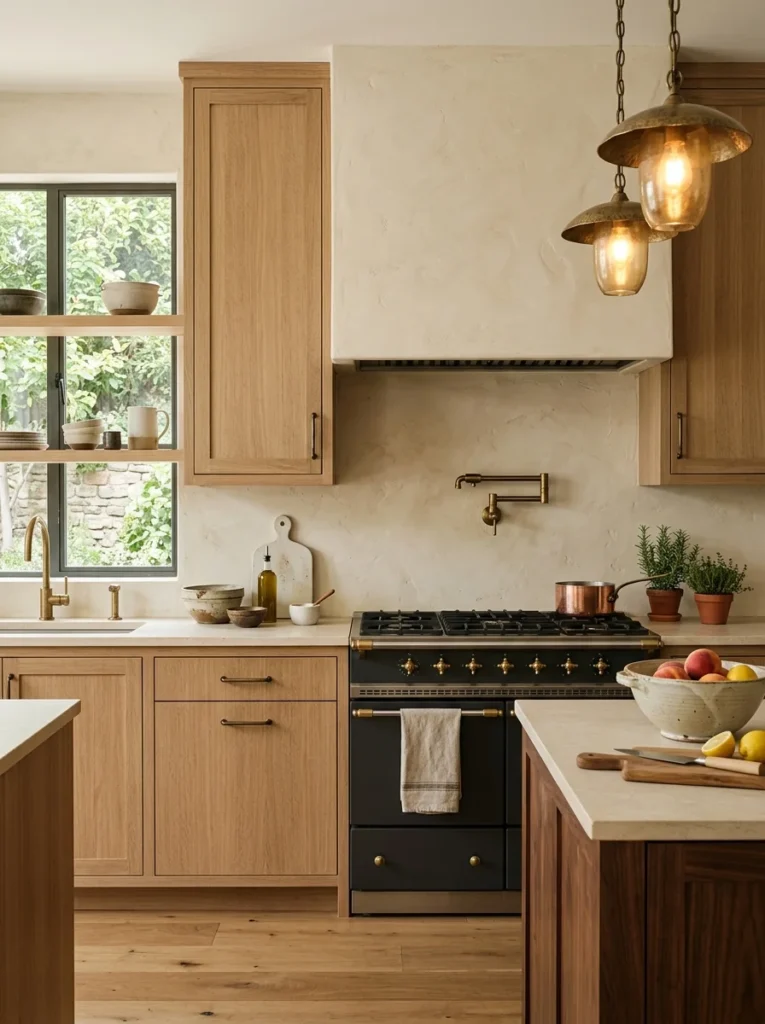
For a softer alternative to traditional tile, consider a suitable textured wall finish in areas appropriate for your kitchen installation. Its subtle movement can create a beautifully understated backdrop.
Pair it with natural stone countertops and warm wood cabinetry. The effect is particularly attractive in kitchens inspired by European or organic-modern interiors.
14. Vertical Stack Tile
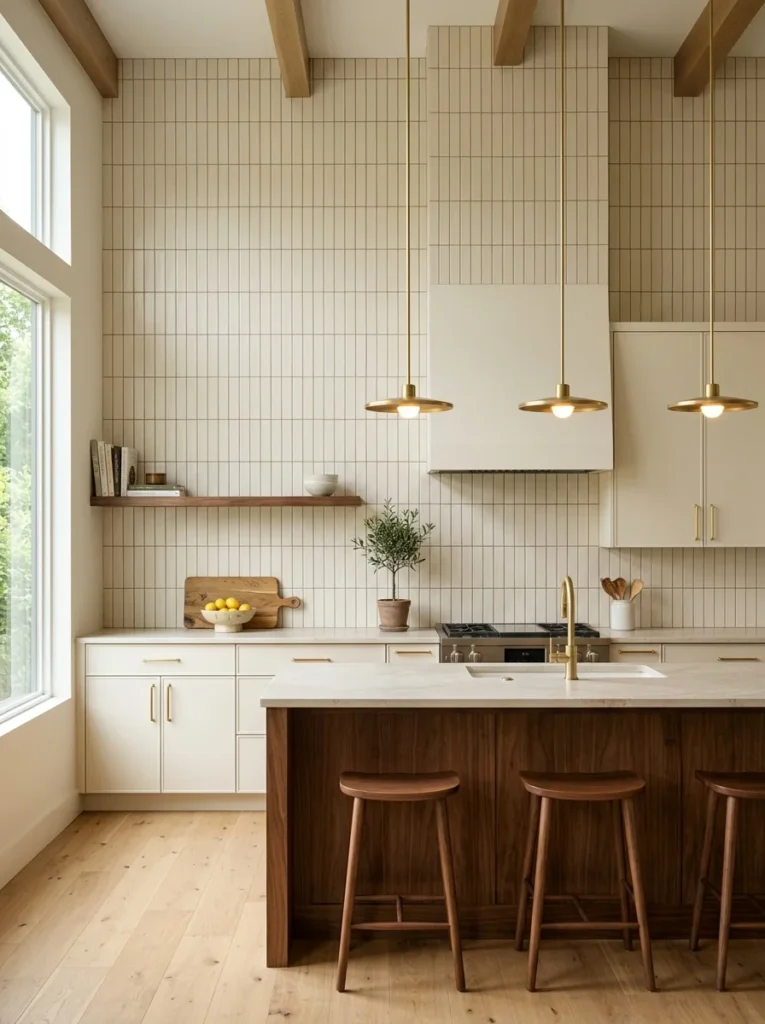
Instead of the traditional horizontal arrangement, install rectangular tiles vertically for a fresh contemporary look. This simple change can make the backsplash feel taller and more architectural.
Choose a warm neutral tile and matching grout for an elegant result. Brass lighting and natural wood will add warmth.
15. Pink-Toned Marble
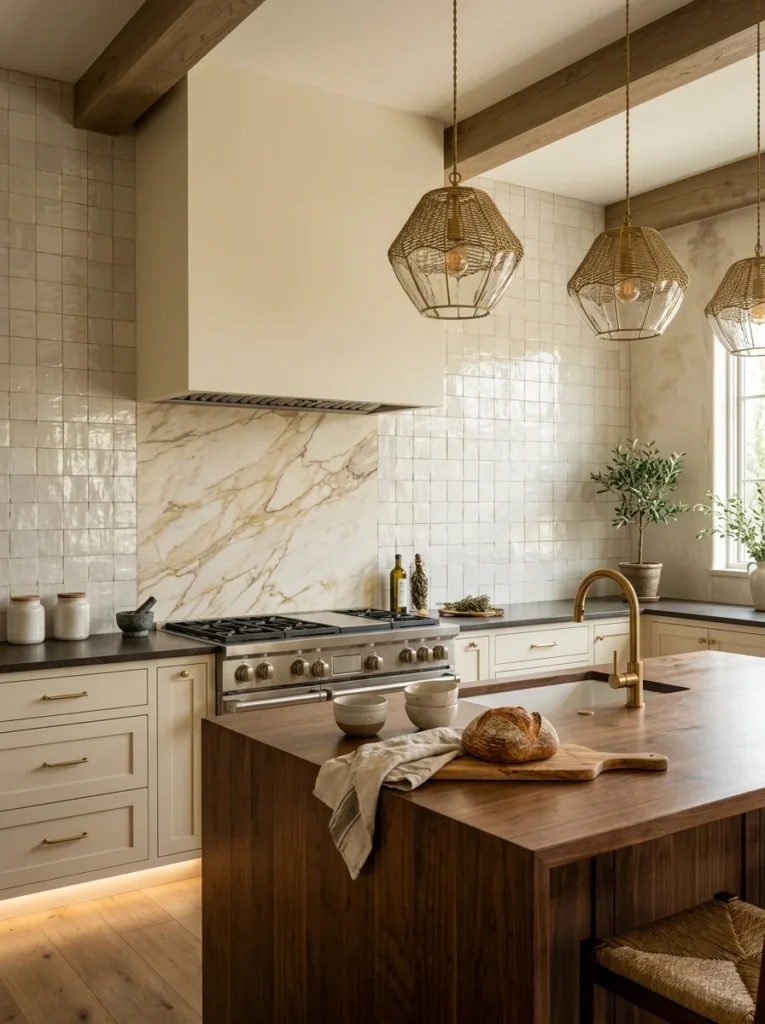
A marble with subtle blush, rose, or warm peach undertones can add unexpected personality to a kitchen. The color doesn’t need to be dramatic to make an impression.
Balance it with cream cabinetry, walnut, and understated brass. The result feels sophisticated, distinctive, and beautifully warm.
16. Dark Green Stone
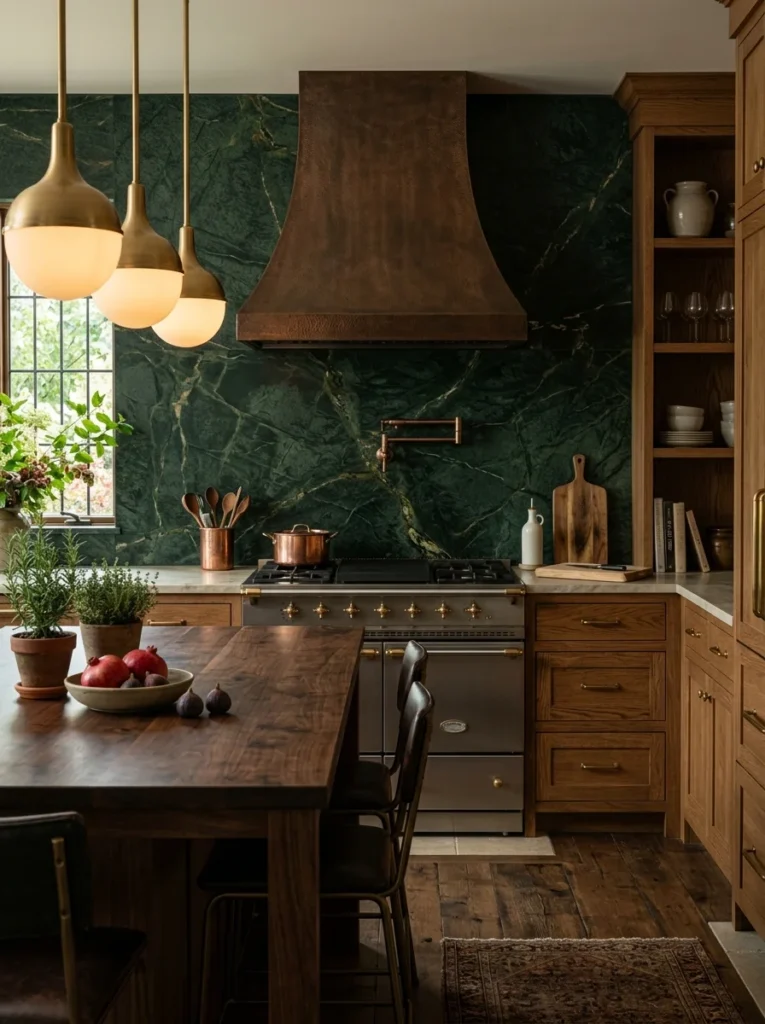
Deep green stone can create a rich, luxurious backsplash with a strong connection to nature. Use it behind the range or across a single wall for maximum impact.
Pair it with warm oak, brass, and creamy counters. Soft lighting will make the deeper color feel atmospheric rather than heavy.
17. Terrazzo Backsplash
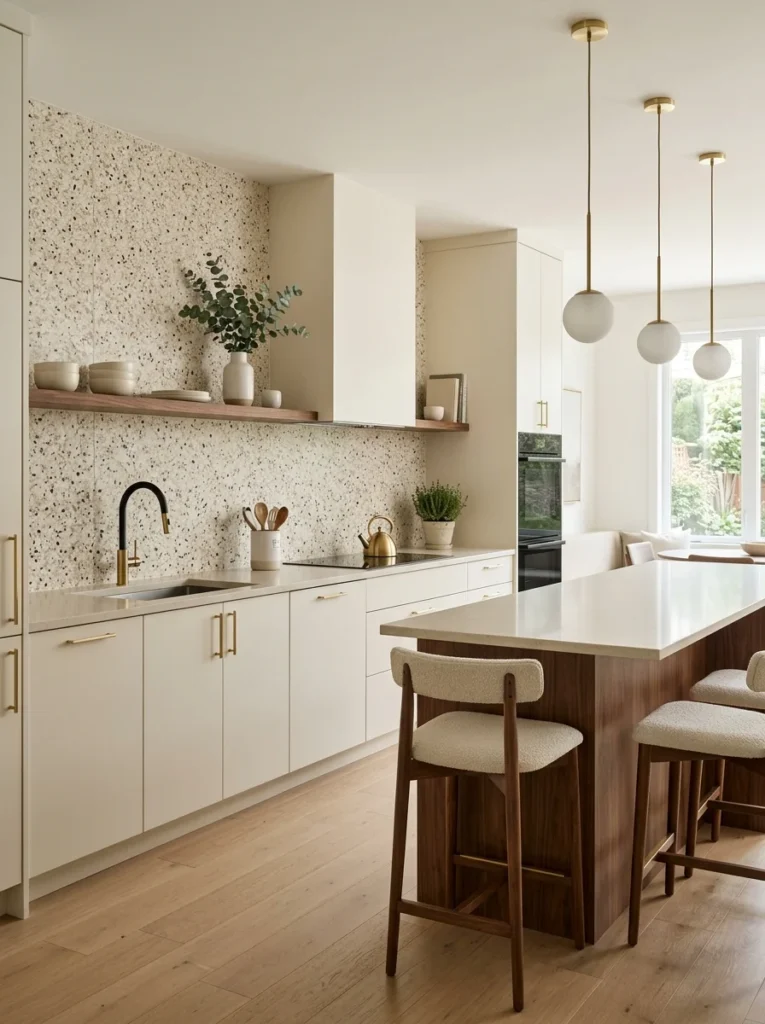
Terrazzo brings playful texture through small stone fragments embedded in a neutral base. Choose a subtle palette if you want a more refined look.
Repeat one or two of the terrazzo colors elsewhere in the kitchen for cohesion. Natural wood and simple hardware will keep the design balanced.
18. Arabesque Tile
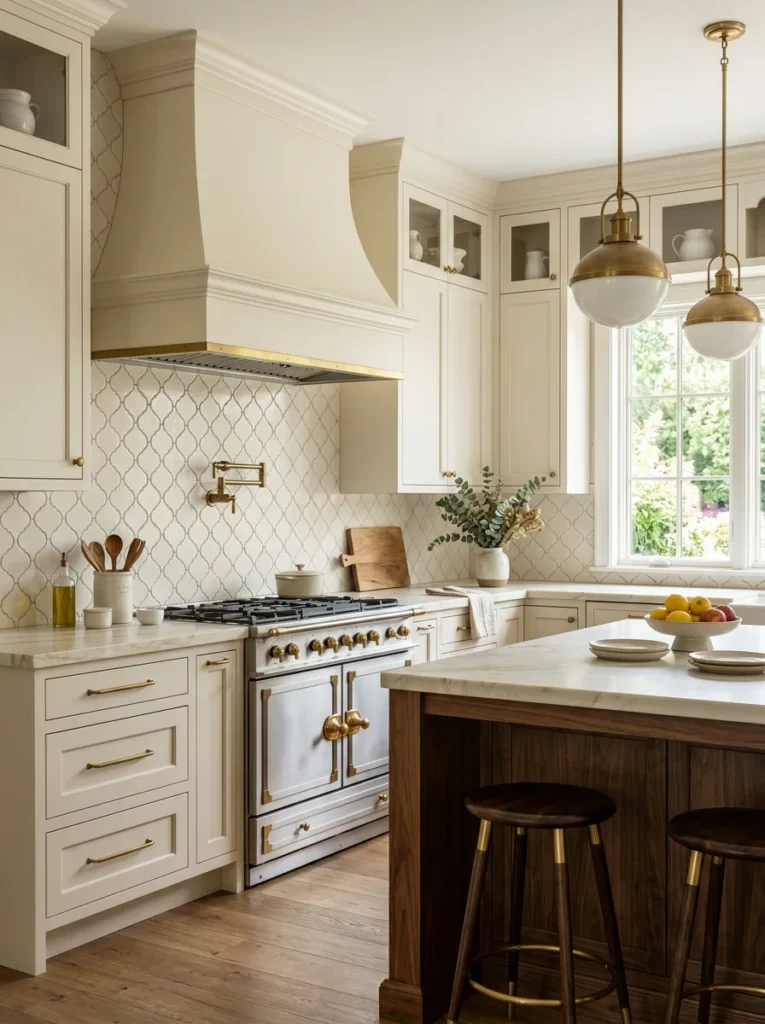
An arabesque silhouette introduces an elegant decorative shape without requiring an elaborate color palette. Cream or soft gray tile can keep the effect sophisticated.
Use it behind the range as a feature area or across a larger wall. Simple cabinetry will allow the curved tile profile to stand out.
19. Natural Quartzite Backsplash
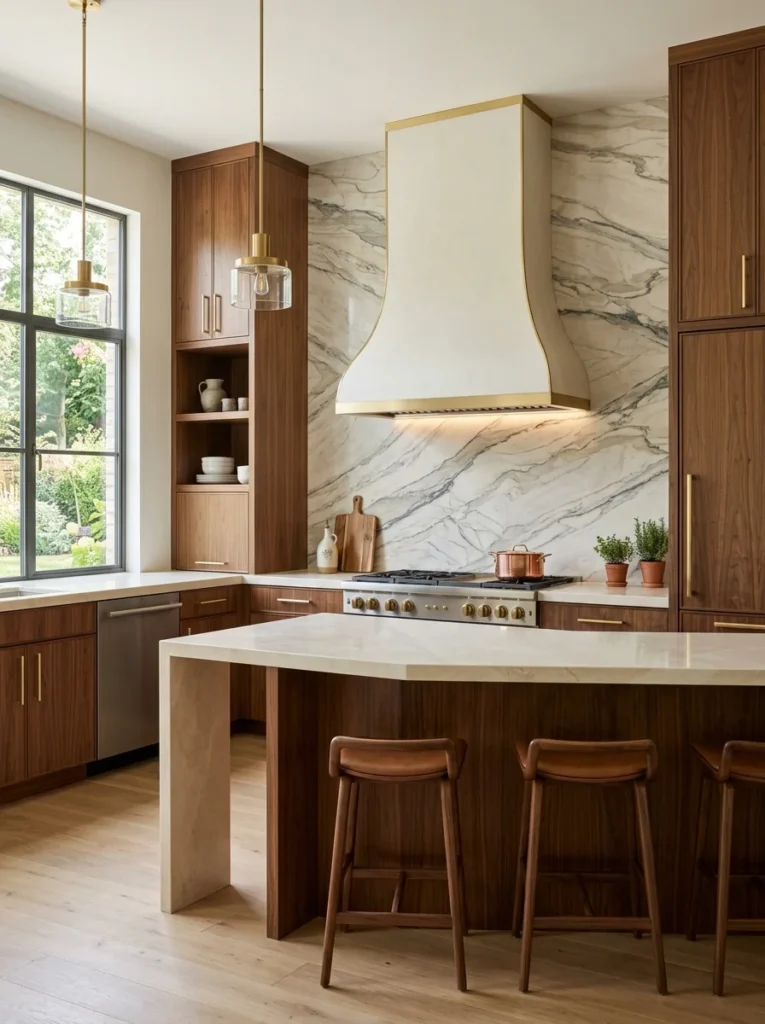
Quartzite can provide the dramatic look of natural stone while offering excellent durability for kitchen applications. A full-height quartzite backsplash can become a spectacular architectural feature.
Choose a slab with controlled veining and pair it with understated cabinetry. Warm wood and brass can make the stone feel more inviting.
20. Terracotta Tile
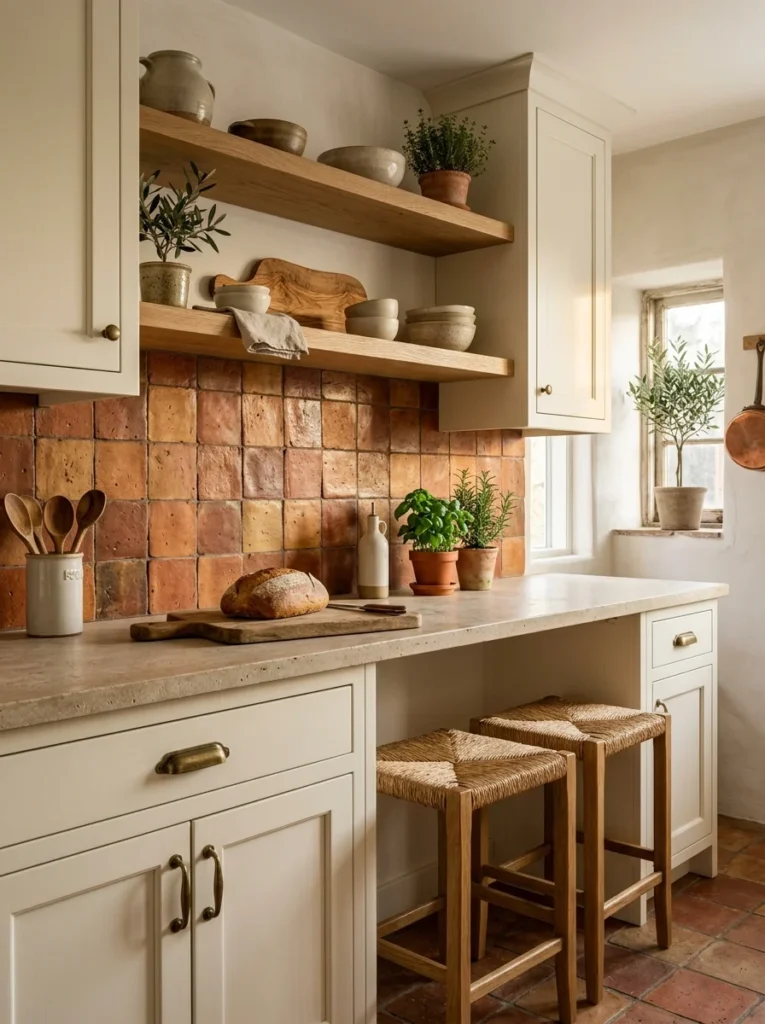
Terracotta brings warmth, depth, and a relaxed European character to a kitchen. Its earthy color works especially well with cream, olive, natural wood, and aged brass.
Use handmade-looking tiles for extra texture. Keep the rest of the palette soft so the terracotta becomes a warm accent rather than overwhelming the room.
21. Marble Mosaic Backsplash
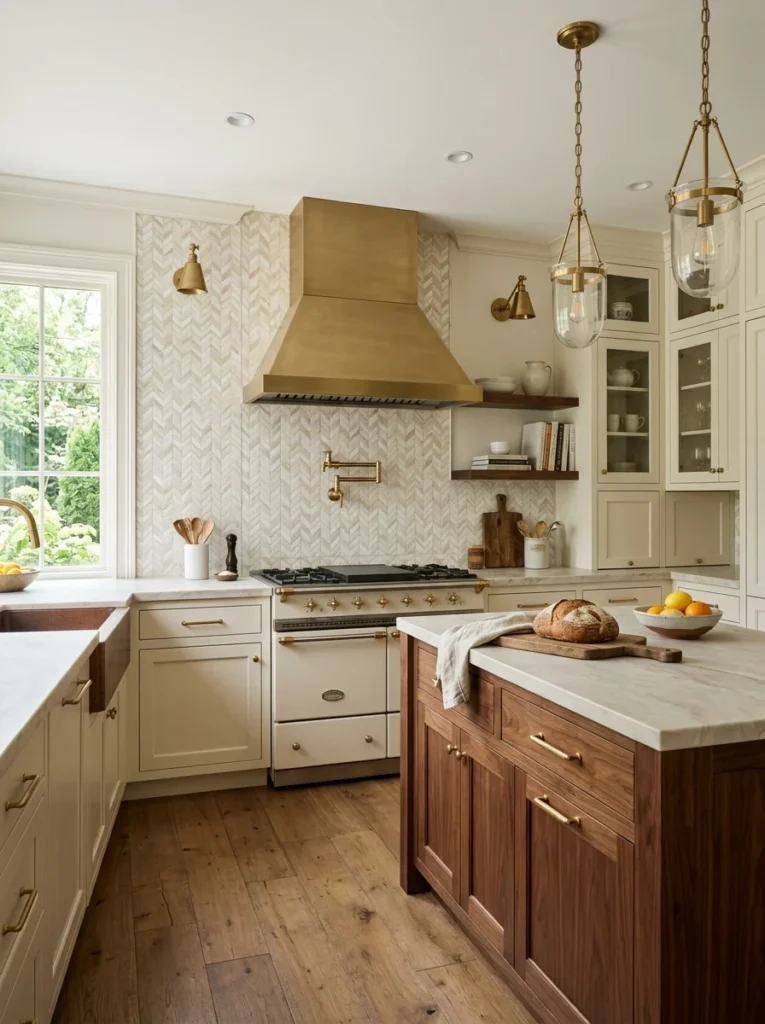
Small marble mosaics can add subtle luxury without requiring a huge amount of material. Choose a simple geometric pattern in warm neutral tones.
Use the mosaic as a range-wall accent or a framed detail behind the cooktop. Coordinating marble elsewhere will make the design feel intentional.
22. Fluted Tile Backsplash
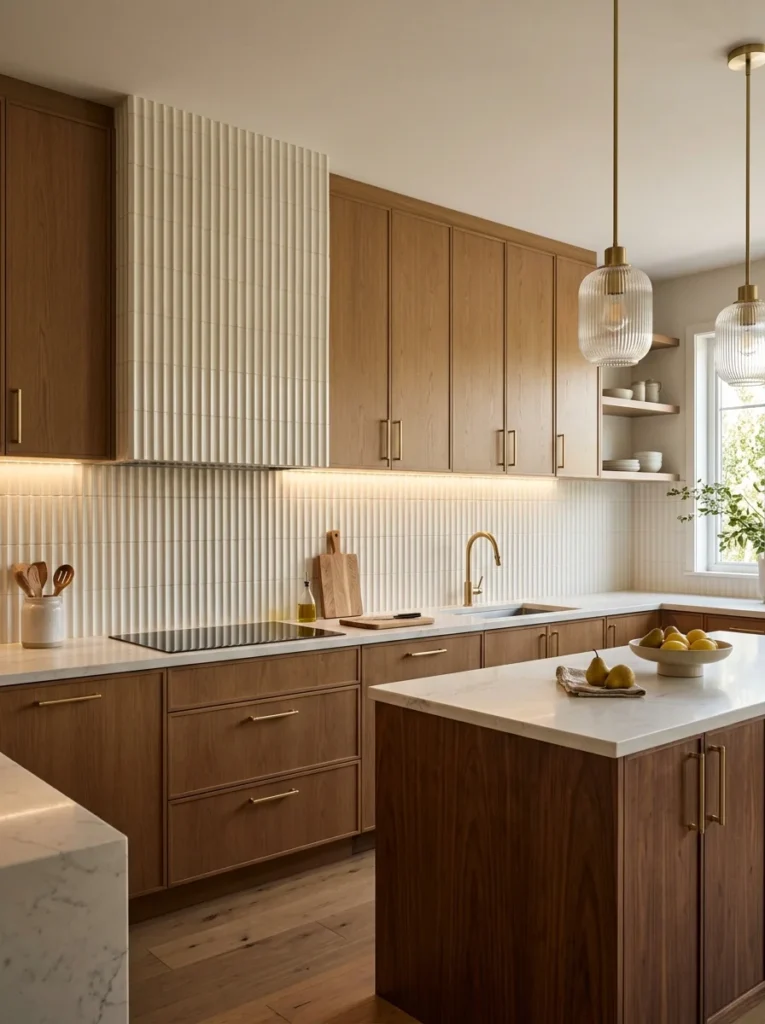
Fluted or ribbed tile introduces three-dimensional texture that looks especially beautiful under directional lighting. The vertical grooves create rhythm while maintaining a neutral palette.
Use creamy or sandy tones with warm wood cabinetry. Soft under-cabinet lighting can create beautiful shadows across the surface.
23. Slate Backsplash
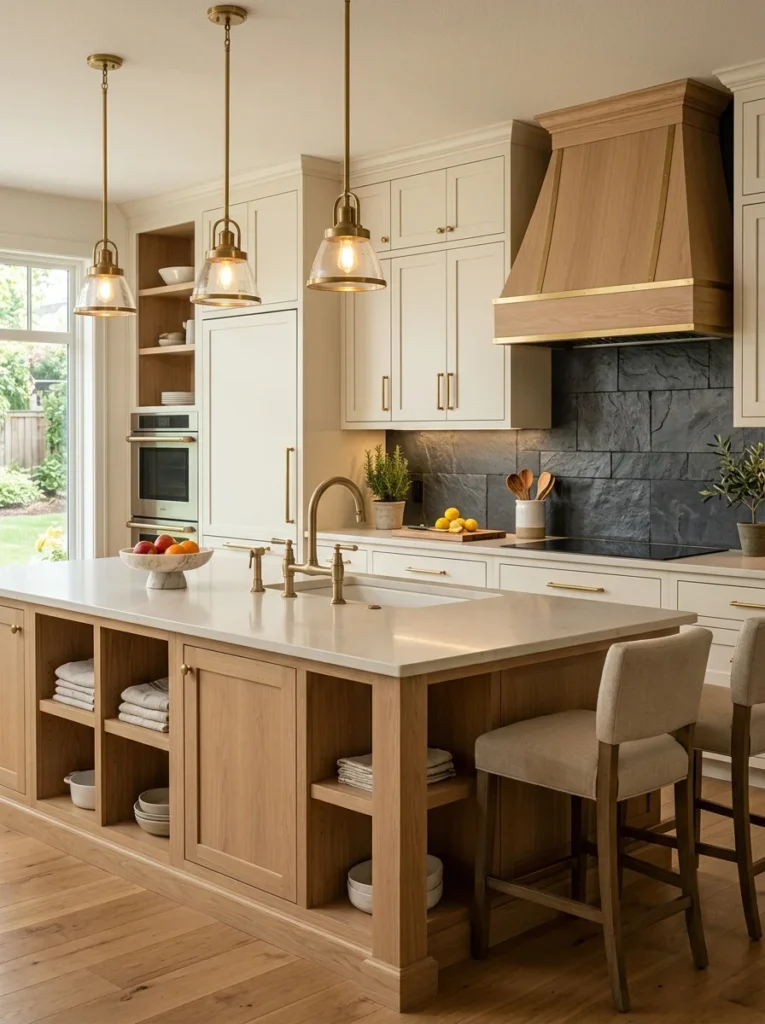
Slate provides a darker, naturally textured alternative to polished stone. Its variation in charcoal, gray, and earthy tones gives a kitchen an understated architectural quality.
Pair it with warm oak or cream cabinets to prevent the room from feeling too dark. Brushed brass can provide a refined finishing touch.
24. Neutral Mosaic Backsplash
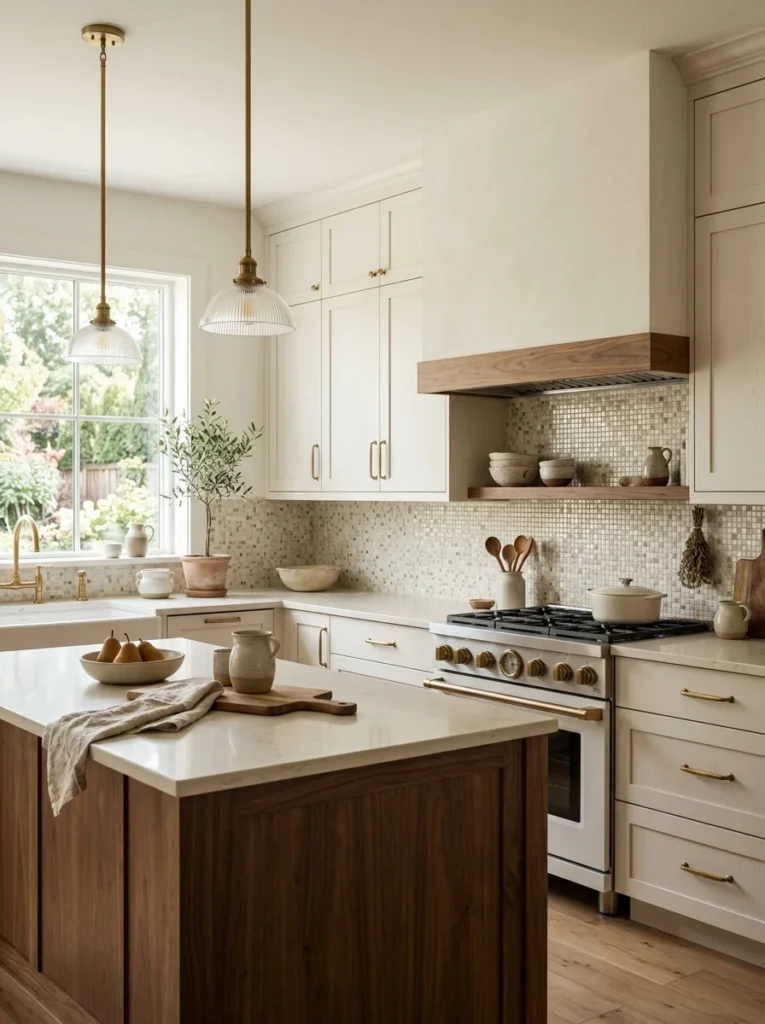
A small-scale neutral mosaic can add detail while remaining easy to coordinate. Choose cream, beige, taupe, or soft gray tones for a timeless appearance.
Use simple cabinetry and minimal countertop accessories. This lets the mosaic provide texture without becoming the dominant feature.
25. Watercolor-Inspired Tile
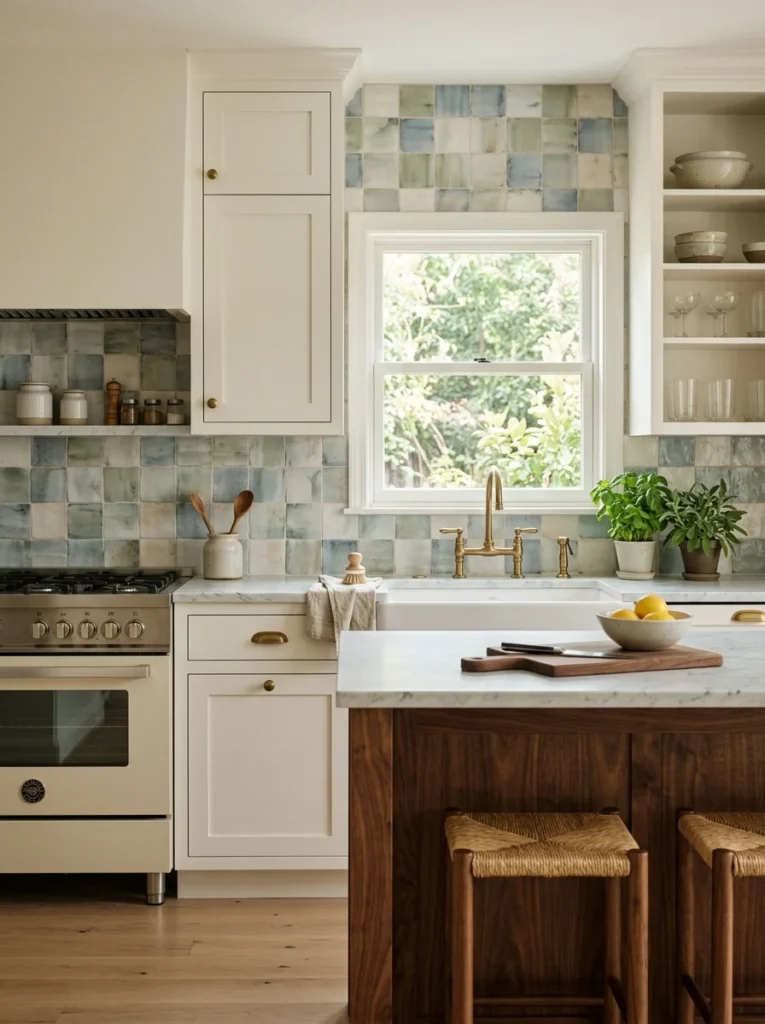
Soft watercolor-style tile can create a subtle artistic quality. Look for gentle variations of blue, green, beige, or cream rather than highly saturated colors.
Pair the tile with natural wood and understated hardware. The changing tones can make the backsplash feel handcrafted and unique.
26. Warm Wood-Look Backsplash
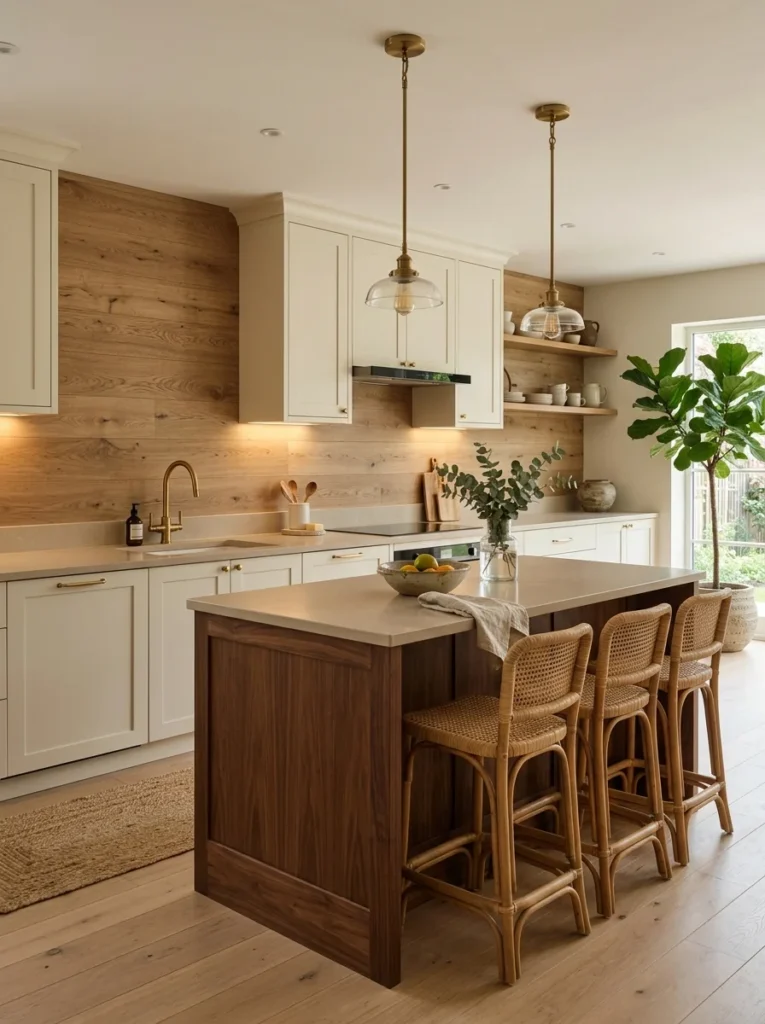
Wood-inspired surfaces can bring warmth to a kitchen filled with stone and metal. Use a suitable kitchen-rated material where necessary and repeat the wood tone through shelving or cabinetry.
Keep the surrounding palette light and simple. This approach works particularly well in organic-modern and Scandinavian-inspired kitchens.
27. Statement Range Wall
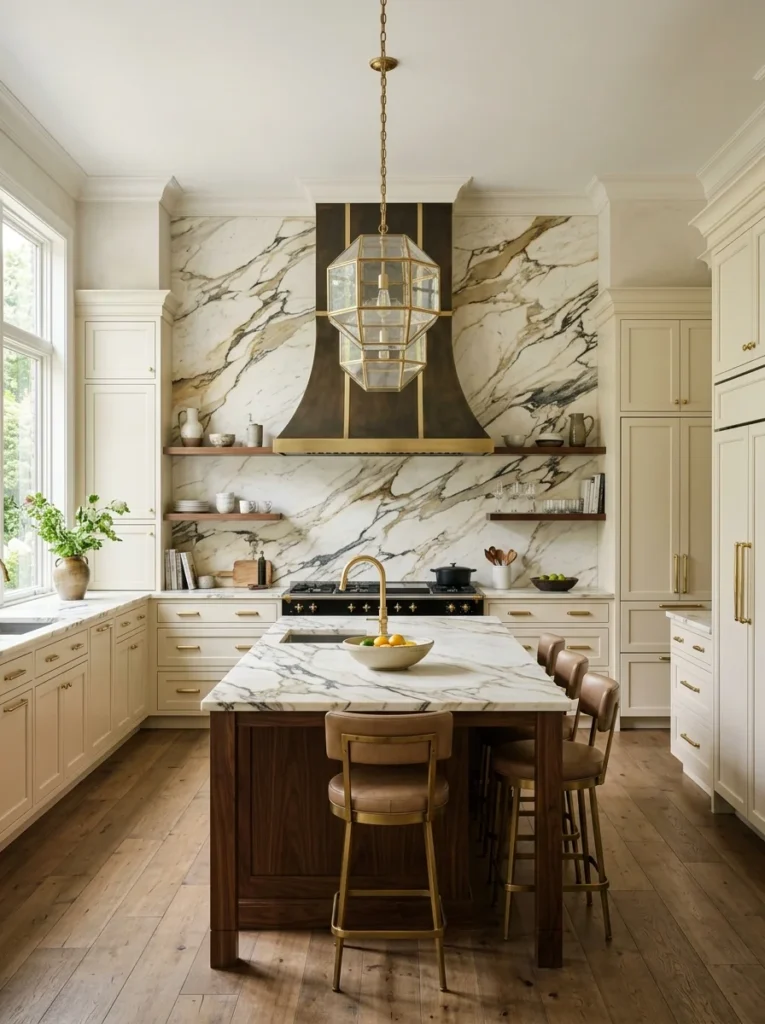
Rather than making every wall dramatic, create one spectacular backsplash behind the range. Use bold stone, decorative tile, or a contrasting color to establish a focal point.
Continue quieter materials across the remaining walls. This gives the kitchen visual hierarchy and prevents the design from becoming overwhelming.
28. Luxe Neutral Stone Backsplash
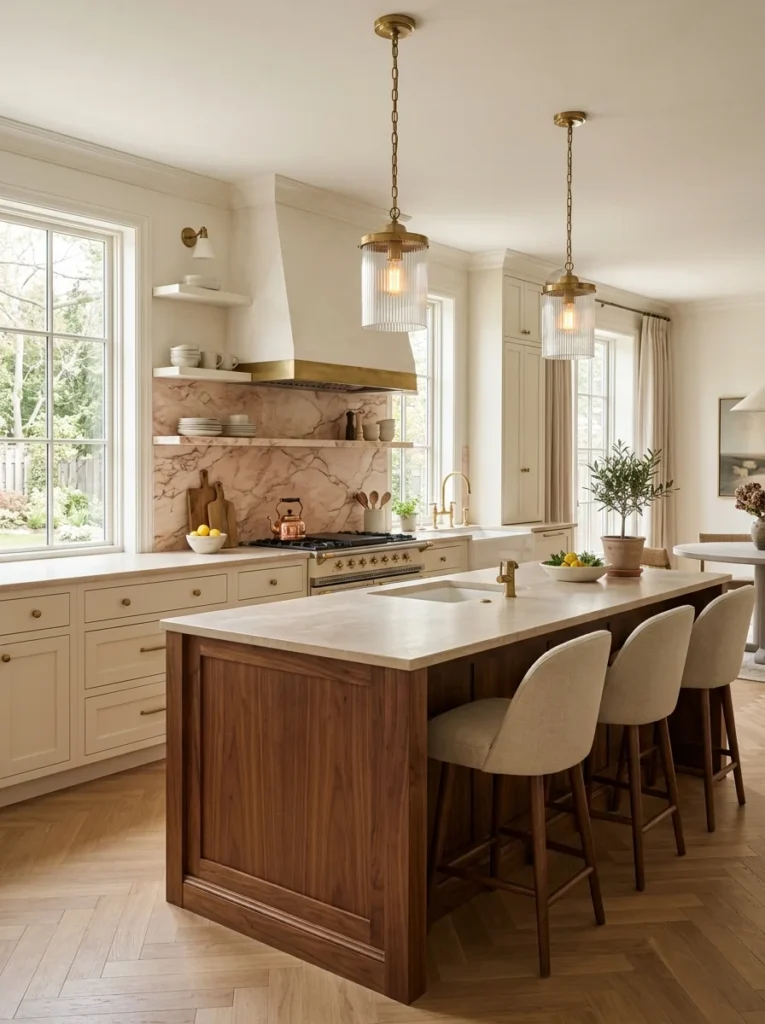
A softly veined neutral stone can deliver luxury without becoming the center of attention. Look for creamy beige, taupe, and warm gray movement.
Pair it with warm cabinetry, elegant brass hardware, and layered lighting. The finished kitchen should feel polished, calm, and timeless.
29. Mixed-Material Designer Backsplash
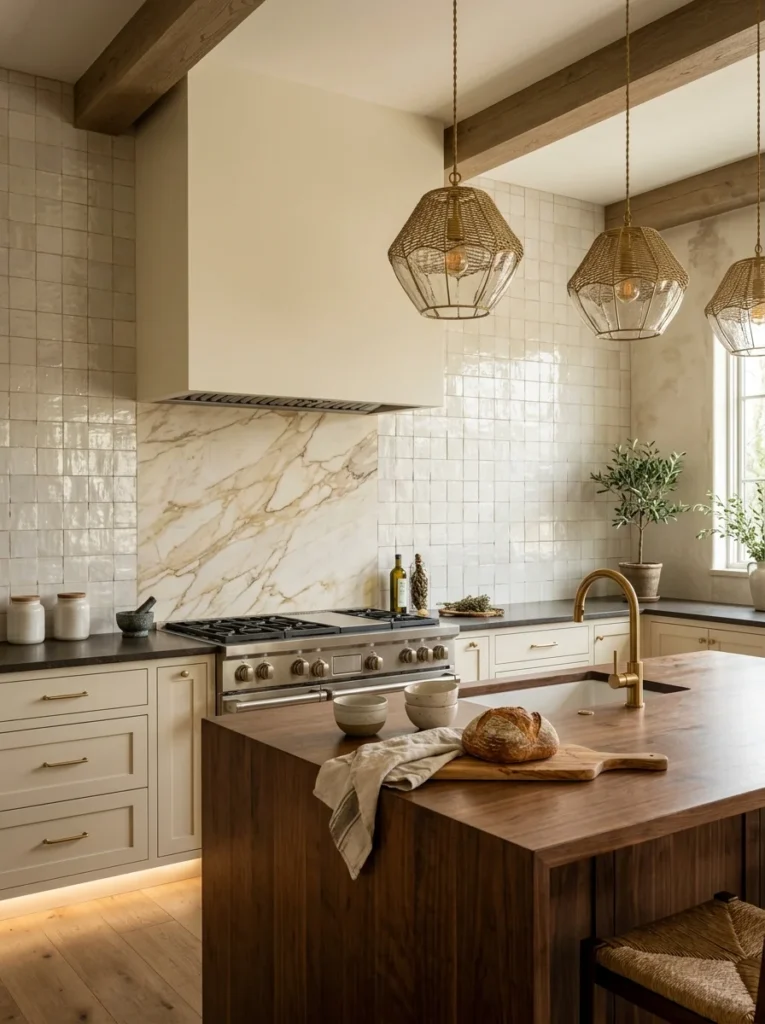
For a truly custom look, combine two complementary materials. A marble slab behind the range can transition into subtle handmade tile along the surrounding countertop walls.
Keep the colors closely related so the combination feels deliberate. Repeat the stone and tile tones through hardware, cabinetry, and accessories for a cohesive designer finish.

Ahmad is the founder and writer behind Valmora Decor, a home decor blog packed with practical ideas for beautiful, livable spaces. From cozy bedrooms to inviting outdoor areas, he shares easy-to-follow inspiration for every corner of the home.