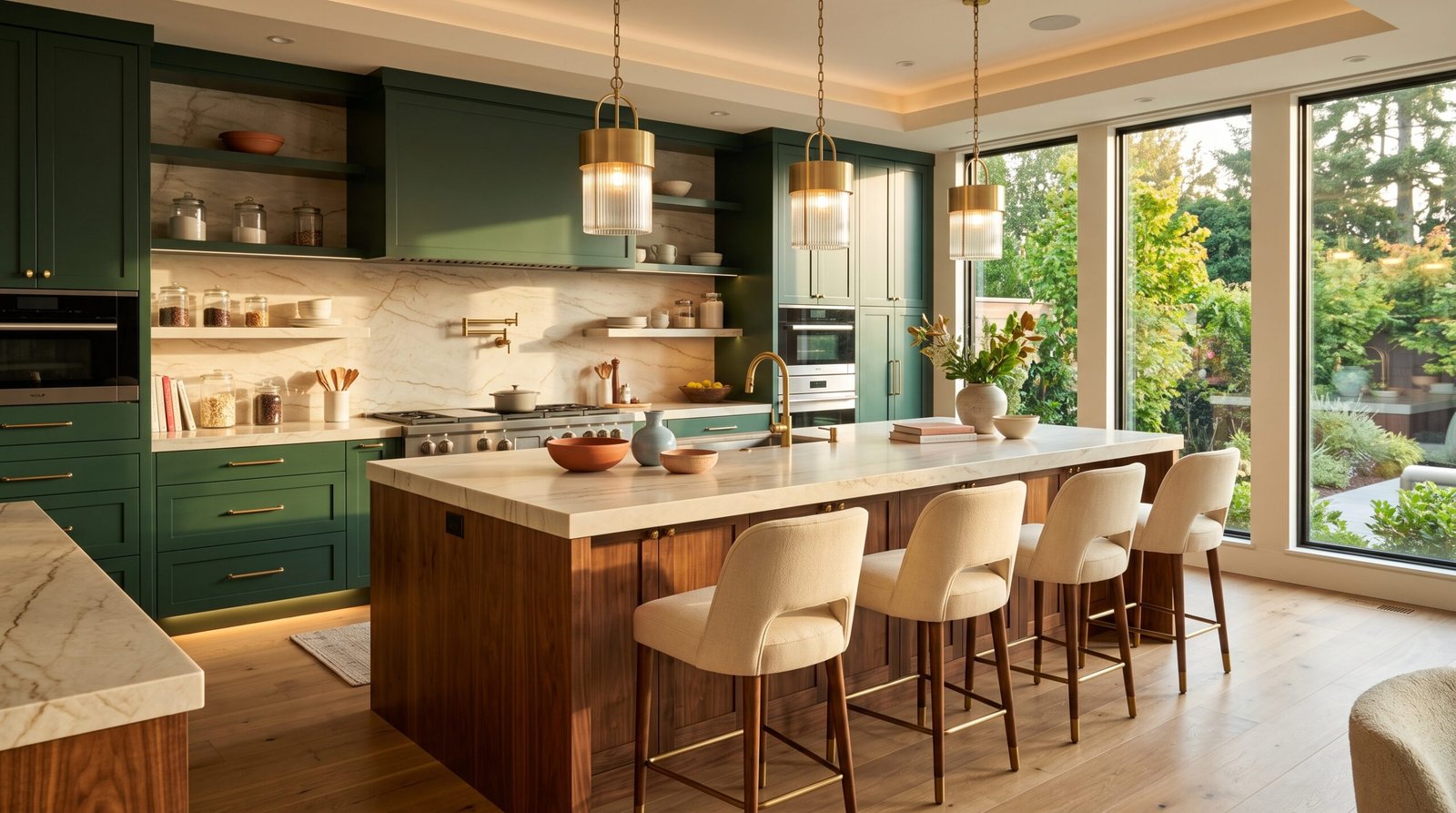
Kitchen color can completely change how a home feels. The right shade can make cabinets look more expensive, brighten a compact layout, warm up a large open-plan space, or create a dramatic designer statement. From timeless creamy neutrals to rich greens, sophisticated blues, warm terracotta, and soft earthy tones, there are countless ways to give a kitchen personality.
The secret is choosing colors that work beautifully with the kitchen’s lighting, countertops, flooring, and hardware. These 24 ideas combine stylish color palettes with warm textures and modern finishes, making them especially useful if you’re planning a kitchen refresh that feels polished, welcoming, and Pinterest-worthy.
1. Warm White Kitchen
Warm white is one of the most versatile kitchen colors because it creates a bright and timeless foundation. Unlike stark white, warmer shades have creamy undertones that make cabinetry feel softer and more welcoming.
Pair warm-white cabinets with natural oak, creamy quartz countertops, and brushed-brass hardware. Add woven stools and warm pendant lighting to create a kitchen that feels clean, comfortable, and quietly luxurious.
2. Sage Green Kitchen
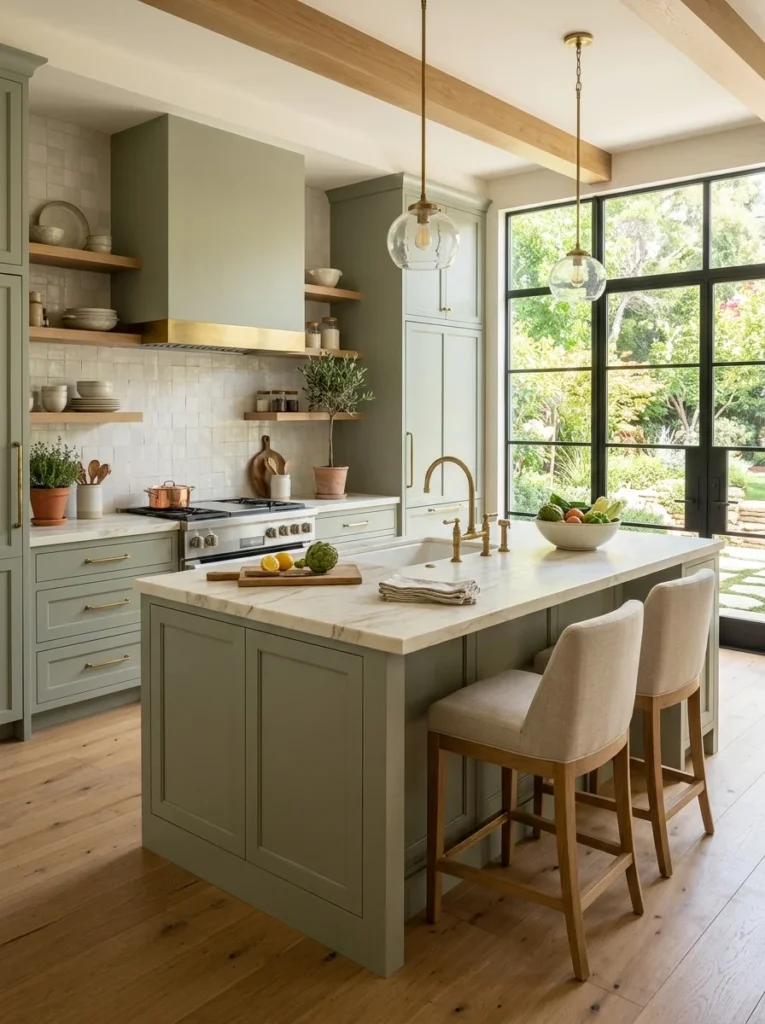
Sage green brings a calm, natural quality into the kitchen. Its muted appearance works beautifully with both traditional and contemporary cabinetry, especially when paired with simple shaker or slab doors.
Combine sage cabinets with creamy countertops, natural wood flooring, and aged-brass fixtures. A few ceramic accessories and subtle greenery can reinforce the organic feel without making the space look overly themed.
3. Navy Blue Kitchen
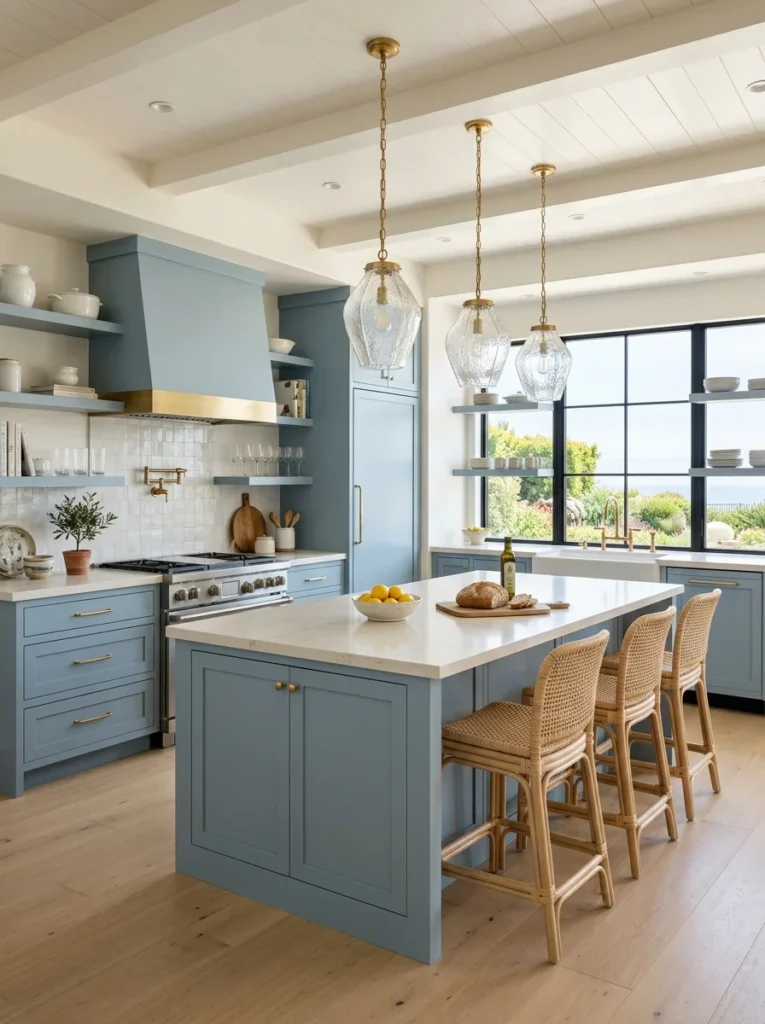
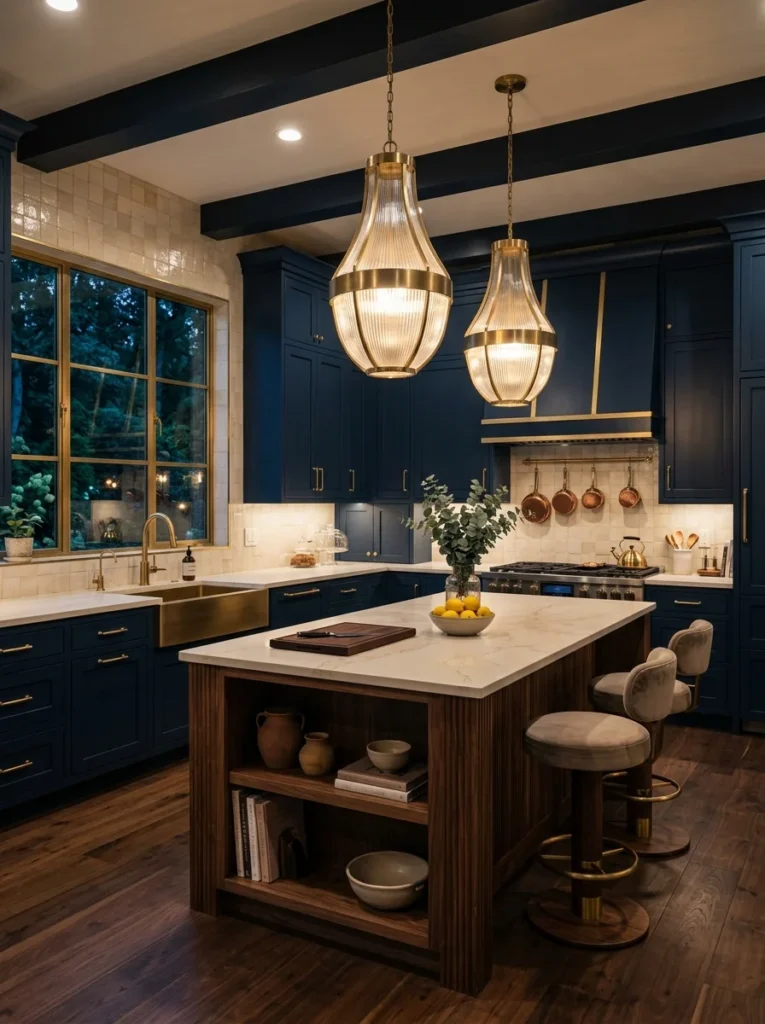
Navy blue creates a sophisticated kitchen with plenty of depth. Use it on lower cabinets, a large island, or an entire cabinetry wall for a dramatic but timeless effect.
Balance navy with warm white countertops and backsplash materials. Brass hardware, walnut accents, and soft pendant lighting can make the deep blue feel rich rather than heavy.
4. Soft Blue Kitchen
Soft powder blue or dusty blue can make a kitchen feel fresh and airy. This color works particularly well in spaces with plenty of natural light.
Pair blue cabinetry with warm-white walls, pale oak flooring, and creamy stone countertops. Small brass accents can add warmth while keeping the overall room light and inviting.
5. Olive Green Kitchen
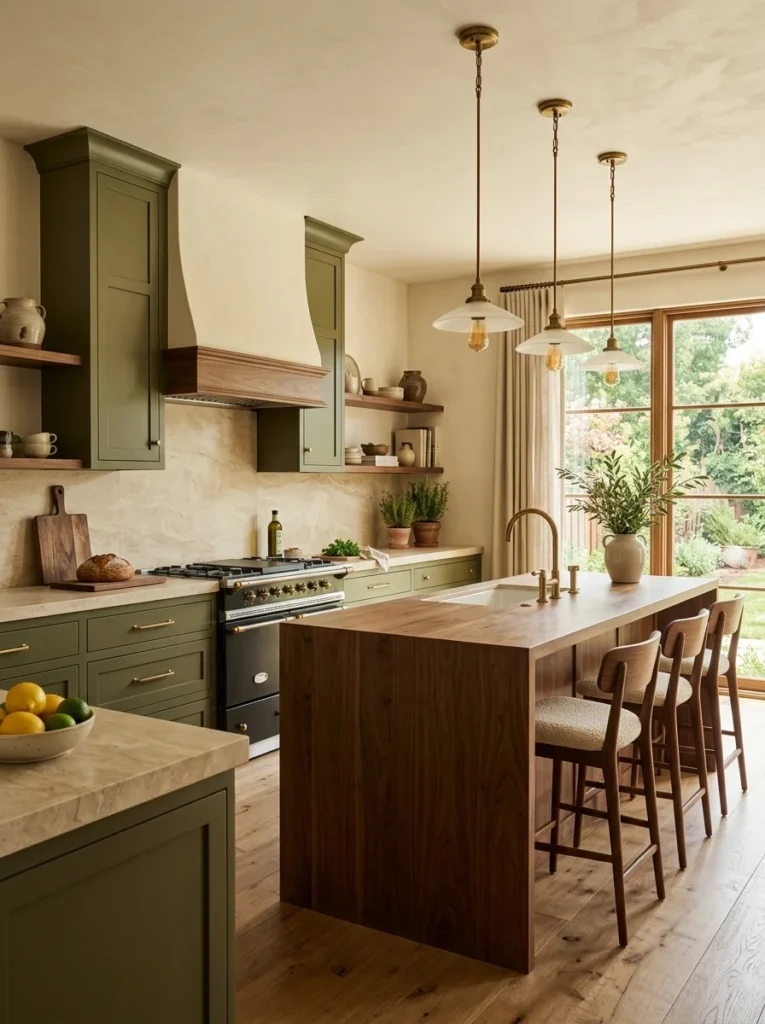
Olive green provides a richer alternative to pale sage. Its earthy undertones work beautifully with natural materials and create a sophisticated connection to the outdoors.
Use olive cabinets with warm limestone, walnut, or oak details. Aged-brass fixtures and soft cream walls will balance the deeper green and give the kitchen a refined modern character.
6. Cream and Beige Kitchen
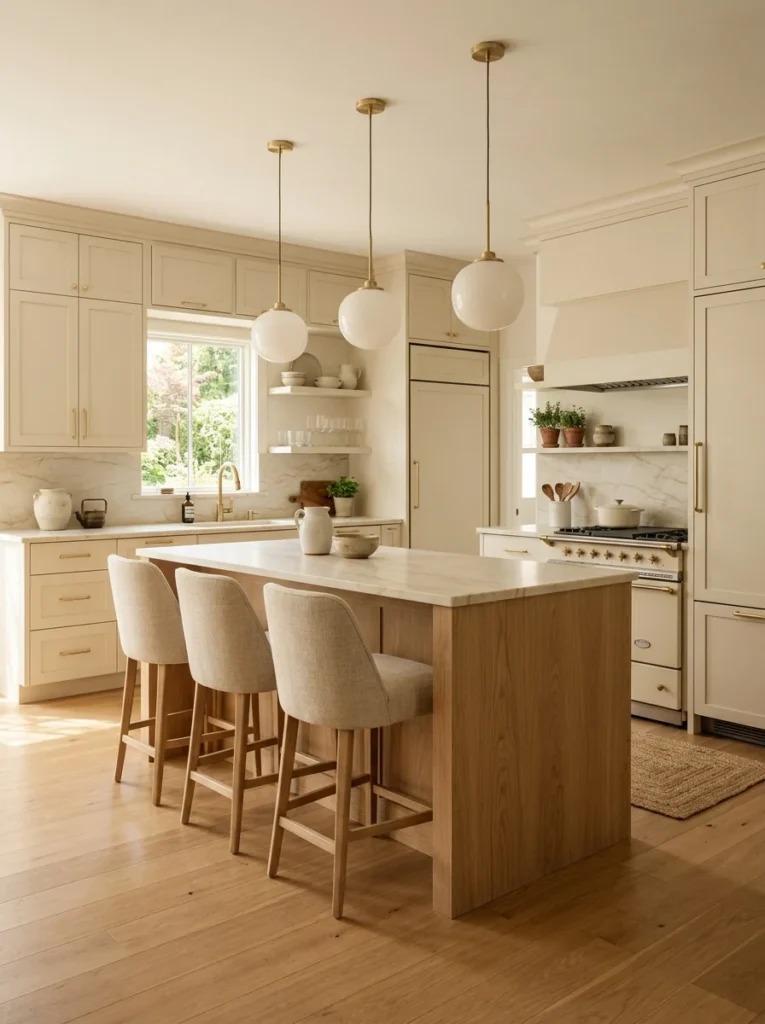
Cream and beige create a warm neutral kitchen that feels especially inviting. Instead of using one flat color, layer several shades of cream, sand, taupe, and warm beige.
Introduce natural stone, light oak, linen textures, and brushed-brass fixtures to create depth. This palette is perfect for anyone who wants a timeless kitchen that feels cozy without being dark.
7. Terracotta Kitchen
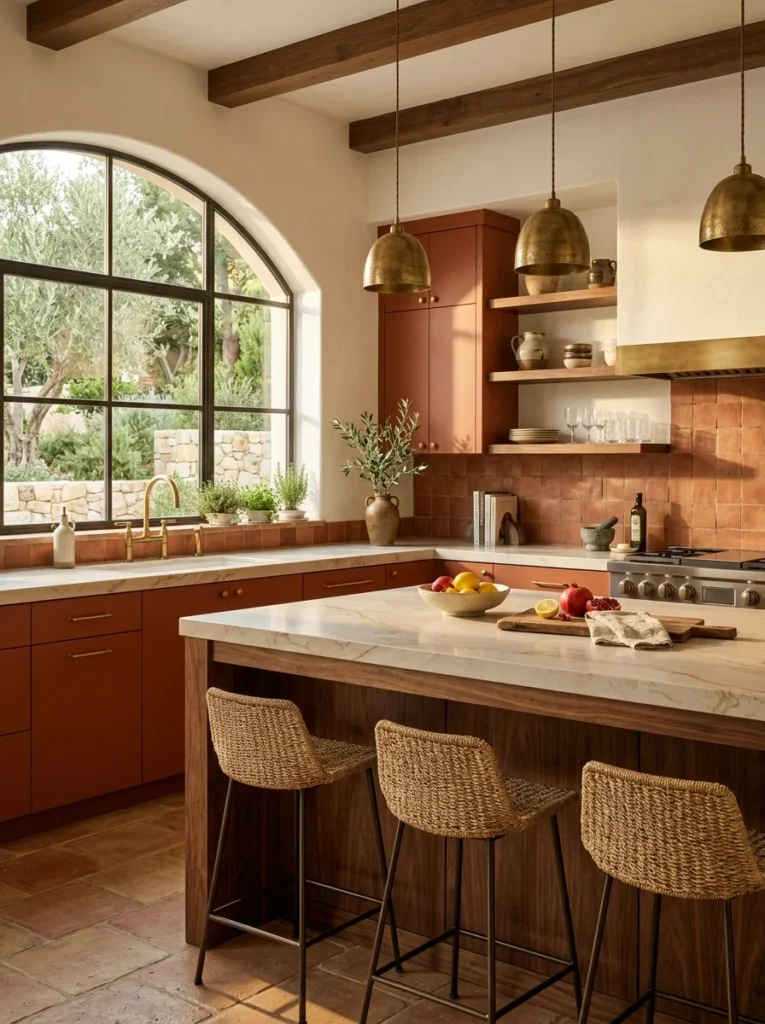
Terracotta adds warmth and personality through its earthy orange-red undertones. It can be introduced through cabinetry, tile, walls, or even a colorful kitchen island.
Balance terracotta with creamy white surfaces and natural wood. Matte black or aged-brass hardware can provide contrast and keep the look contemporary.
8. Charcoal Gray Kitchen
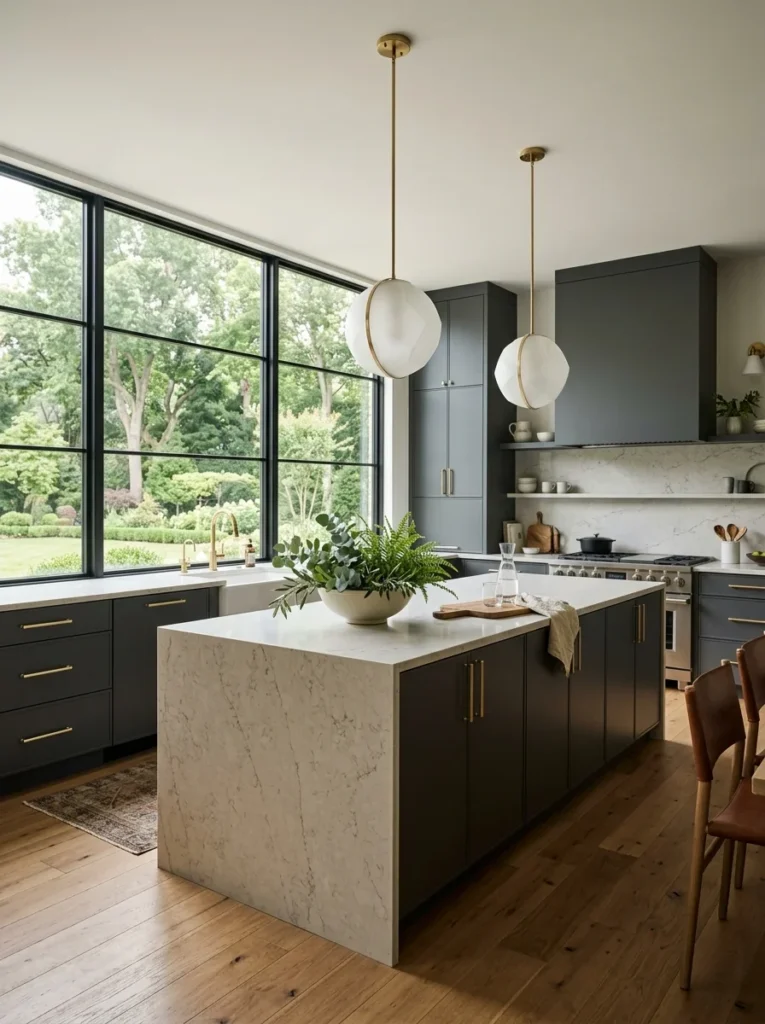
Charcoal gray is an excellent alternative to black when you want a dramatic kitchen with a slightly softer appearance. It works particularly well with modern cabinetry and large open layouts.
Pair charcoal cabinets with light quartz countertops, warm wood flooring, and brass lighting. Large windows can provide enough natural light to keep the darker palette from feeling heavy.
9. Dusty Pink Kitchen
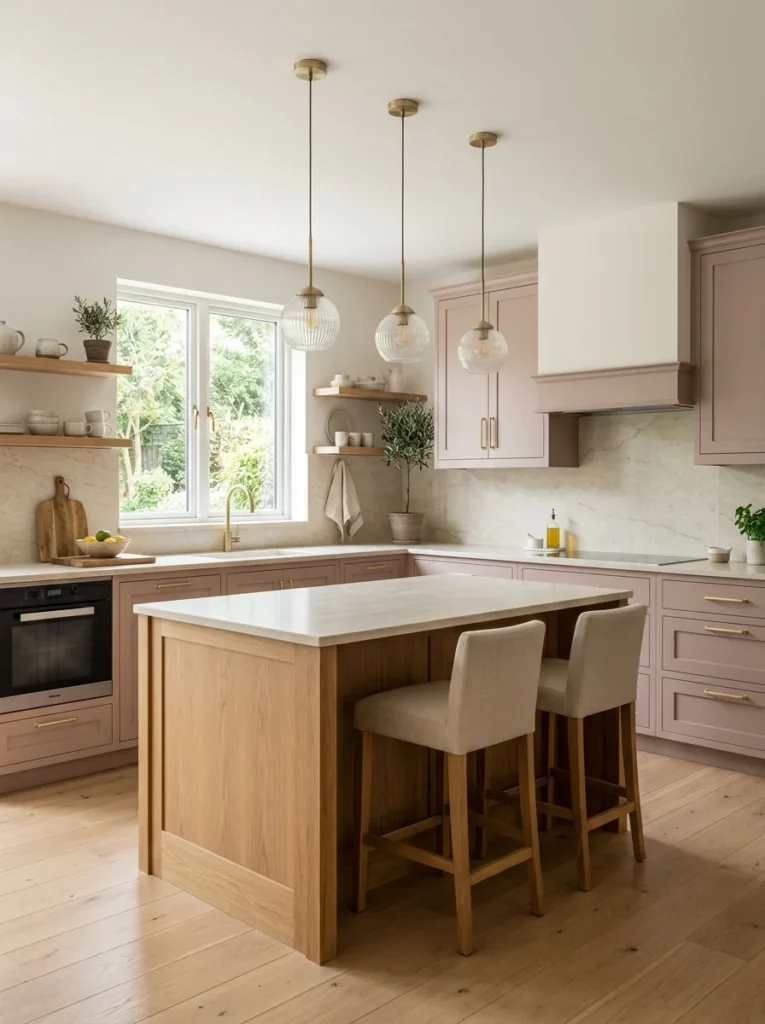
Dusty pink can bring unexpected elegance into a kitchen. The muted tone feels sophisticated rather than overly sweet, especially when paired with simple cabinetry.
Combine dusty-pink cabinets with creamy stone, warm oak, and champagne-brass hardware. Keep accessories neutral to allow the unusual cabinet color to remain the star.
10. Forest Green Kitchen
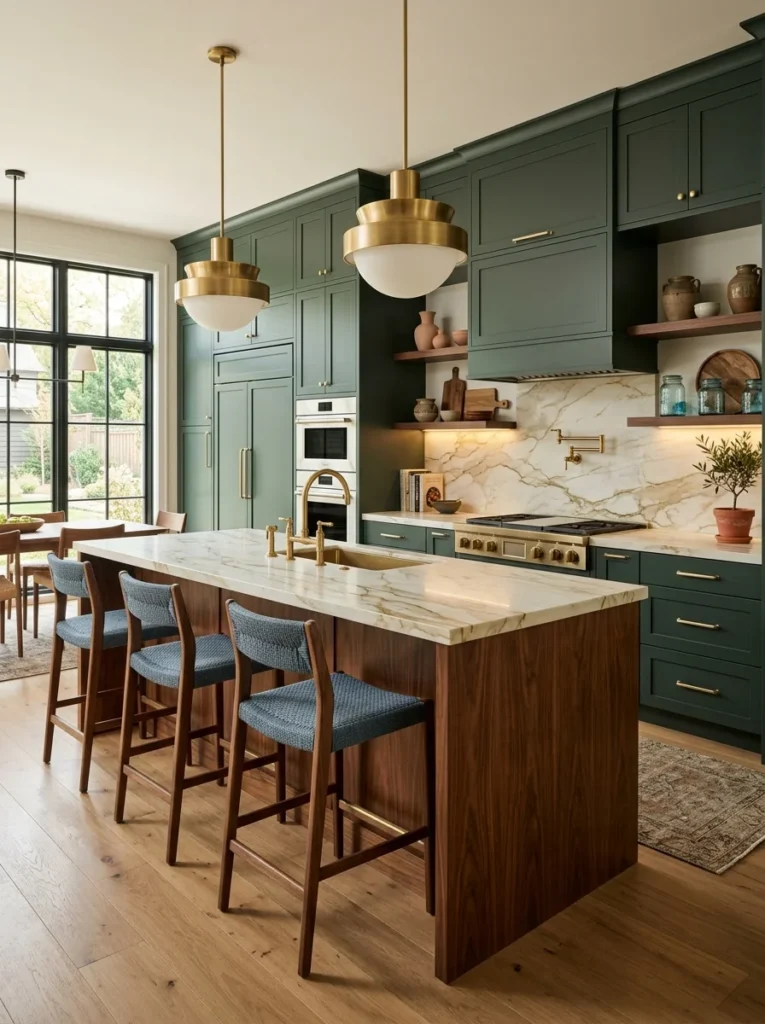
Forest green creates a dramatic, luxurious kitchen with strong natural character. It works beautifully on cabinetry when paired with lighter countertops and warm metallic accents.
Use creamy marble or quartzite to brighten the composition. Natural walnut, brass fixtures, and warm lighting can transform the deep green into a sophisticated designer palette.
11. Black and Cream Kitchen
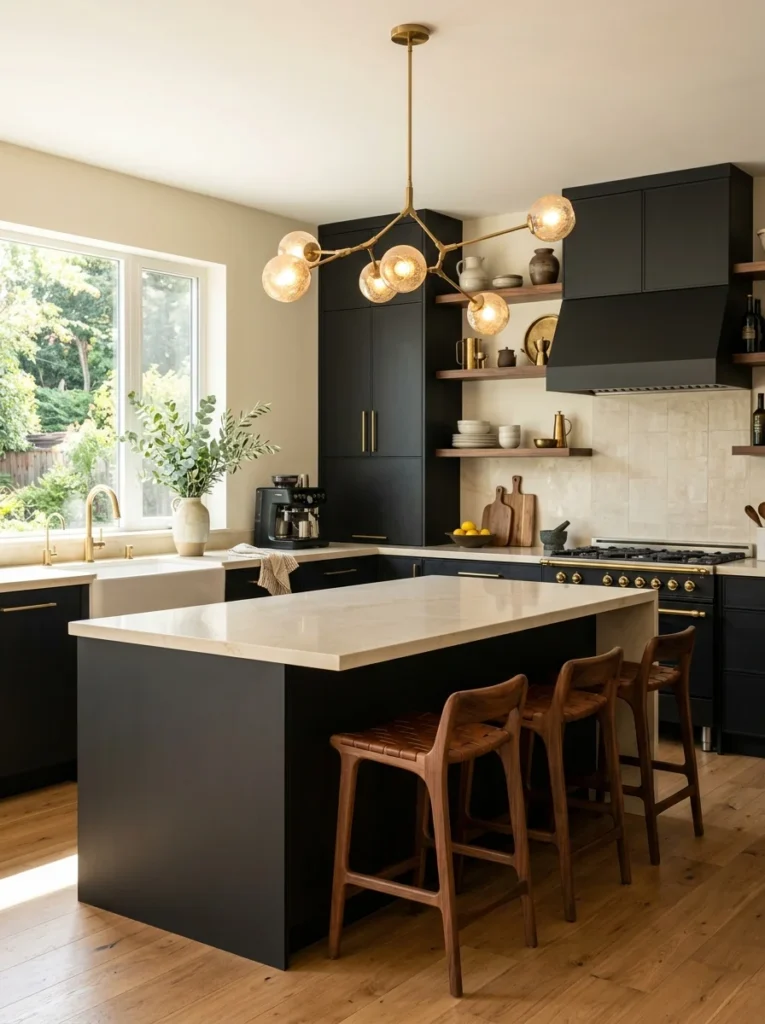
Black and cream offer a timeless contrast that feels bold without becoming overly harsh. Use matte-black cabinetry with warm cream countertops and walls.
Introduce walnut stools, brass hardware, and soft lighting to bridge the two tones. The result is a sophisticated modern kitchen with strong visual definition.
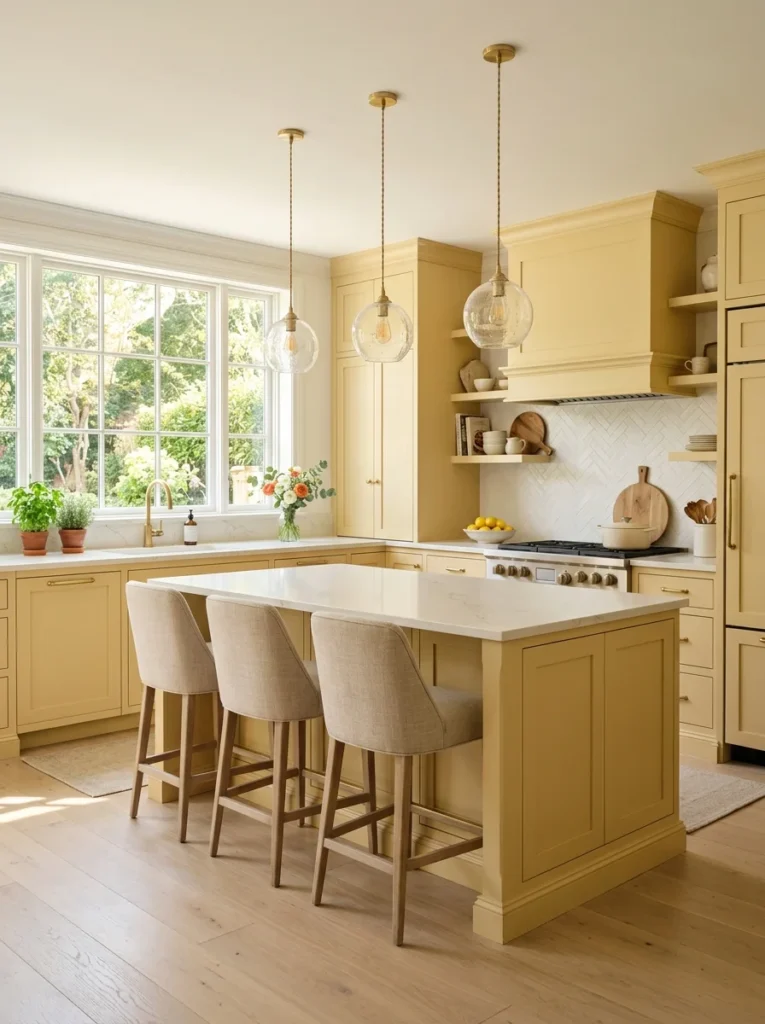
12. Pale Yellow Kitchen
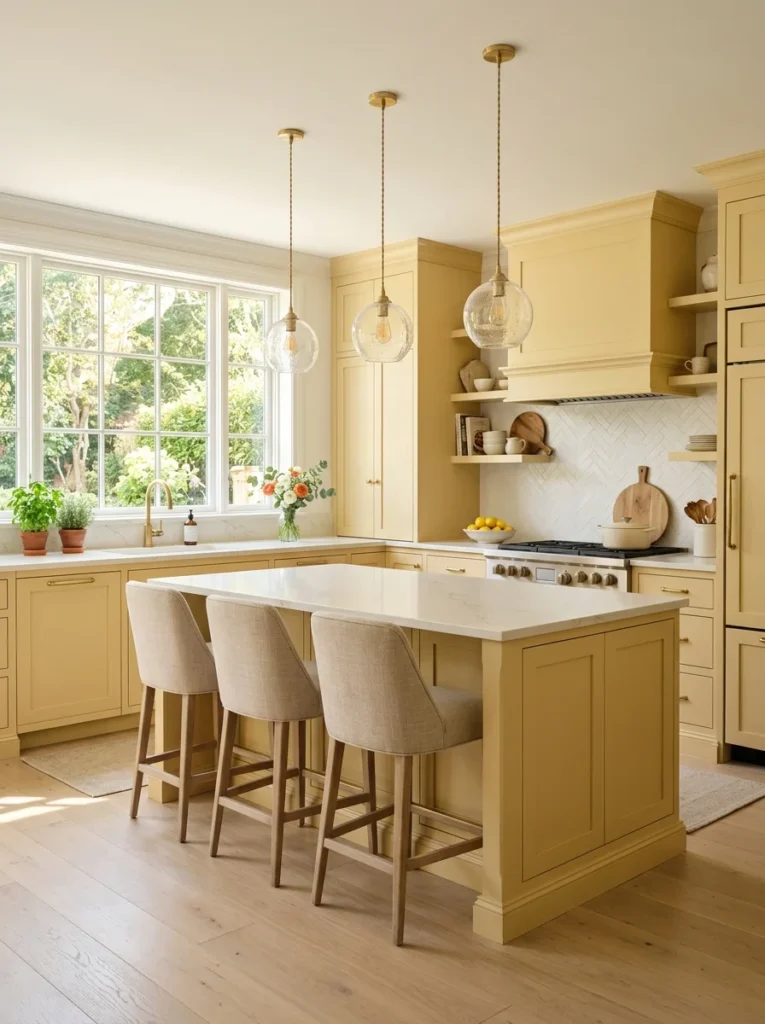
Soft buttery yellow can make a kitchen feel cheerful and sun-filled. It works especially well in kitchens where you want a subtle color that doesn’t overpower the architecture.
Pair pale-yellow cabinets with warm white countertops, light oak, and delicate brass hardware. Keep patterns minimal so the color remains elegant.
13. Blue and White Kitchen
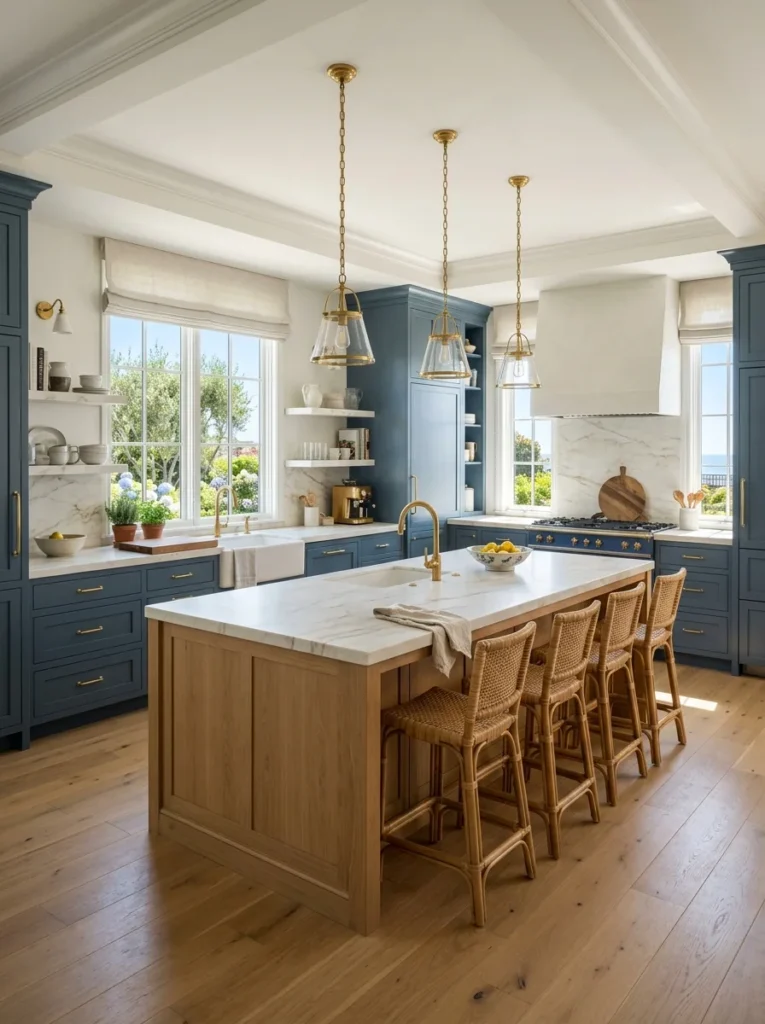
Blue and white create a fresh combination that can work in coastal, traditional, farmhouse, or contemporary interiors. Choose a blue shade that suits the room’s natural lighting.
Use blue cabinetry with warm white walls and countertops, then add natural wood stools and brass lighting. The palette feels bright, relaxed, and timeless.
14. Mushroom Taupe Kitchen
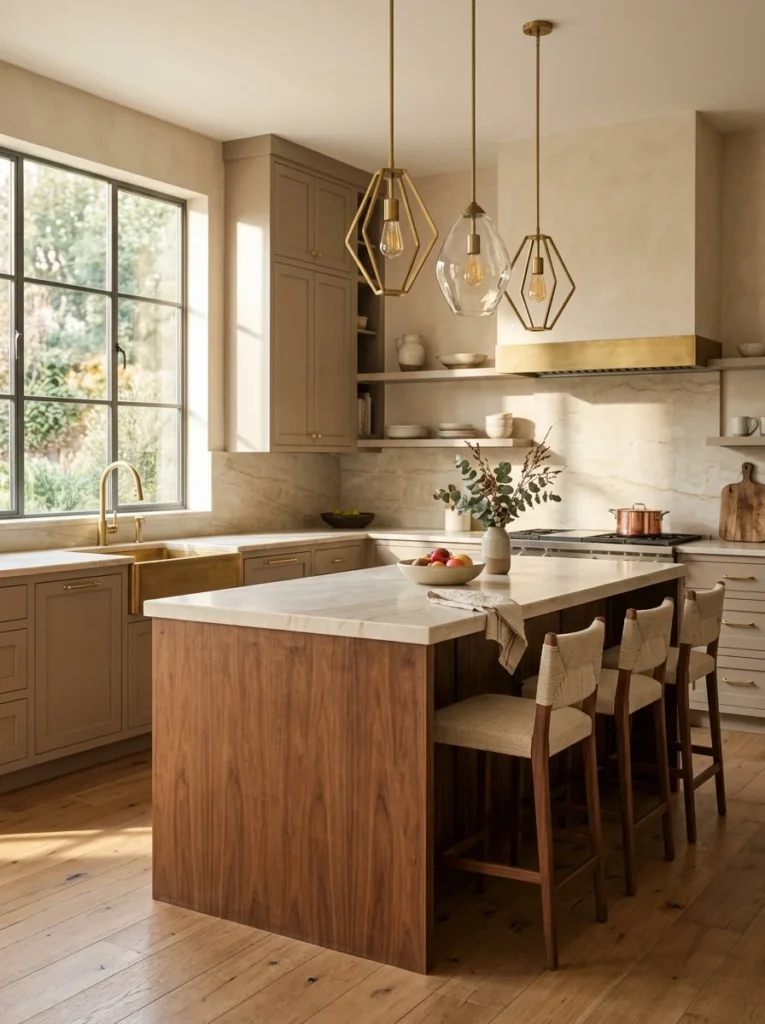
Mushroom taupe is an understated color that sits beautifully between gray and beige. It creates a sophisticated neutral backdrop without the starkness of white.
Pair taupe cabinetry with creamy stone, walnut, and brushed-brass details. Layering similar earthy tones gives the kitchen an expensive, custom-designed appearance.
15. Deep Teal Kitchen
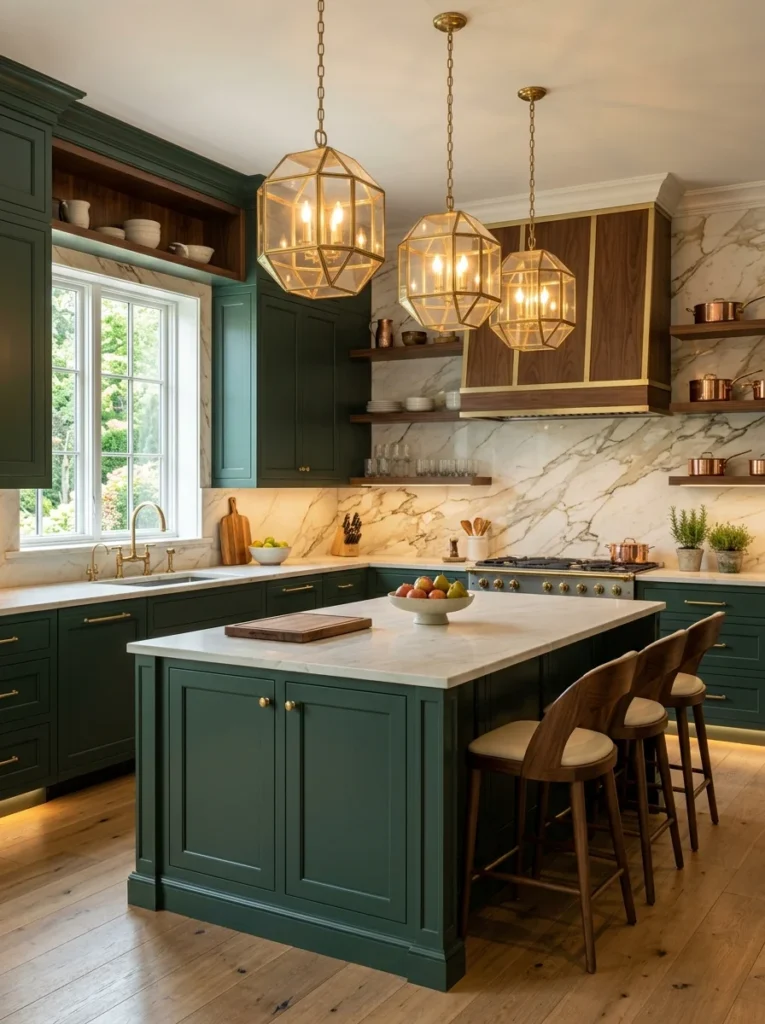
Deep teal combines the sophistication of blue with the organic character of green. It creates a memorable statement while remaining surprisingly versatile.
Use teal cabinetry with warm ivory countertops and natural wood accents. Champagne-brass hardware and soft lighting can make the color look especially luxurious.
16. Warm Greige Kitchen
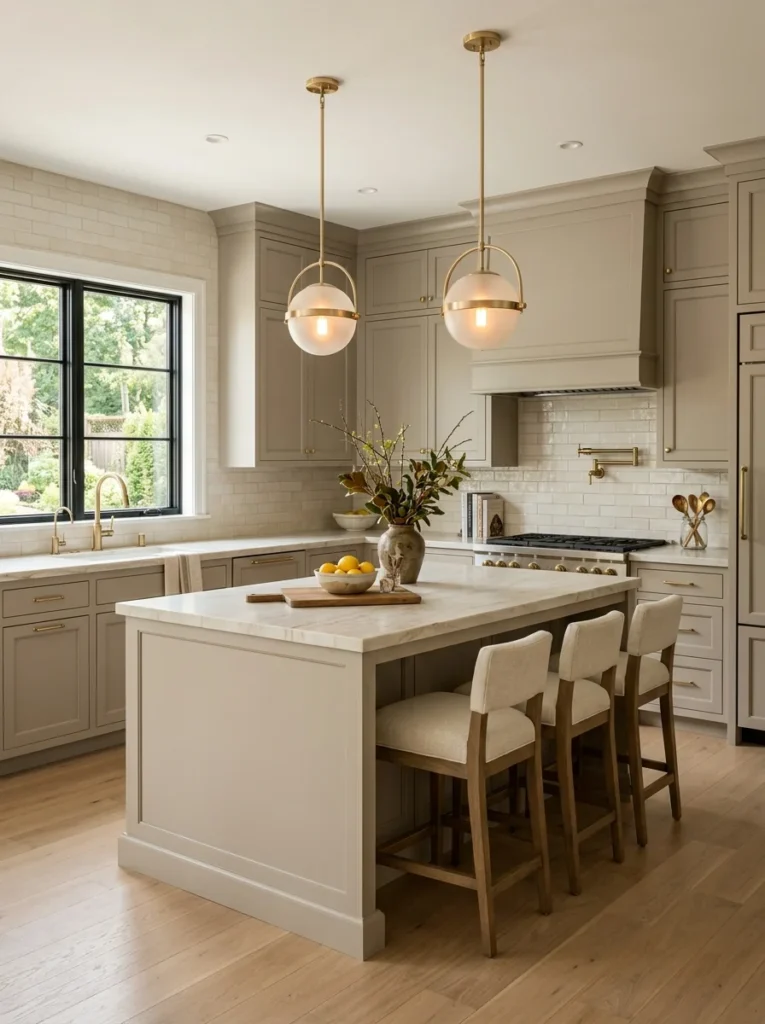
Greige combines gray and beige to create a modern neutral with plenty of warmth. It works beautifully when you want something more interesting than white but less dramatic than dark cabinetry.
Pair greige cabinets with light stone, oak flooring, and subtle brass fixtures. The palette can adapt easily to modern farmhouse, transitional, and contemporary kitchen styles.
17. Burnt Orange Kitchen
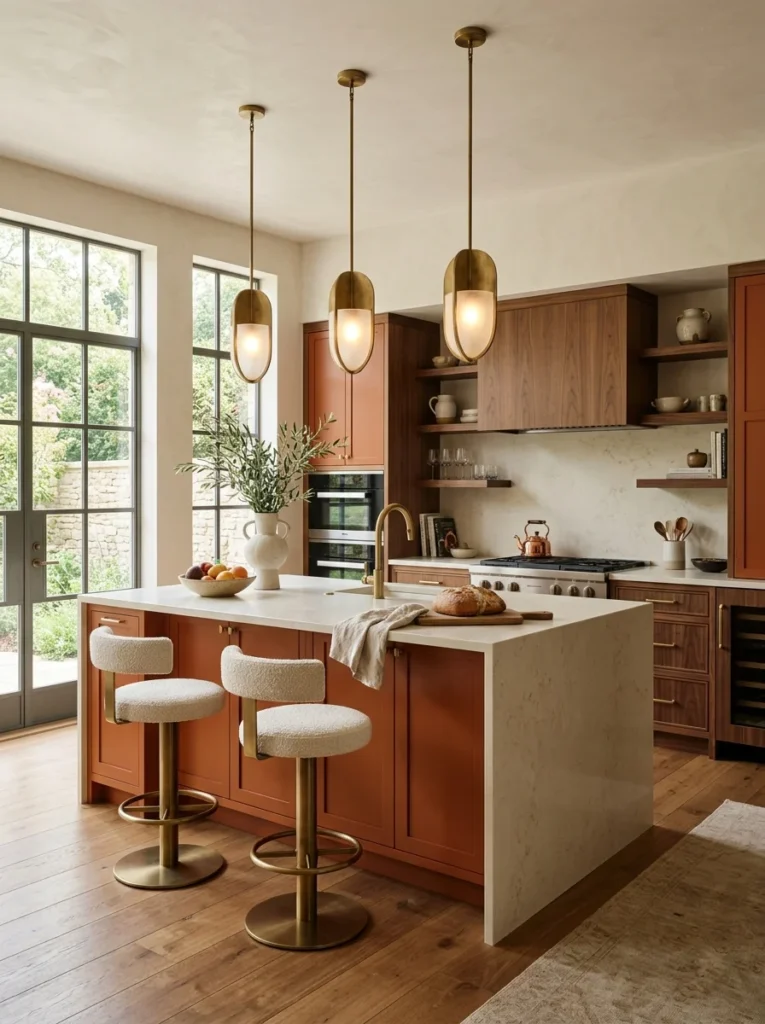
Burnt orange creates a warm and expressive kitchen palette. Instead of covering the entire room in orange, use the shade on an island or selected cabinetry.
Balance it with creamy white, walnut, and muted brass. The combination feels artistic and inviting while maintaining a sophisticated designer appearance.
18. Soft Black Kitchen
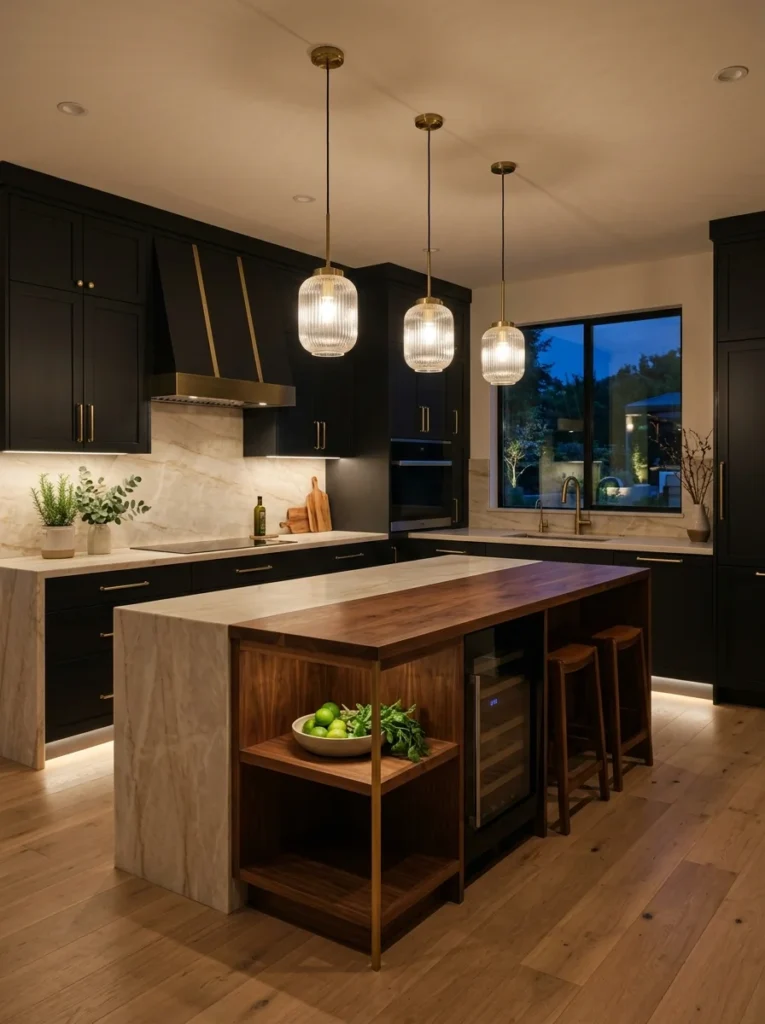
Soft black or charcoal-black cabinetry creates drama while allowing natural textures to stand out. Choose a matte finish to give the color a contemporary appearance.
Combine it with creamy quartzite, warm walnut, and golden lighting. The contrast between dark cabinetry and light stone creates exceptional depth.
19. Muted Mint Kitchen
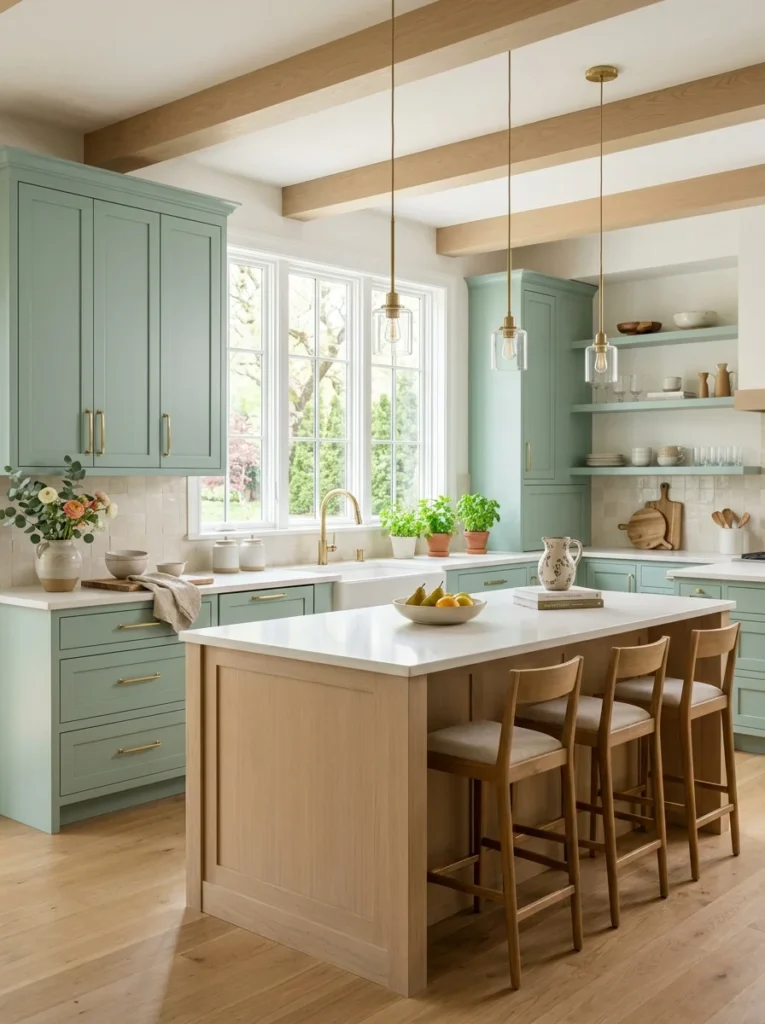
Muted mint is a refreshing color choice that works especially well in bright kitchens. Its soft green-blue undertone creates a light and cheerful atmosphere.
Pair mint cabinets with warm white countertops, pale oak, and brushed-brass hardware. Add simple ceramic accessories for a relaxed yet polished finish.
20. Mocha Brown Kitchen
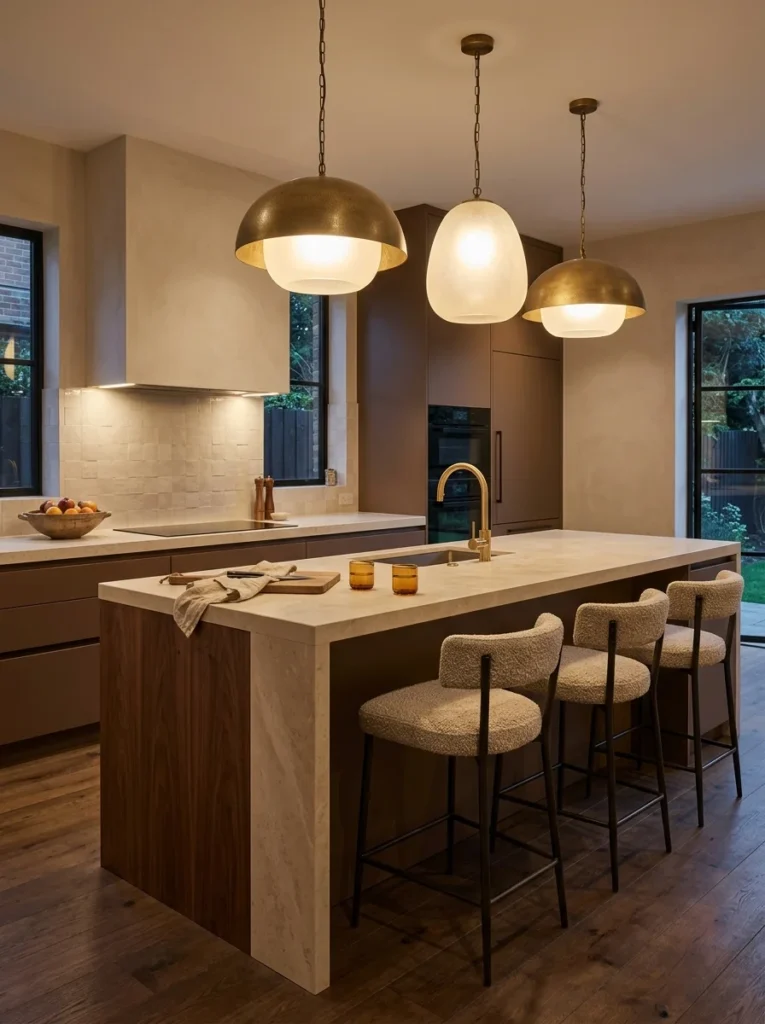
Mocha brown brings warmth and richness to contemporary kitchens. Use the color through cabinetry or wood-look finishes to create a cozy foundation.
Pair mocha with creamy stone, soft beige walls, and champagne-brass details. Warm pendant lights can emphasize the richness of the brown after sunset.
21. Burgundy Kitchen
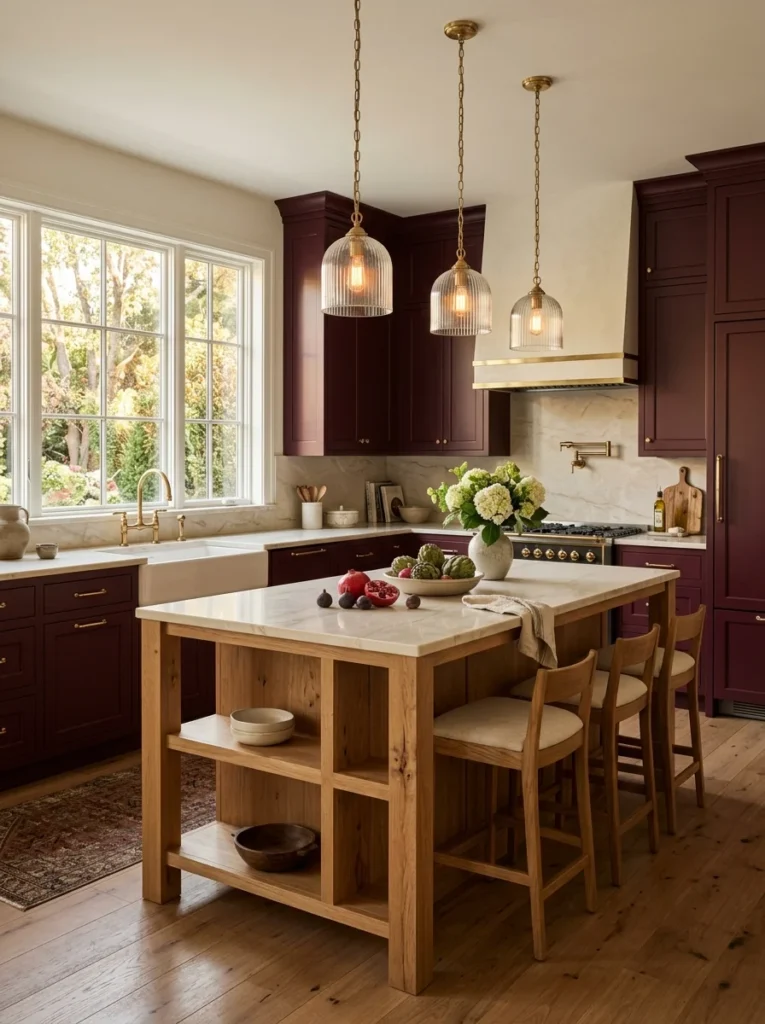
Burgundy offers a dramatic alternative to more common kitchen colors. A deep wine-inspired shade can make cabinetry feel sophisticated and distinctive.
Keep countertops and walls light so the color doesn’t dominate the room. Brass hardware, natural wood, and warm neutral accessories provide beautiful balance.
22. Two-Tone Green and Wood Kitchen
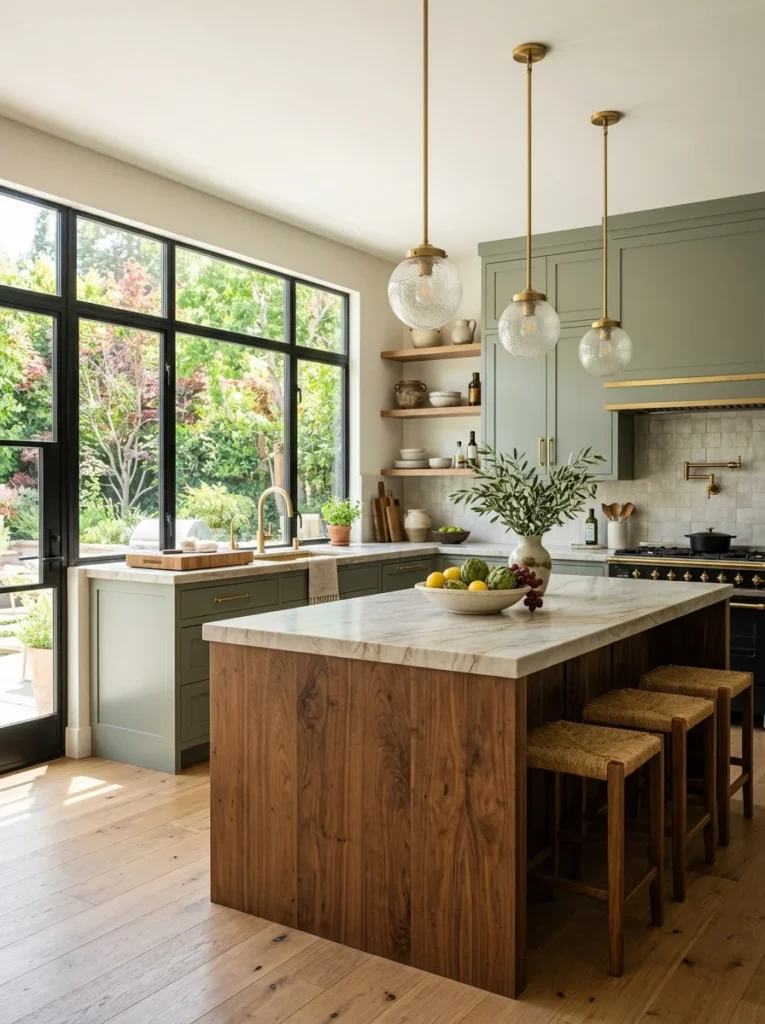
Combining colored cabinetry with natural wood creates an organic, designer-inspired kitchen. Use a sophisticated green on the main cabinets and warm walnut or oak on the island.
Creamy stone countertops can connect the two materials. The mixture of painted color and natural grain gives the kitchen plenty of visual depth.
23. Coastal Blue-Green Kitchen
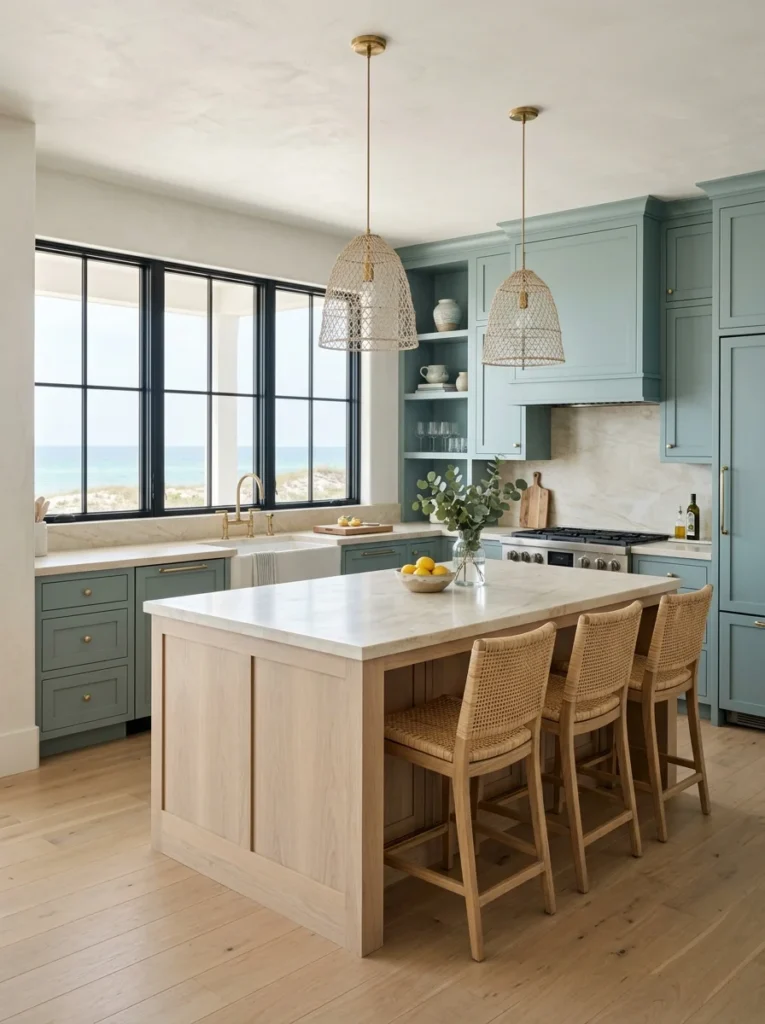
A muted blue-green palette can create a relaxed coastal feeling without relying on obvious beach décor. Choose a soft sea-glass or blue-green shade for the cabinetry.
Pair it with warm white walls, pale oak, creamy countertops, and subtle brass accents. Keep decorative accessories minimal so the colors and materials create the coastal mood naturally.
24. Ultimate Designer Color Palette
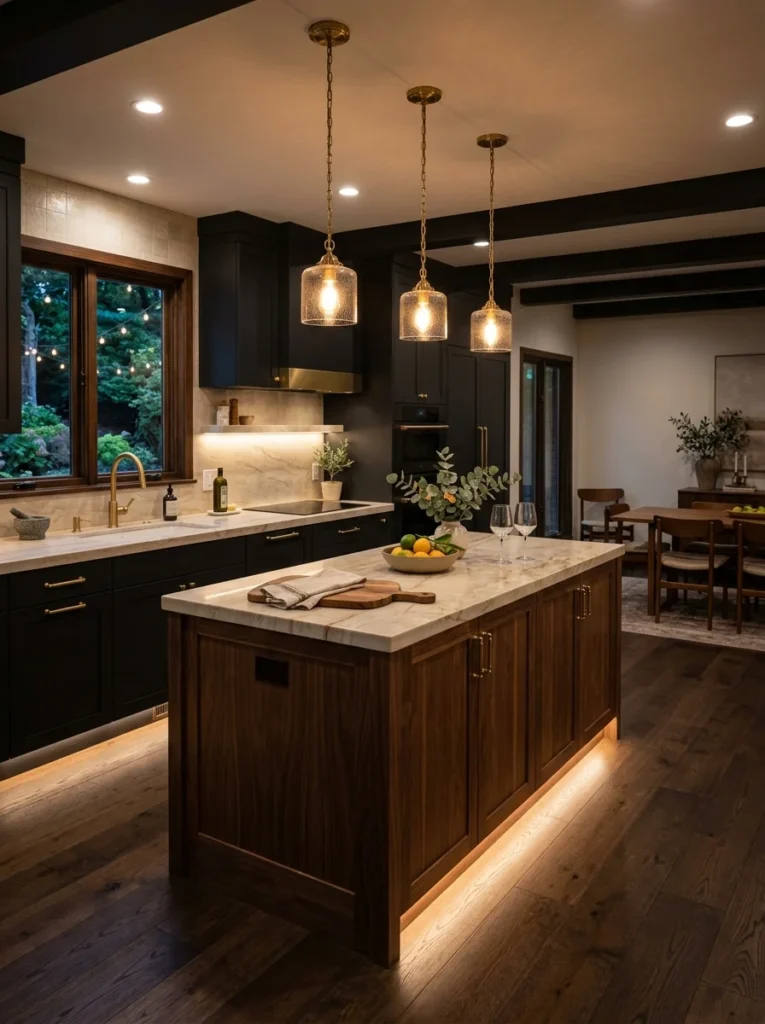
For a truly memorable kitchen, combine several sophisticated colors through carefully controlled layers. Imagine deep green cabinetry, a warm walnut island, creamy quartzite countertops, muted blue accents, and subtle terracotta accessories.
Use champagne-brass hardware and warm architectural lighting to connect the palette. The result should feel colorful but cohesive, luxurious but comfortable, and distinctive enough to become the centerpiece of the home.