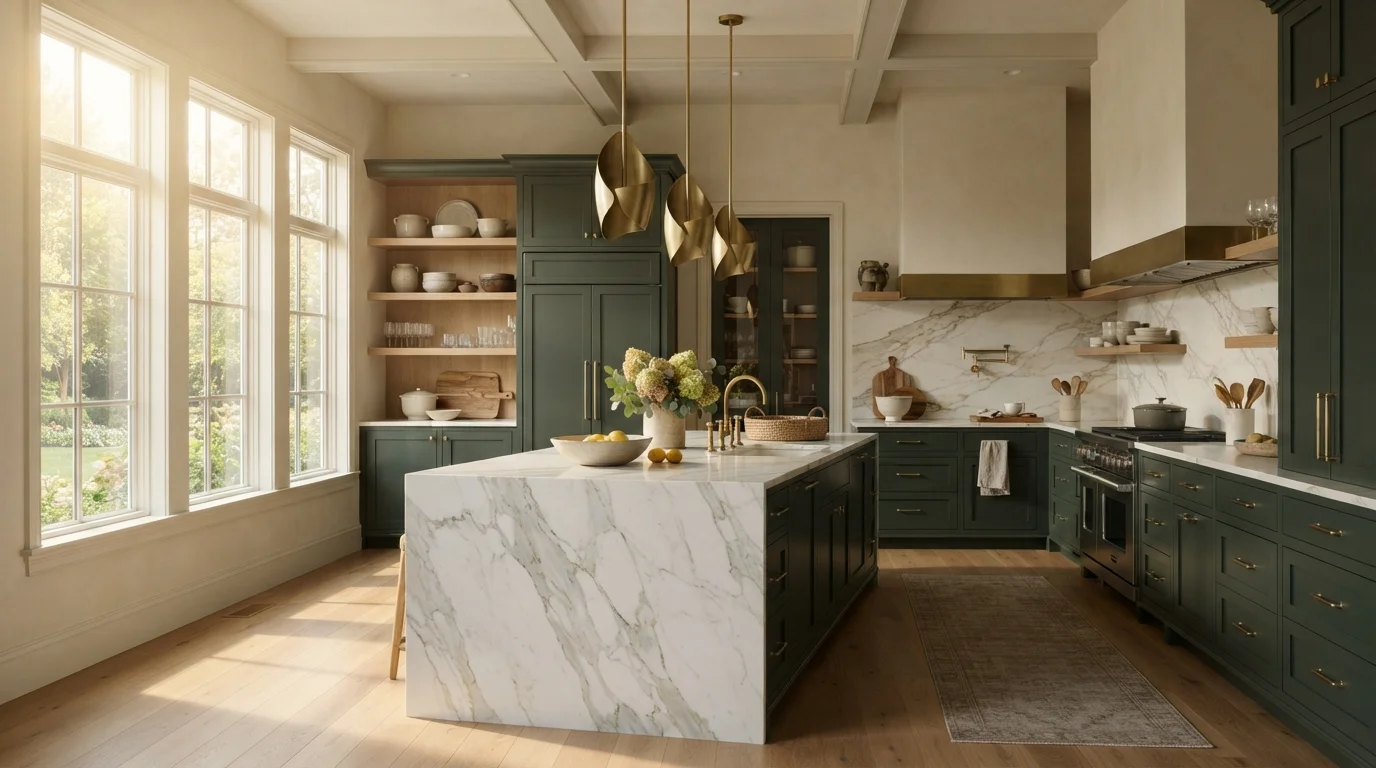
Dark green kitchens have a special kind of elegance. Rich, calming, and effortlessly sophisticated, this deep color can make an ordinary kitchen feel like a beautifully designed space with the character of a luxury home. From dramatic forest-green cabinetry to soft sage accents and polished brass details, dark green offers plenty of ways to create a kitchen that feels both stylish and welcoming.
The secret to getting this look right is balancing the richness of green with thoughtful materials, warm lighting, beautiful textures, and complementary colors. Whether you love classic interiors, modern minimalism, or cozy European-inspired kitchens, these 27 dark green kitchen ideas will help you create a space that feels timeless rather than trendy.
1. Choose Deep Forest Green Kitchen Cabinets
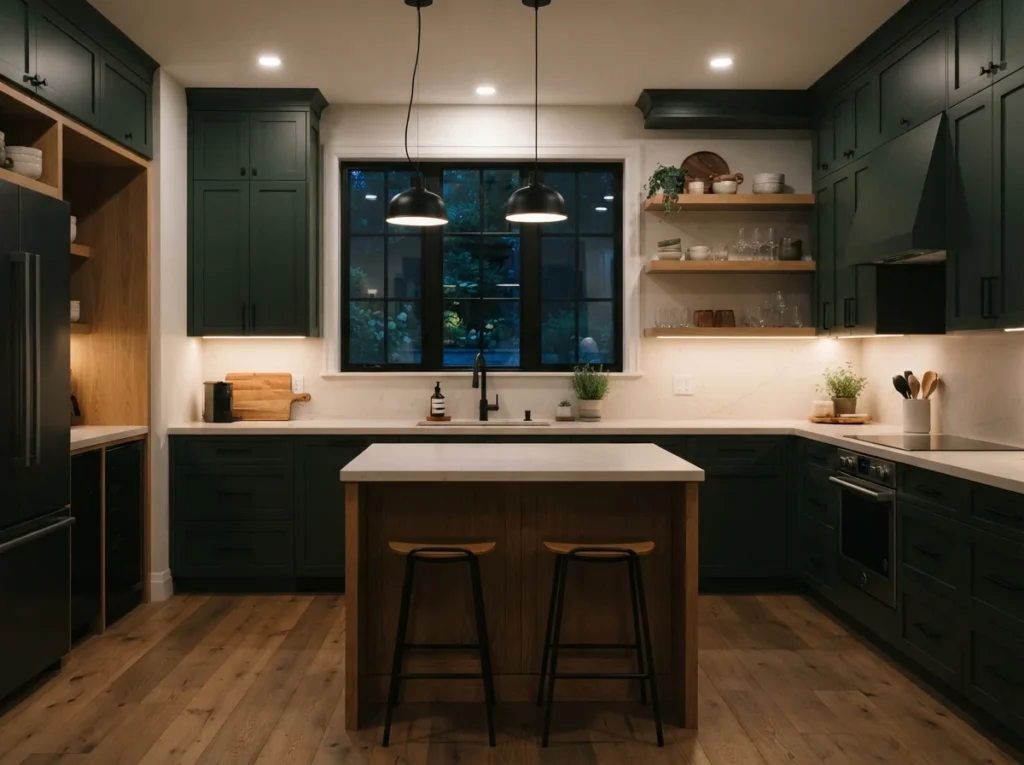
Deep forest green cabinets create a striking foundation for a luxurious kitchen. Their rich, earthy tone brings depth to the room while feeling more inviting than traditional black cabinetry. Choose a soft satin or matte finish to give the cabinets a refined appearance without making the space feel overly glossy. Shaker-style doors work beautifully for a classic look, while flat-front cabinetry creates a cleaner, contemporary effect.
Balance the dramatic cabinetry with creamy walls, natural stone countertops, and warm wood flooring. These lighter materials prevent the green from overwhelming the room and allow its rich color to stand out. Add understated brass hardware for a polished finishing touch that makes the entire kitchen feel thoughtfully designed.
2. Pair Dark Green Cabinets with White Marble Countertops
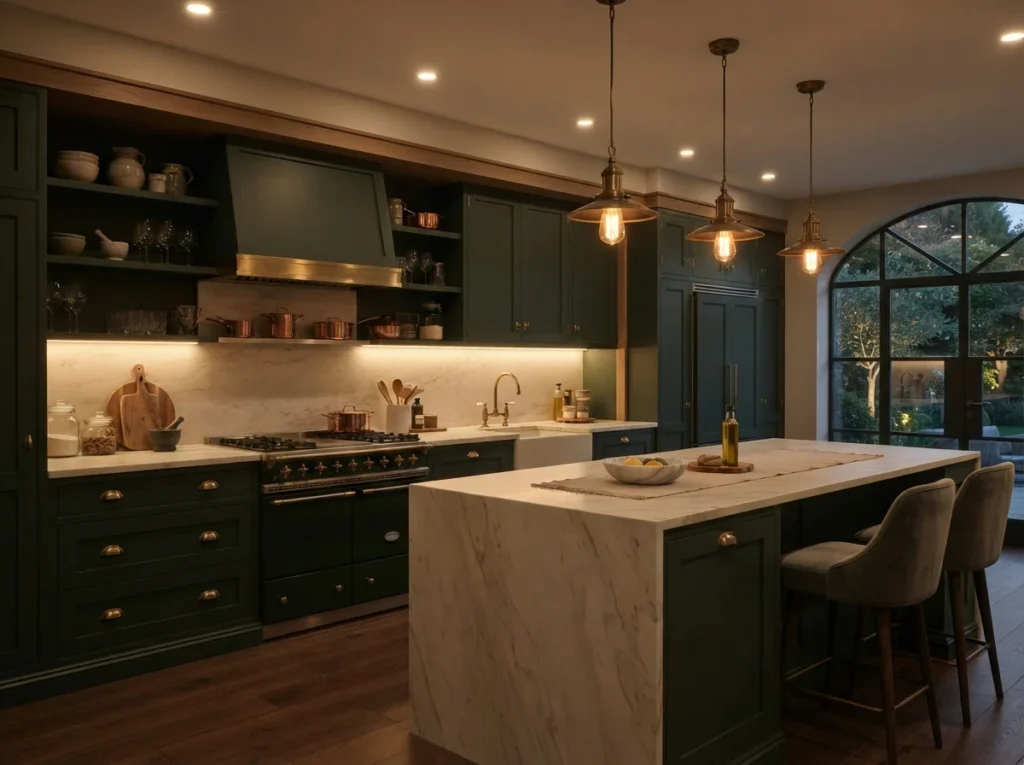
White marble and dark green cabinetry create a beautiful contrast that instantly elevates a kitchen. The crisp white background brightens the deep cabinet color, while delicate gray or warm beige veining adds natural movement. Consider using the same marble across the countertops and backsplash to create a seamless, high-end appearance.
For an especially elegant result, choose dark green cabinets with simple door profiles and minimal hardware. A few brass accents, such as cabinet pulls or a traditional faucet, can introduce warmth without distracting from the stone. This combination feels sophisticated enough for a formal kitchen but remains practical and welcoming for everyday cooking.
3. Install a Dark Green Kitchen Island
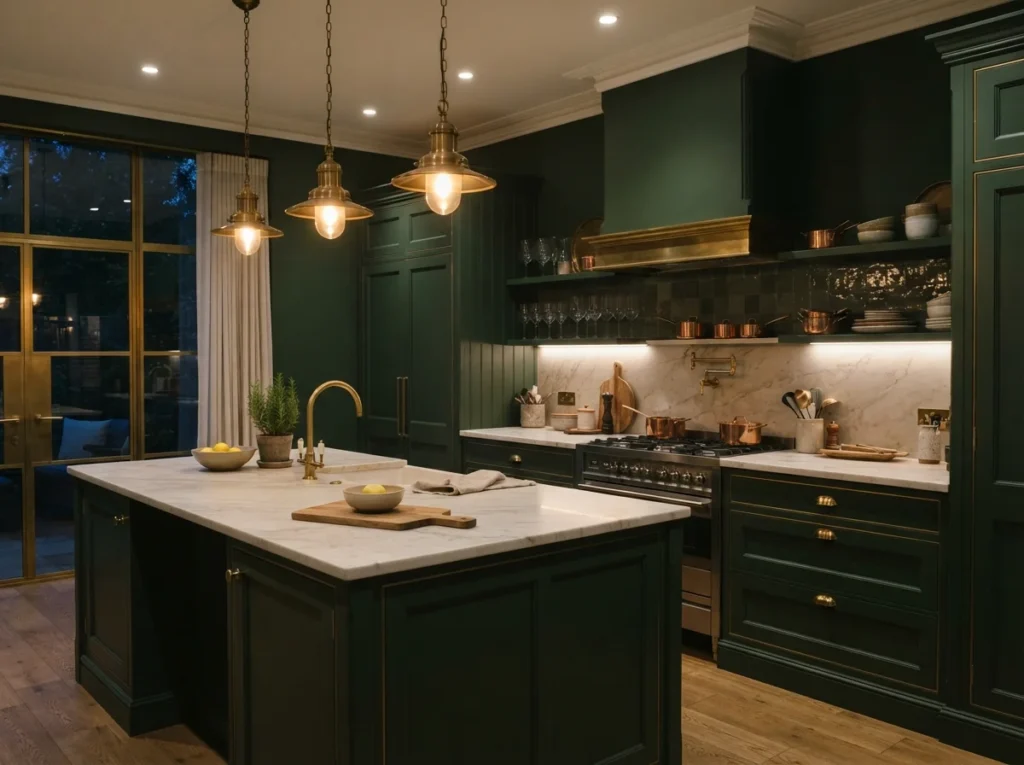
A dark green island can become the centerpiece of a kitchen without requiring every cabinet to share the same color. This approach works especially well in open-plan spaces where a bold island helps define the cooking area. Choose a rich emerald, woodland, or deep olive shade, then pair it with lighter perimeter cabinets for an appealing contrast.
Give the island extra presence with a waterfall stone countertop, decorative paneling, or elegant turned legs. Pendant lights above the island can highlight its color and create a comfortable gathering spot. If the surrounding kitchen feels neutral, the green island adds personality while keeping the overall design balanced and timeless.
4. Create a Dramatic Green and Brass Kitchen
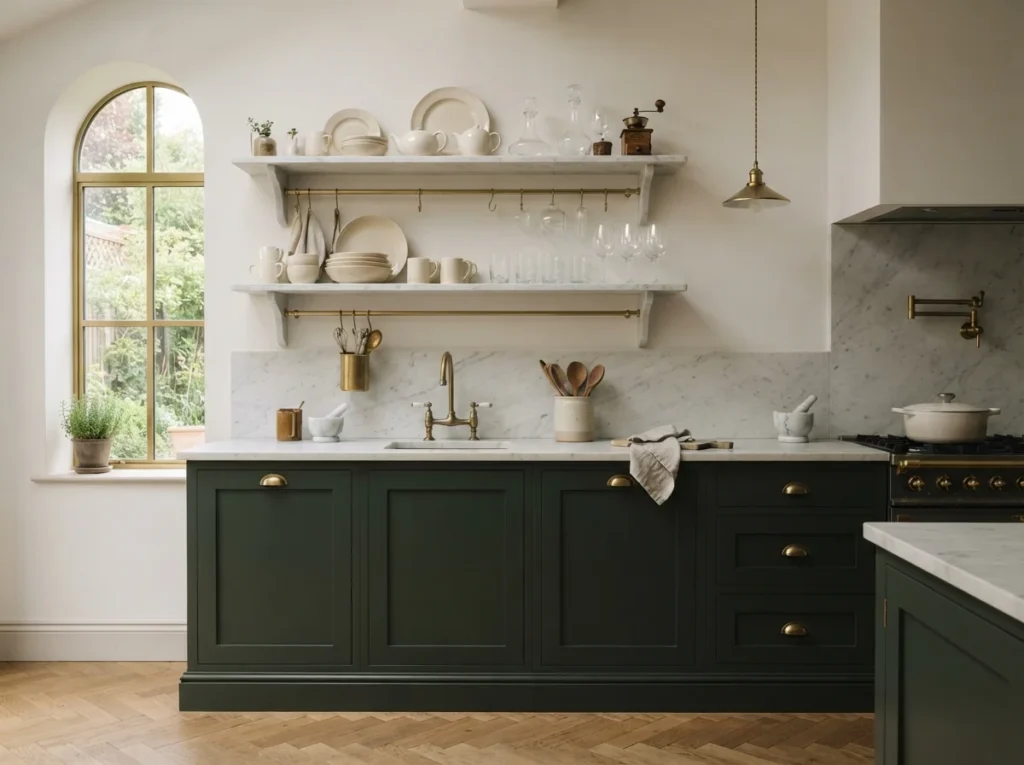
Dark green and brass are a natural pairing when you want a kitchen with a luxurious, polished atmosphere. The warm golden tone of brass brings out the richness of green, creating a beautiful contrast that feels both classic and glamorous. Use brass for cabinet handles, drawer pulls, faucets, pot fillers, and pendant light details.
The key is to use metallic finishes thoughtfully rather than covering every surface in gold. Matte dark green cabinetry, warm white walls, and a stone countertop provide a calm backdrop for the brass accents. Aged or brushed brass can be especially attractive because it develops a softer character than highly polished metallic finishes.
5. Add a Dark Green Backsplash
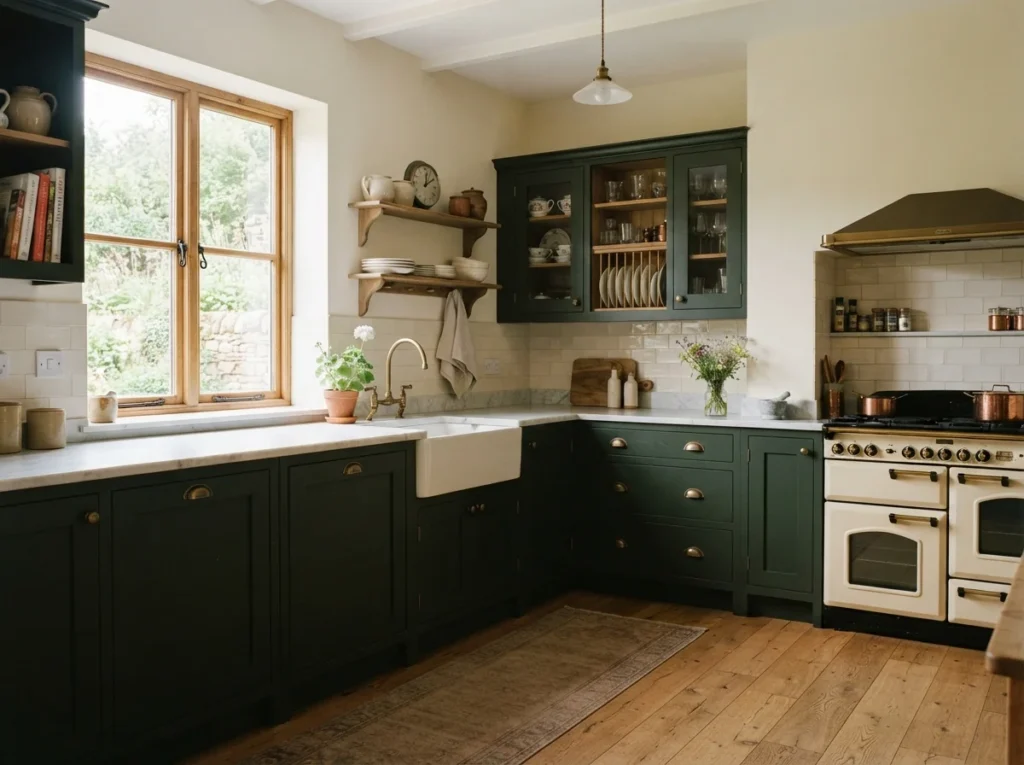
A dark green backsplash is an effective way to introduce rich color without committing to an entire kitchen of green cabinetry. Glossy green tiles reflect light beautifully, while handmade or zellige-style tiles bring subtle texture and variation. Choose a deep bottle-green shade for a dramatic effect or a softer moss tone for a more relaxed atmosphere.
Continue the backsplash behind the cooking range or along the main preparation wall to create a cohesive design feature. Pair it with cream, oak, or natural stone countertops to prevent the darker surface from feeling too heavy. Brass or antique bronze fixtures can complete the look with understated warmth.
6. Design a Moody Dark Green Kitchen with Black Accents
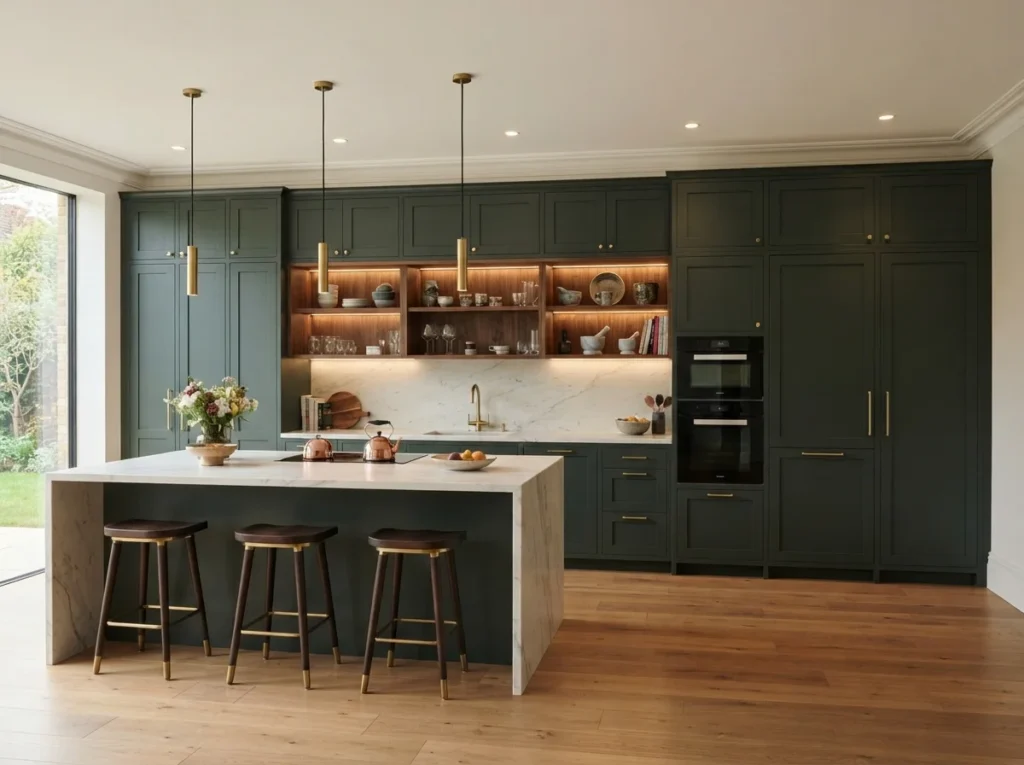
For a bold contemporary kitchen, combine dark green cabinetry with carefully selected black details. Black faucets, slim cabinet handles, window frames, and pendant lights create a strong visual outline that makes the green appear even richer. This palette is especially appealing in kitchens with generous natural light and clean architectural lines.
To keep the room from becoming too dark, introduce lighter materials through pale countertops, warm oak shelving, or creamy flooring. Layered lighting is also essential, particularly beneath upper cabinets and around the island. The result is a sophisticated, moody kitchen that feels intentional rather than gloomy.
7. Use Warm Wood Shelving Against Green Cabinets
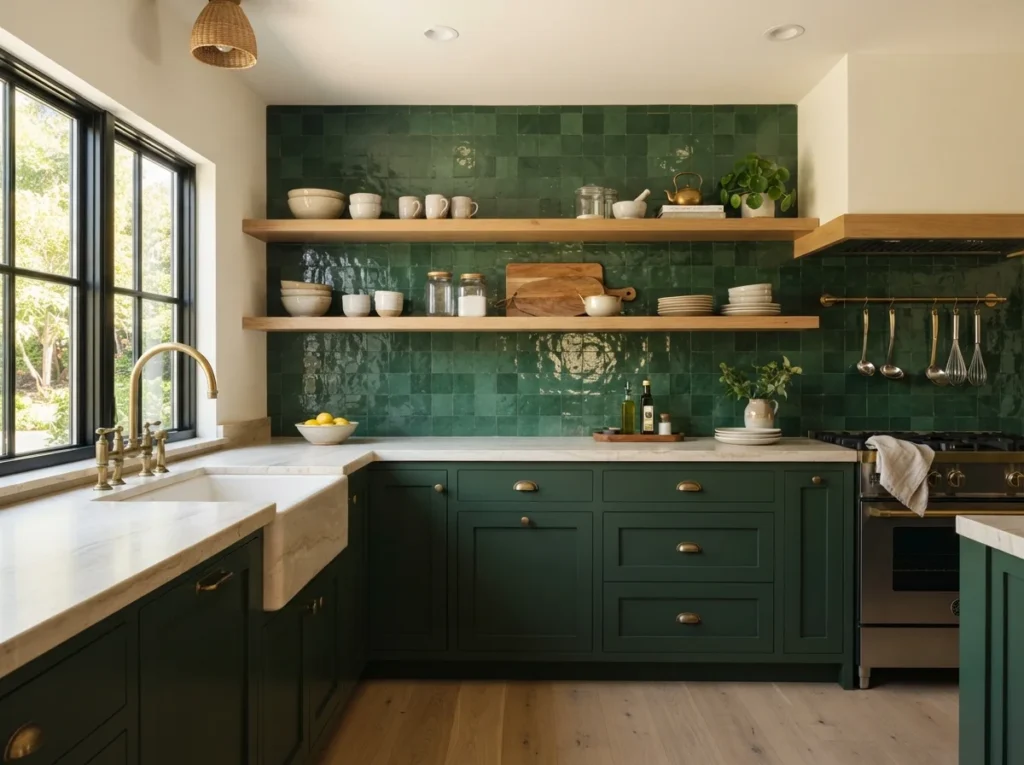
Natural wood shelving brings an inviting softness to dark green kitchens. The warm grain of oak, walnut, or reclaimed timber creates a beautiful contrast against deep green cabinetry and makes the space feel more lived-in. Open shelves can also break up a long stretch of closed cabinets, giving the kitchen a lighter and more relaxed appearance.
Style the shelves with everyday ceramics, clear glass jars, wooden serving boards, and a few carefully chosen decorative pieces. Avoid overcrowding them so the natural wood remains visible. This combination works particularly well in cottage-inspired, Scandinavian, and modern organic kitchens where warmth and texture are just as important as color.
8. Choose Emerald Green Kitchen Cabinets
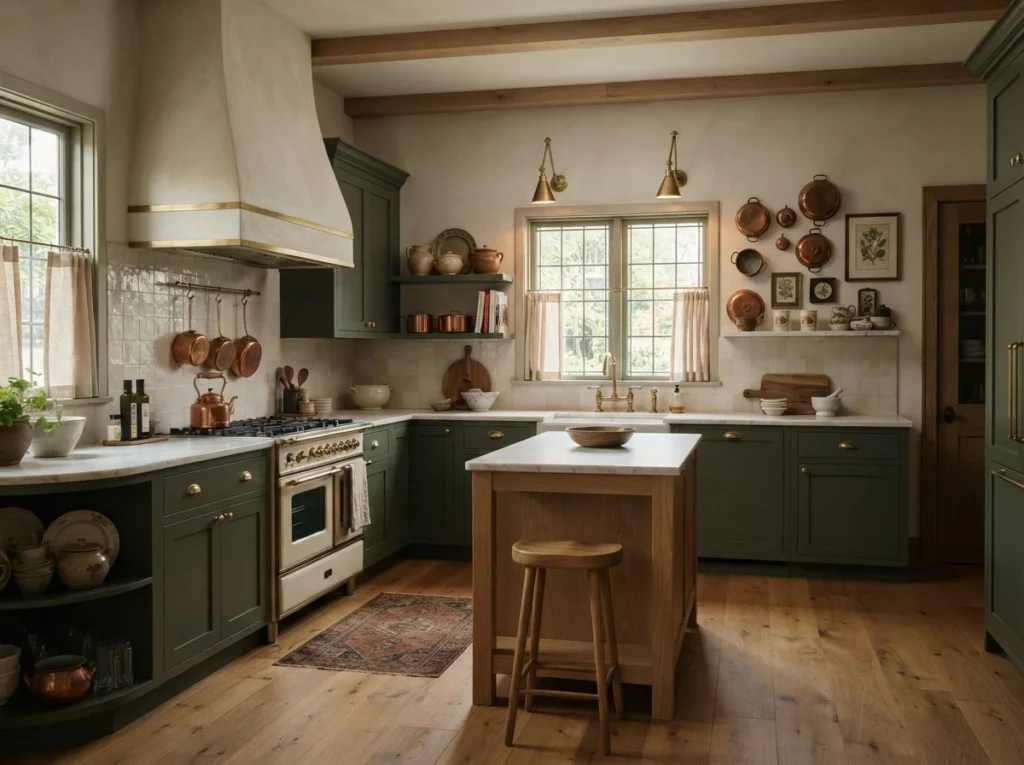
Emerald green offers a more jewel-like interpretation of the dark green kitchen trend. Its saturated color feels rich and expressive, making it an excellent choice for homeowners who want a kitchen with a memorable focal point. A matte finish creates a sophisticated look, while a subtle satin sheen can make the color appear deeper under warm lighting.
Pair emerald cabinetry with white quartz, marble, or pale beige stone to create contrast. Brass hardware and elegant pendant lights can enhance its luxurious character, while natural wood accents keep the space from feeling too formal. For a balanced design, consider using emerald on the lower cabinets and a softer neutral shade above.
9. Create a Classic Dark Green Shaker Kitchen
Shaker cabinetry is a timeless choice that gives dark green kitchens a sense of traditional craftsmanship. Its simple recessed panels add architectural detail without making the design feel overly decorative. A deep olive or forest-green finish can make these familiar cabinet fronts feel fresh, especially when paired with natural materials and classic fixtures.
Complete the look with marble or quartz countertops, a ceramic farmhouse sink, and understated brass hardware. Cream walls and warm wood flooring help create a comfortable atmosphere that feels inspired by elegant country homes. This style is ideal if you want a kitchen that will still look beautiful after current design trends have changed.
10. Add a Dark Green Range Hood Feature
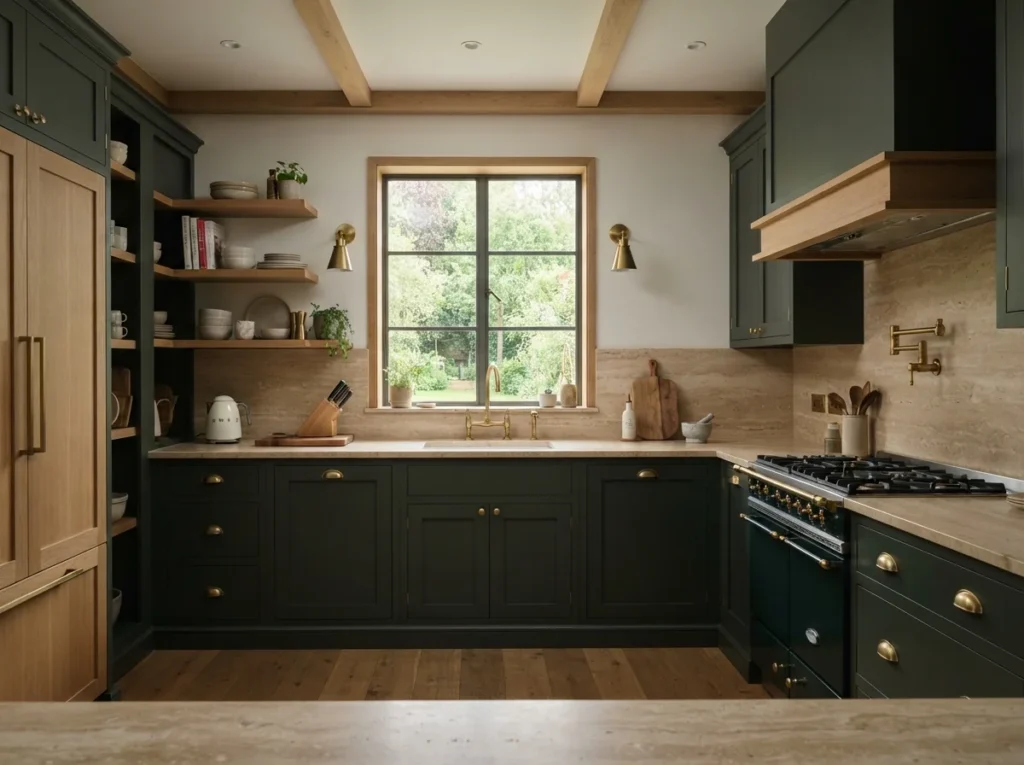
A statement range hood in dark green can give a kitchen a custom-designed appearance. Instead of allowing the cooking area to blend into the background, use the hood as an architectural feature with a sculpted shape, decorative trim, or a smooth plaster-style finish. Matching it to the cabinetry creates a coordinated look, while a contrasting green tone adds extra depth.
Surround the hood with a beautiful backsplash, such as handmade cream tiles or softly veined marble. Keep nearby shelves and countertops relatively simple so the feature remains the visual focus. This detail works especially well in traditional kitchens, transitional interiors, and spaces inspired by European country homes.
11. Combine Dark Green and Natural Oak
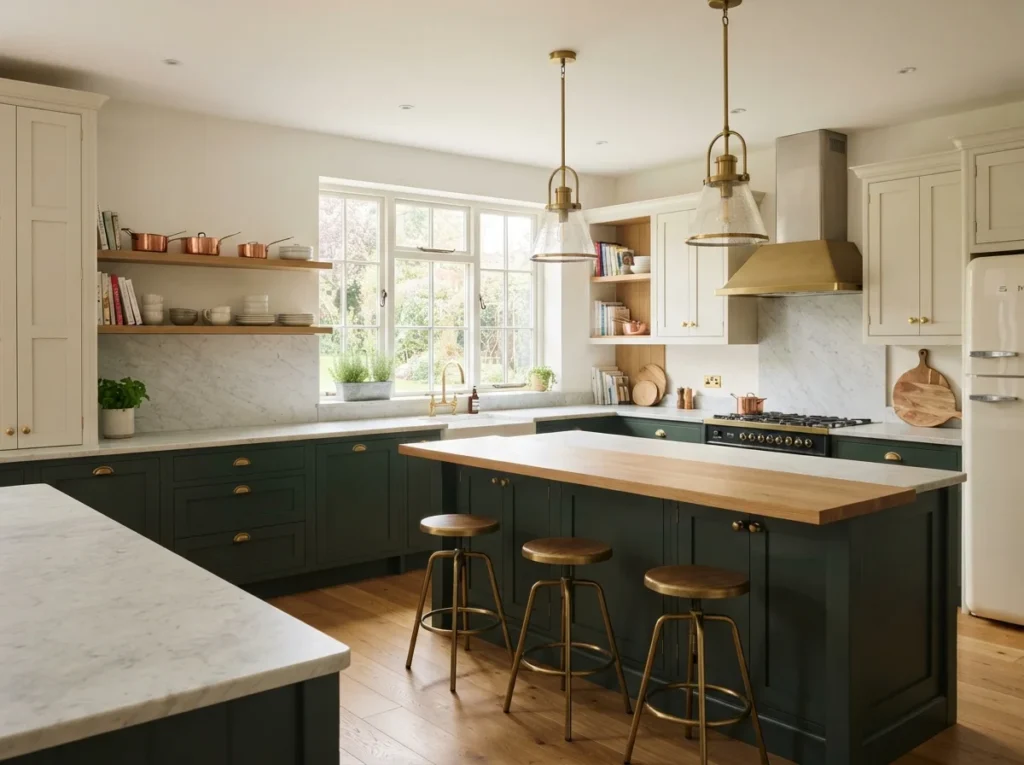
Dark green and natural oak create a welcoming balance between richness and simplicity. Green brings depth to the kitchen, while oak introduces warmth through its natural grain and golden undertones. You can use green for the lower cabinetry and oak for upper cabinets, floating shelves, or a kitchen island to create an attractive two-tone design.
For a cohesive finish, select a muted forest or olive green rather than an extremely bright shade. Pale stone countertops, textured ceramic tiles, and warm lighting will help connect the different materials. This combination is particularly beautiful in modern organic kitchens where natural textures make the space feel calm and inviting.
12. Install Floor-to-Ceiling Dark Green Cabinets
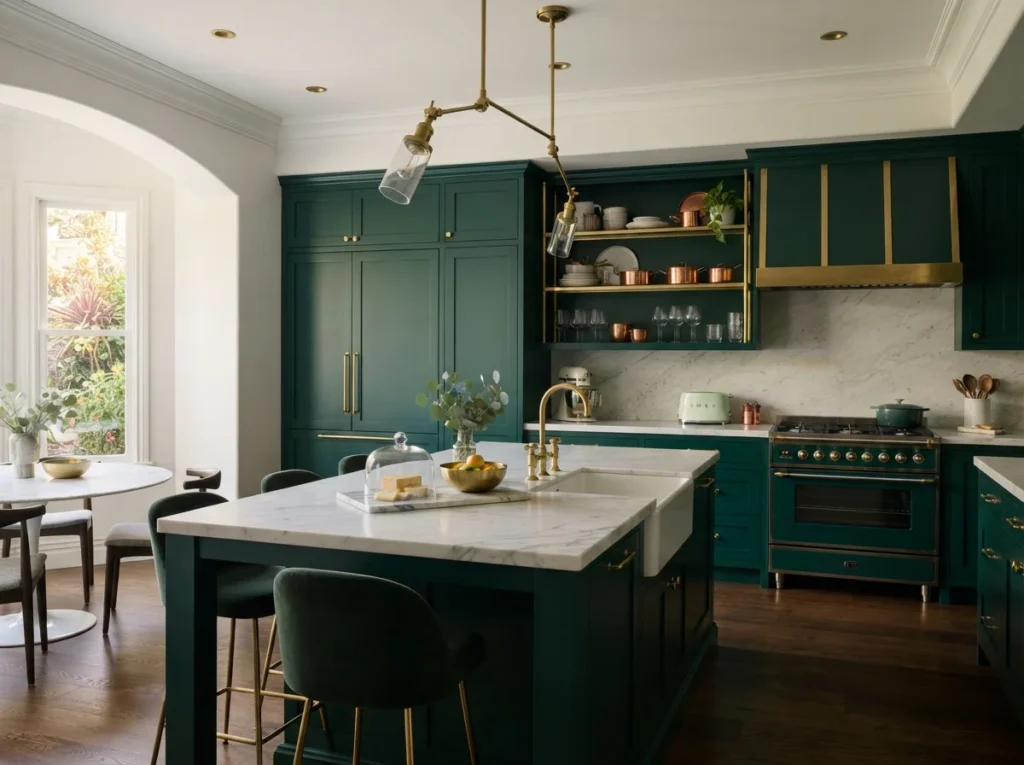
Floor-to-ceiling green cabinetry creates a streamlined appearance while providing generous storage. It is an excellent option for kitchens where you want to minimize visual clutter and make the walls feel more cohesive. Tall cabinets can conceal pantry storage, built-in appliances, and everyday kitchen equipment behind a consistent finish.
To prevent the design from feeling too imposing, use a lighter countertop and introduce open niches or small display sections. Integrated lighting inside selected shelves can add depth and make the cabinetry feel more custom. A warm white ceiling and pale flooring will also help maintain a comfortable balance around the tall green surfaces.
13. Style a Dark Green Kitchen with Cream Cabinets
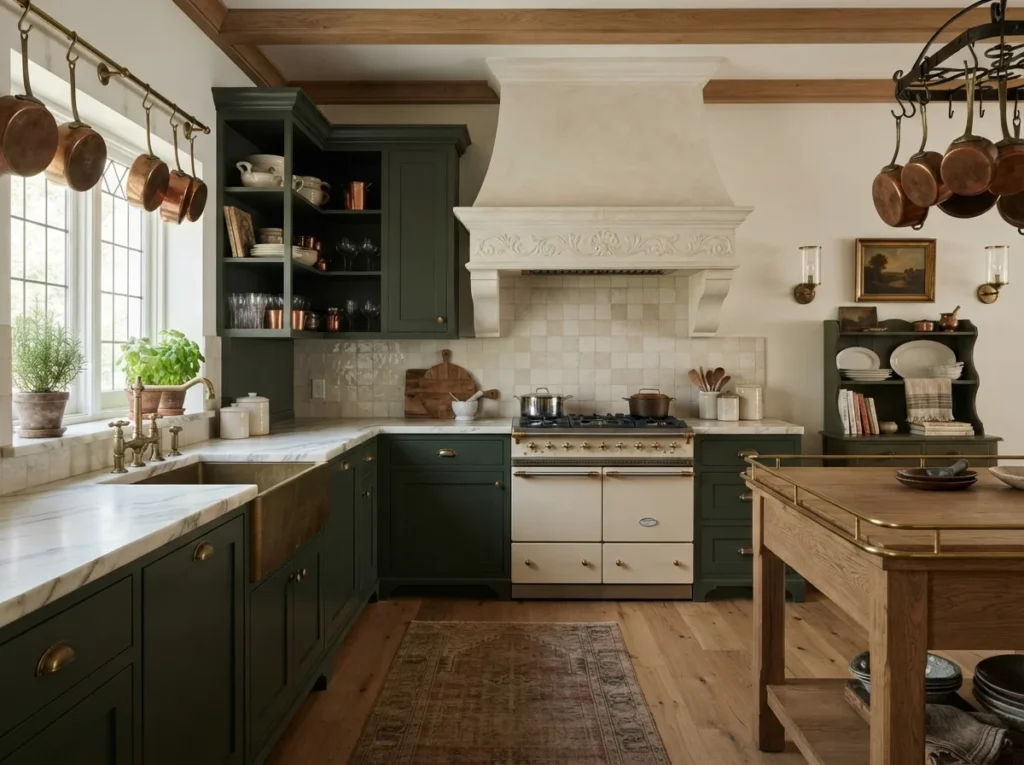
A two-tone kitchen combining dark green and cream feels elegant, warm, and beautifully balanced. Use green on the lower cabinets or island, then introduce creamy upper cabinets to keep the room visually light. This arrangement allows you to enjoy the richness of dark green without making the entire kitchen feel enclosed.
Choose a creamy shade with warm undertones rather than a stark white so it blends naturally with the green. Marble countertops, brass hardware, and light wood accents can connect both colors. The combination is especially suitable for smaller kitchens, where lighter upper cabinetry helps the space feel more open while the green adds character.
14. Add Vintage-Inspired Brass Pendant Lighting
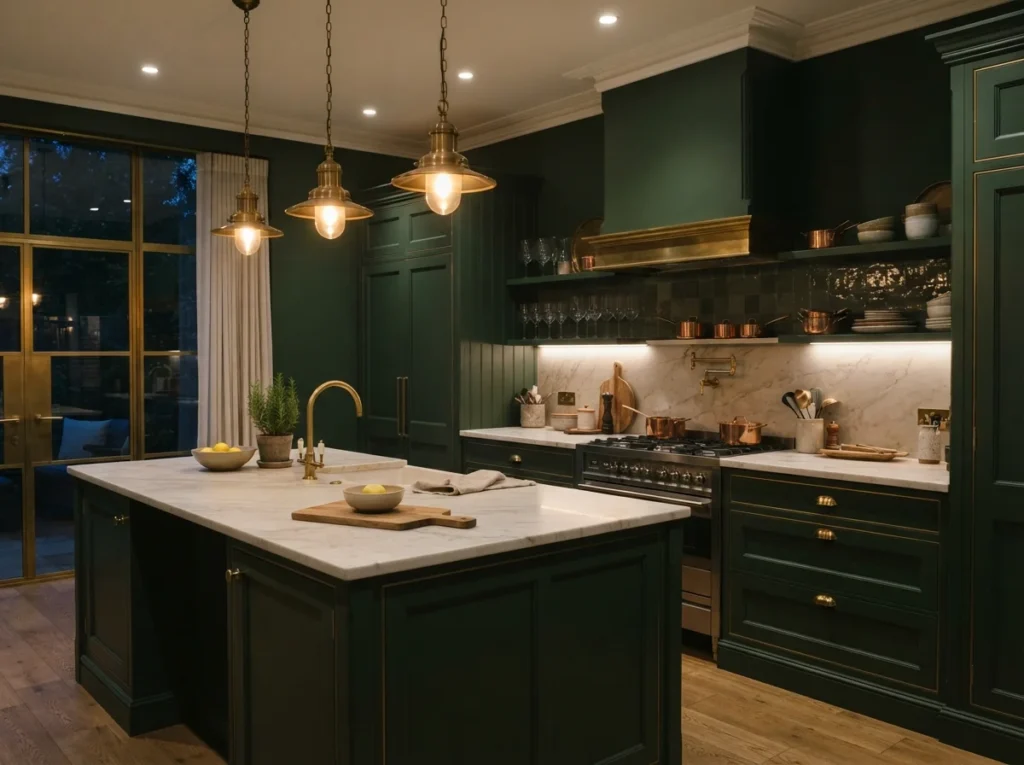
Lighting can dramatically change the appearance of dark green cabinetry, and vintage-inspired brass pendants are a beautiful choice. Their warm metallic finish creates a soft glow against rich green surfaces, while traditional shapes introduce character and visual interest. Look for dome pendants, lantern-style fixtures, or simple glass shades with brass details.
Hang the fixtures above a kitchen island or breakfast counter at a height that provides useful task lighting without obstructing views. Consider using warm-white bulbs to make the green appear inviting rather than cold. Matching the pendants with a brass faucet or cabinet hardware will create a subtle sense of continuity throughout the kitchen.
15. Create a Dark Green Kitchen with a Farmhouse Sink
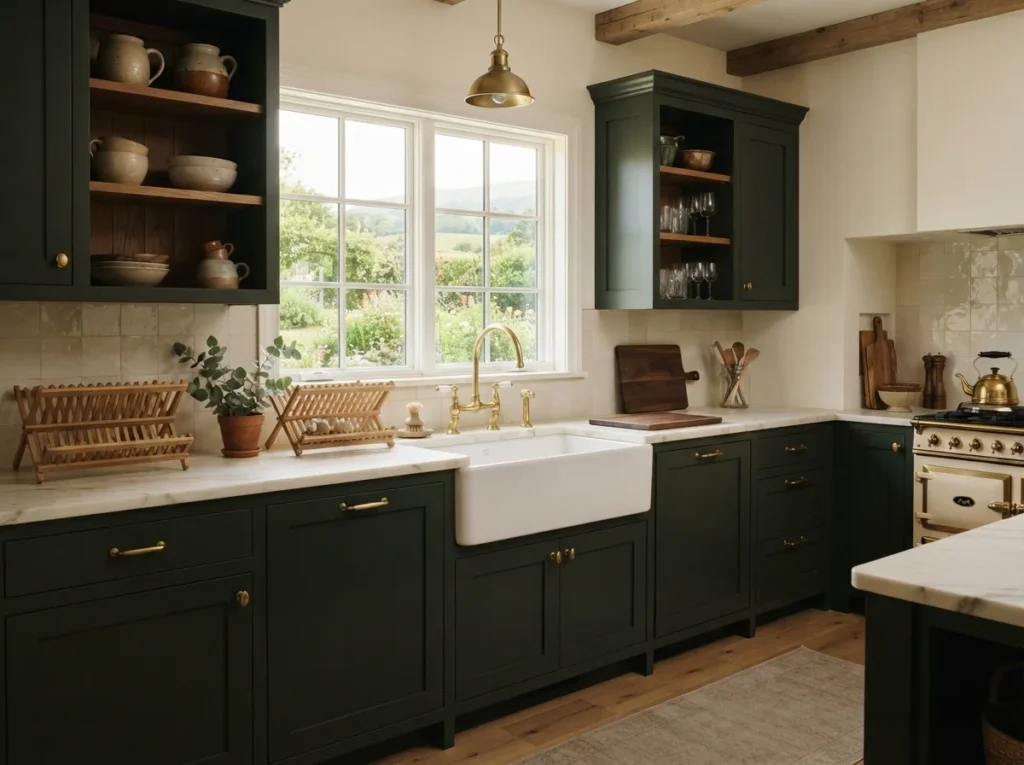
A white farmhouse sink offers a beautiful traditional contrast against deep green cabinetry. Its generous basin and exposed front bring a practical, handcrafted quality to the kitchen, while the bright white surface prevents the darker cabinets from dominating the room. Choose a fireclay or ceramic finish for a classic appearance.
Pair the sink with a bridge-style faucet in brushed brass, antique bronze, or polished nickel. A marble or light quartz countertop can help connect the sink with the rest of the design. Add a simple tiled backsplash and a few natural wood accessories to create a kitchen that feels timeless, comfortable, and full of character.
16. Use Dark Green Cabinets with Terracotta Accents
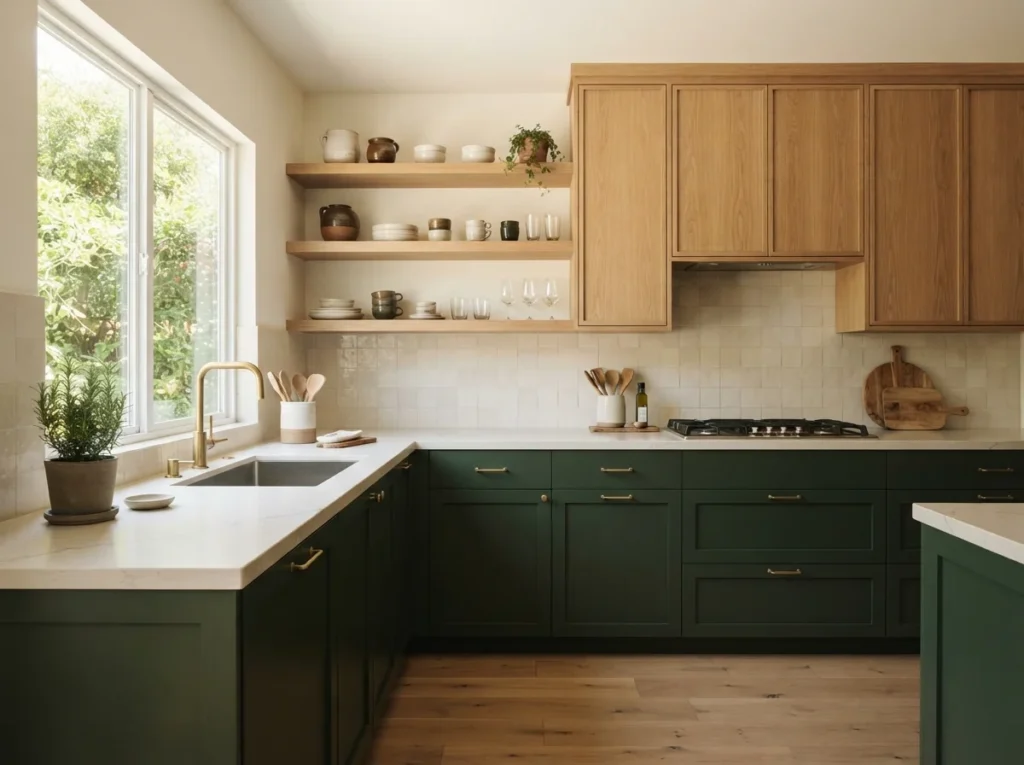
Terracotta adds an earthy warmth that makes dark green kitchens feel especially welcoming. The reddish clay tone creates a natural contrast with green, bringing to mind Mediterranean homes and relaxed European interiors. Introduce terracotta through handmade floor tiles, decorative pottery, backsplash details, or a small collection of countertop accessories.
Keep the cabinetry in a deep olive or forest shade so it complements the warm undertones of terracotta. Natural wood, cream stone, and aged brass can help soften the contrast and connect the different finishes. This palette works beautifully when you want a kitchen that feels rich and distinctive without looking overly formal.
17. Design a Dark Green Kitchen with Open Marble Shelves
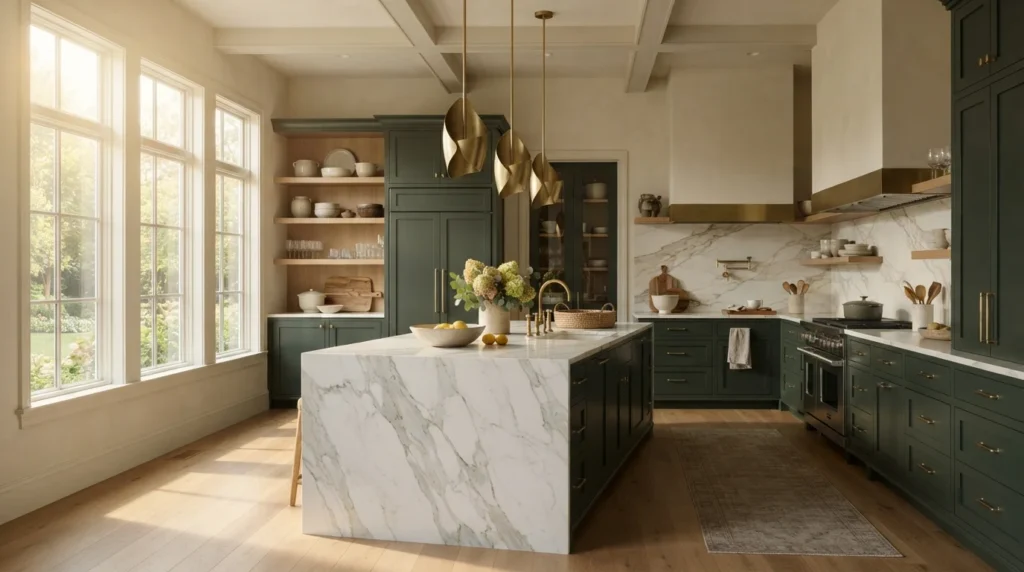
Open marble shelves offer an elegant alternative to traditional upper cabinets. When paired with dark green lower cabinetry, they create a lighter visual arrangement while introducing the natural beauty of stone. Choose shelves with subtle veining that complements the countertop, then use concealed brackets or carefully finished supports for a clean appearance.
Style the shelves with neutral ceramics, glassware, cookbooks, and a few decorative objects. Keeping the display simple allows the marble and green cabinetry to remain the main features. This design works particularly well in kitchens with a beautiful backsplash or an attractive cooking wall that deserves to stay visible.
18. Choose Olive Green for a Softer Timeless Look
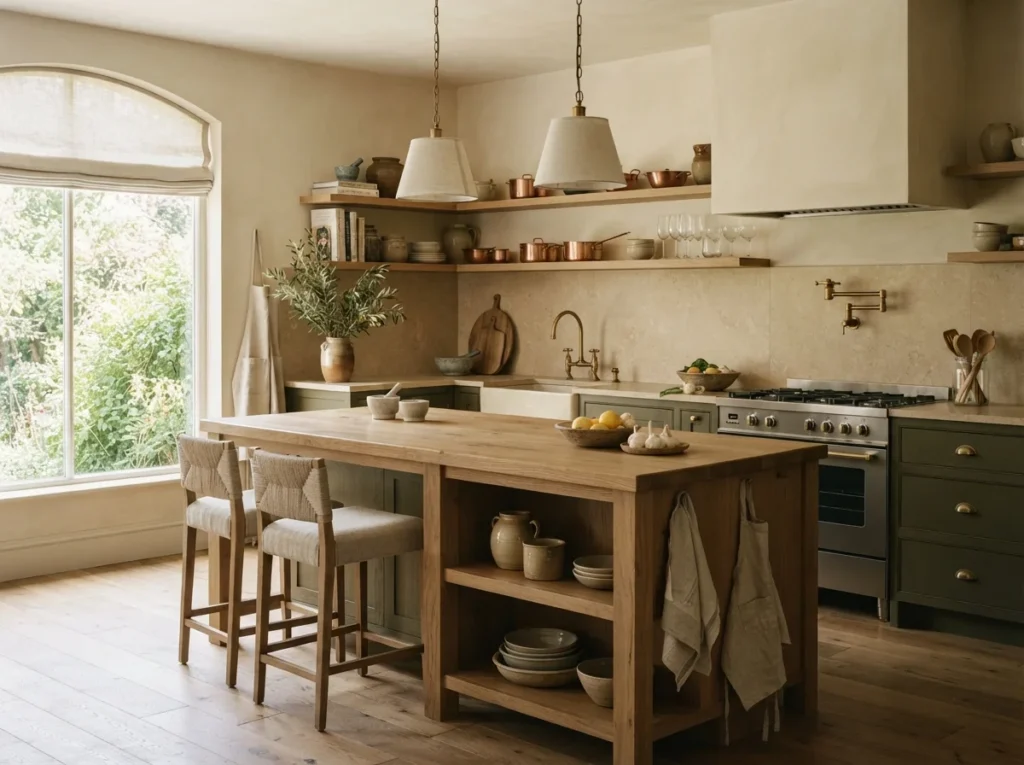
Olive green is a wonderful alternative to very dark forest or emerald shades. Its earthy undertones create a relaxed, sophisticated atmosphere that pairs beautifully with natural materials. Choose a deep olive finish for cabinetry if you want richness without the intensity of a jewel-toned green.
Combine olive cabinets with creamy limestone, warm oak, aged brass, and textured off-white walls. These materials create a layered palette that feels collected and natural. Olive is also versatile enough to work in traditional farmhouse kitchens, modern organic spaces, and transitional interiors, making it a dependable choice for a long-lasting design.
19. Add a Patterned Floor to a Dark Green Kitchen
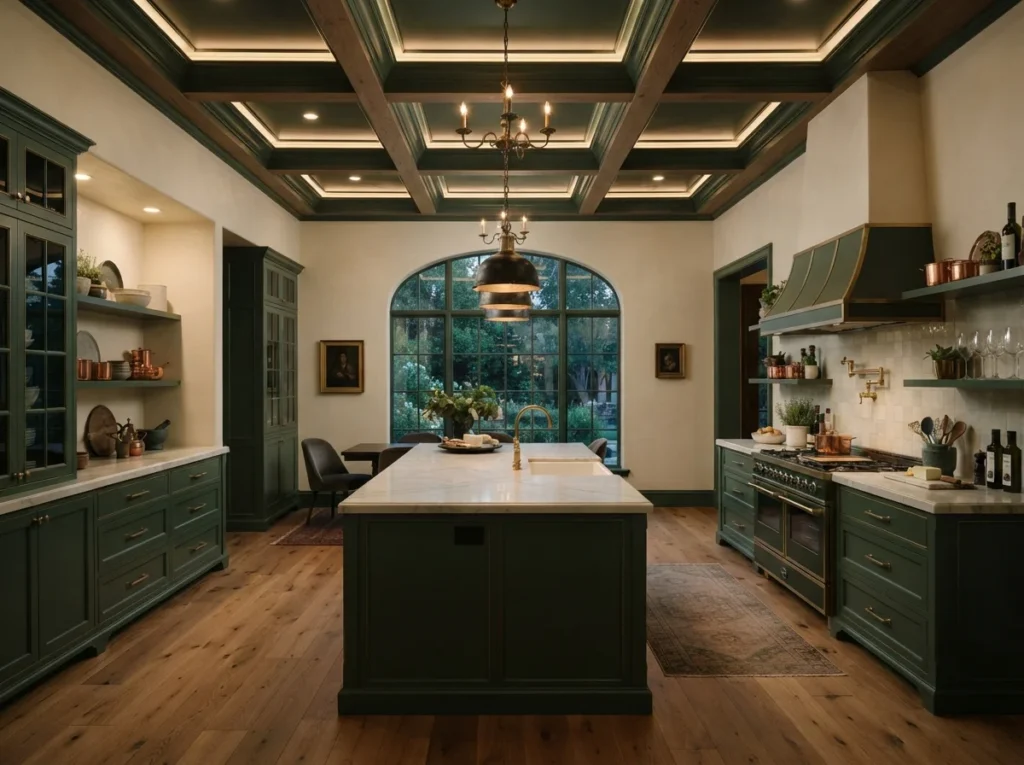
A patterned floor can introduce personality and visual movement into a kitchen dominated by dark green cabinetry. Consider classic checkerboard tiles, geometric encaustic patterns, or subtle vintage-inspired designs in cream, charcoal, and muted earthy tones. The pattern adds interest at floor level while allowing the cabinets to remain the main feature.
If the kitchen already has several decorative elements, choose a restrained pattern with a limited color palette. For a more dramatic design, use patterned cement tiles with a slightly aged finish and pair them with simple countertops. Keeping the walls and backsplash understated will prevent the room from feeling visually crowded.
20. Create a Dark Green Kitchen with a Butcher Block Countertop
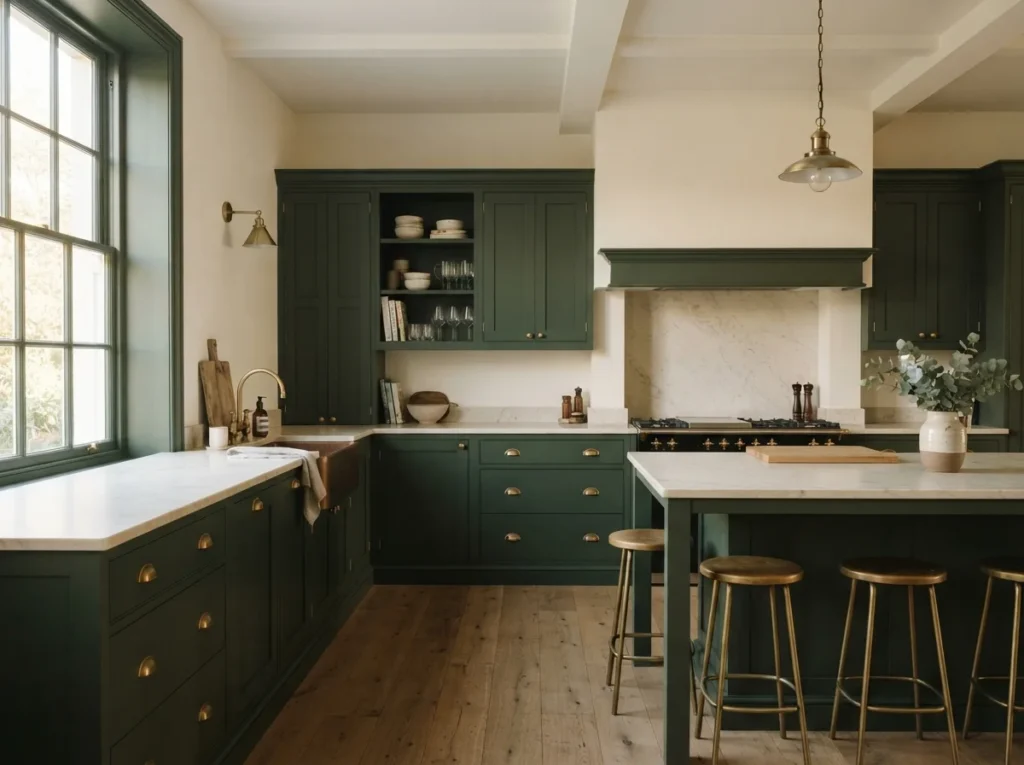
A butcher block countertop brings natural warmth to deep green cabinetry. Its visible wood grain softens the strong cabinet color and introduces a practical, rustic quality that feels comfortable in everyday kitchens. Choose oak, walnut, or maple depending on whether you prefer a golden, rich, or lighter wood tone.
You can use butcher block across the entire kitchen or reserve it for an island or breakfast counter. Pair it with simple hardware, a neutral backsplash, and warm lighting to create a balanced look. Remember that wood countertops need proper sealing and maintenance, especially around sinks and other areas exposed to frequent moisture.
21. Install a Dark Green Glass Tile Backsplash
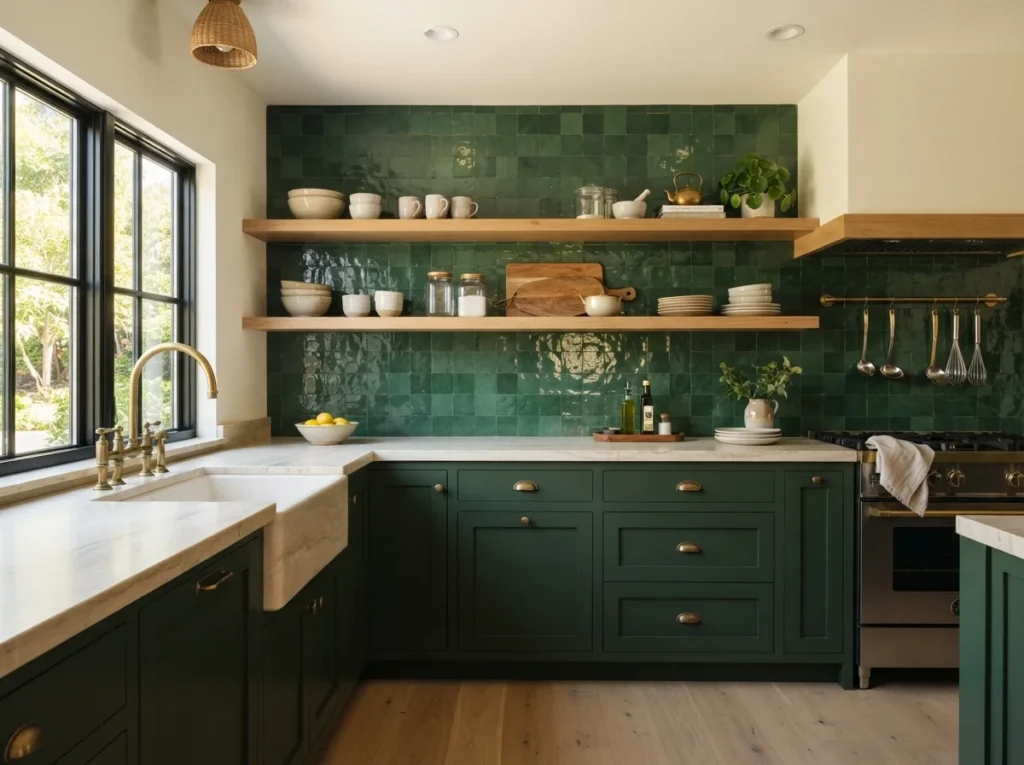
Glass tiles can bring a subtle reflective quality to a dark green kitchen. Their smooth surface catches natural and artificial light, helping the backsplash feel lively rather than flat. Choose deep bottle green, glossy emerald, or a slightly varied green blend to create depth behind the countertop.
A simple stacked layout gives the kitchen a modern appearance, while a classic subway arrangement feels more traditional. Pair the tiles with pale stone countertops and understated cabinetry so the backsplash remains noticeable without overwhelming the room. Under-cabinet lighting is particularly useful here because it highlights the reflective surface and adds a soft evening glow.
22. Make a Statement with a Dark Green Kitchen Ceiling
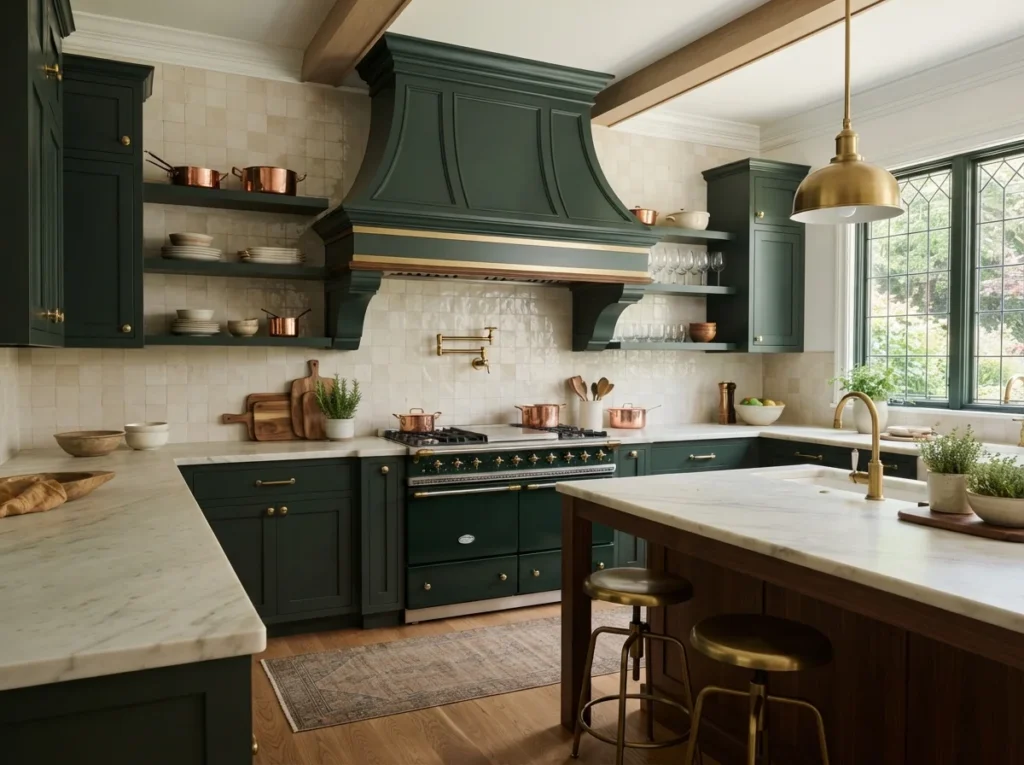
Painting the kitchen ceiling dark green can create a dramatic, enveloping atmosphere, especially in rooms with high ceilings or beautiful architectural details. This approach works well when the green is already present in the cabinetry, allowing the color to travel across the room and create a cohesive design. A matte finish helps keep the result sophisticated.
To balance the darker ceiling, introduce light-colored walls, pale countertops, and warm flooring. Consider using the same green on ceiling beams or decorative trim for a more intentional appearance. This look is best suited to kitchens with adequate lighting, as a dark ceiling can make a small or poorly lit room feel more enclosed.
23. Add a Cozy Dark Green Breakfast Nook
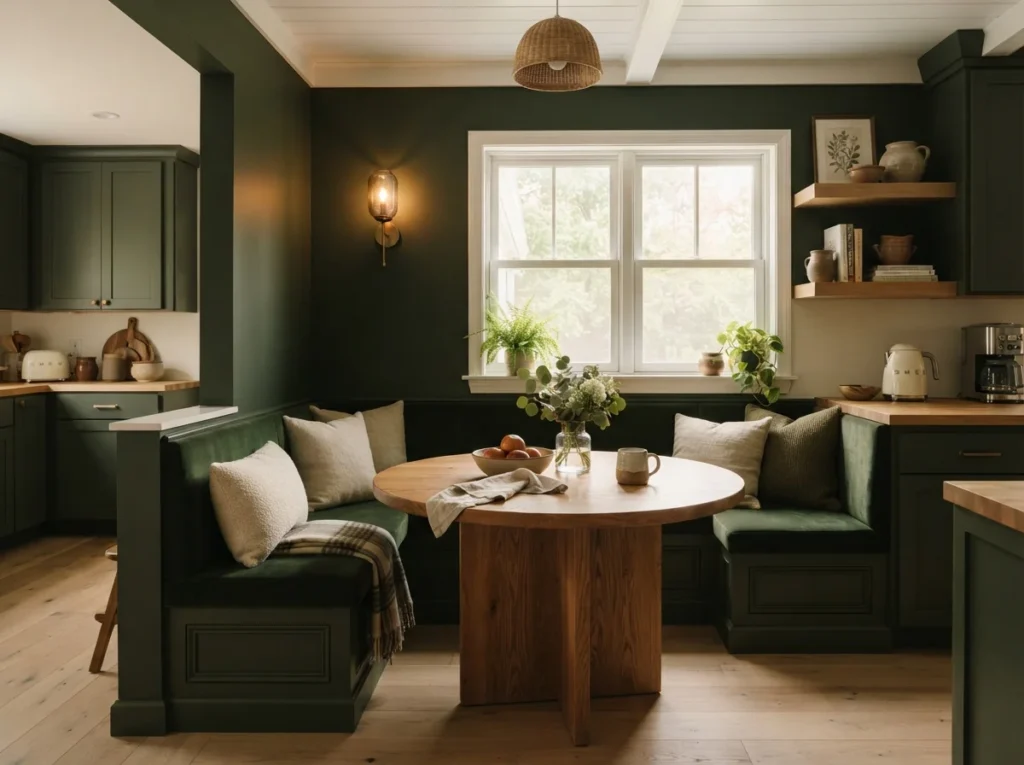
A breakfast nook can make a dark green kitchen feel more personal and inviting. Use a built-in bench with deep green upholstery or painted paneling, then add a small round wood table and comfortable cushions. This creates a dedicated place for morning coffee, casual meals, or relaxed conversations without requiring a large dining area.
For a cohesive design, repeat the kitchen’s green shade in the nook while introducing lighter fabrics and natural textures. A wall sconce, pendant light, or small framed artwork can make the corner feel complete. This idea is particularly useful in open kitchens where a cozy seating area helps soften the practical feel of the cooking space.
24. Pair Dark Green Cabinets with Beige Stone
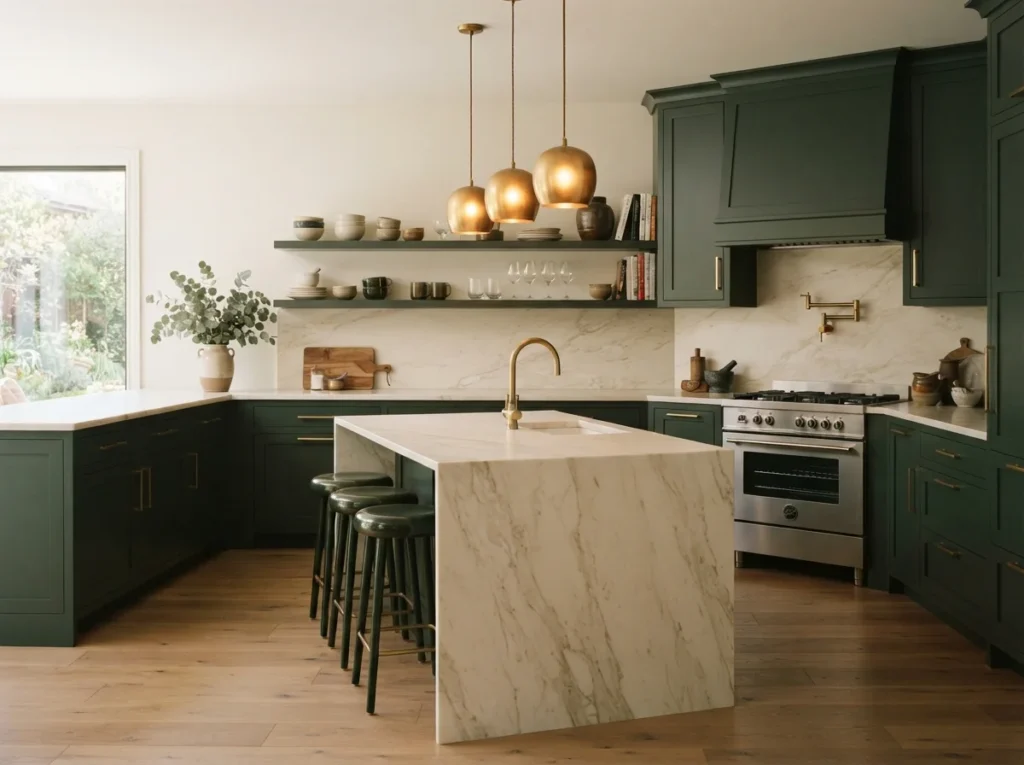
Beige stone countertops create a softer, warmer alternative to bright white surfaces. Their creamy undertones complement dark green cabinetry and give the kitchen a refined, natural appearance. Materials such as travertine, limestone, and warm-toned quartz can introduce subtle texture without competing with the cabinet color.
Continue the stone onto the backsplash or use a matching slab behind the range for a seamless finish. Add oak details and brushed brass hardware to reinforce the warm palette. This combination is ideal for homeowners who want a luxurious kitchen that feels understated, organic, and comfortable rather than highly polished or dramatic.
25. Design a Dark Green Kitchen with Fluted Details
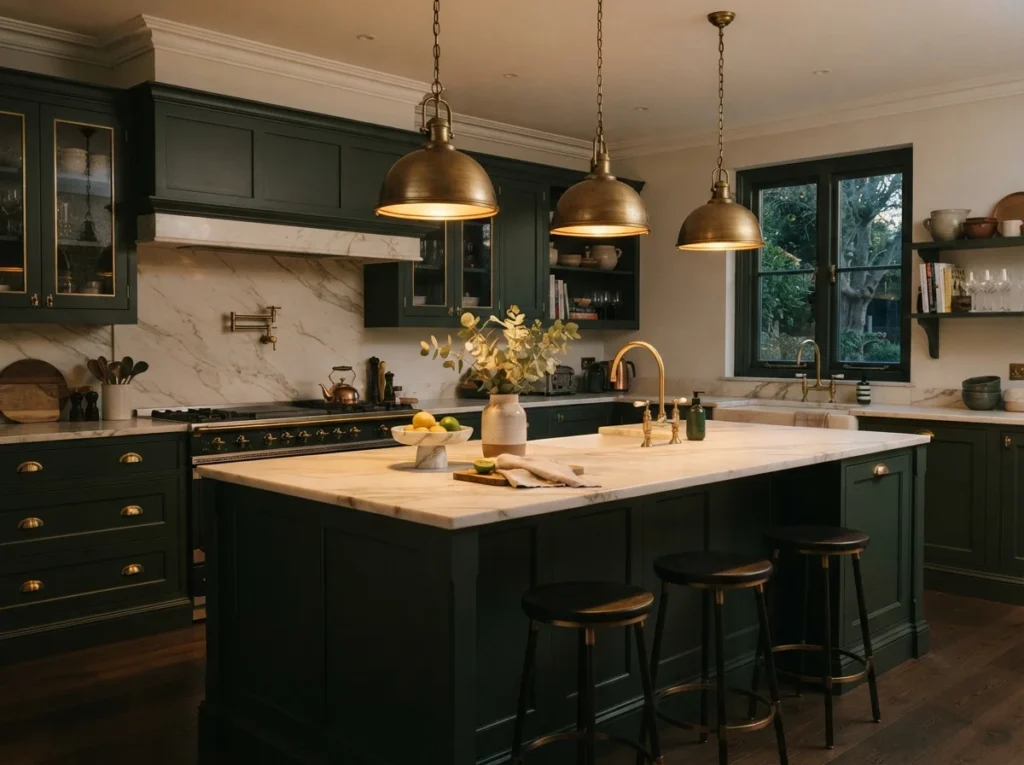
Fluted details add texture and craftsmanship to dark green cabinetry. Vertical grooves on an island, cabinet panels, or a breakfast bar create gentle shadows that make the surface feel more dimensional. This decorative treatment is especially attractive when finished in a deep matte green, where the changing light emphasizes the pattern.
Keep the surrounding cabinetry simple so the fluted feature has room to stand out. A smooth marble countertop, understated brass pulls, and warm pendant lights provide a beautiful contrast to the textured surface. This approach brings a modern designer touch to both contemporary kitchens and traditional spaces that need a little architectural interest.
26. Create a European-Inspired Dark Green Kitchen
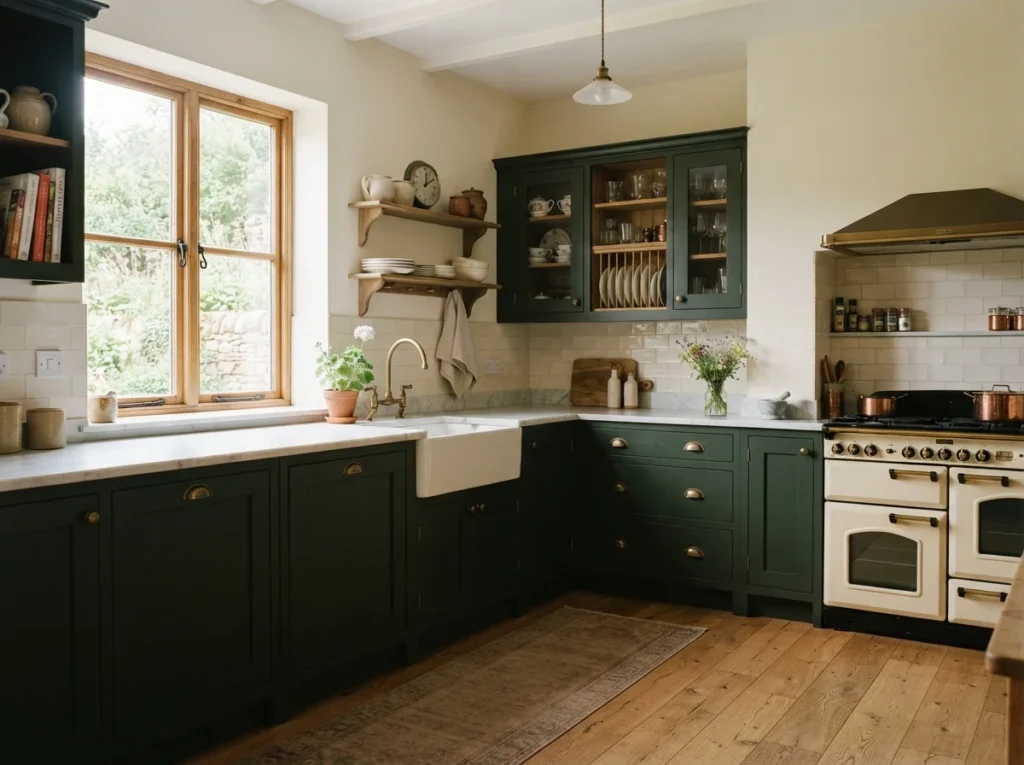
European-inspired kitchens often combine rich colors with natural materials and timeless architectural details. Dark green cabinetry, creamy stone, aged brass, and warm wood can recreate this collected, lived-in elegance. Consider adding a decorative range hood, traditional wall sconces, open shelves, or a freestanding pantry cabinet to give the kitchen more character.
Rather than making every element look perfectly coordinated, introduce a few different textures and finishes. Handmade tiles, vintage-style hardware, and natural stone with visible variation can make the space feel authentic. The result is a kitchen that looks refined but still comfortable enough for everyday family life.
27. Style a Dark Green Kitchen with Layered Warm Lighting
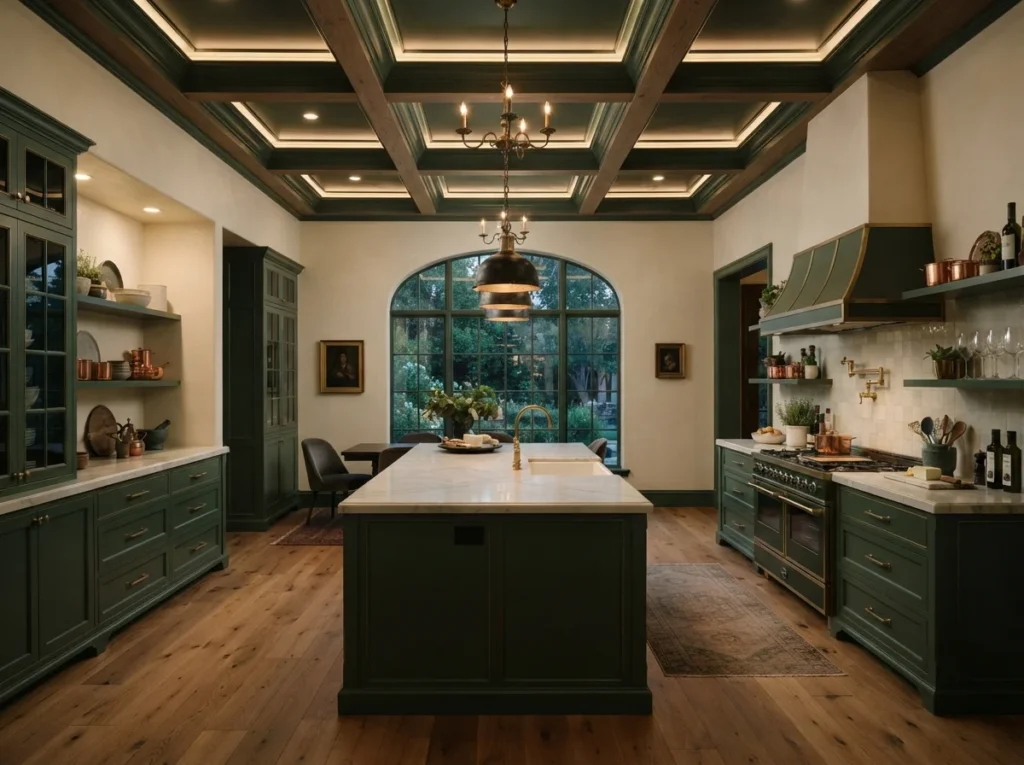
The right lighting can make dark green cabinetry look exceptionally beautiful. Instead of relying on one overhead fixture, combine pendant lights, recessed ceiling lights, under-cabinet illumination, and decorative wall sconces. Each layer serves a different purpose, helping the kitchen remain functional while creating a warm atmosphere in the evening.
Choose warm-white lighting to bring out the earthy undertones of green and complement brass, wood, and natural stone. Under-cabinet lights are especially useful for illuminating preparation areas, while pendants can highlight the island as a focal point. Thoughtful lighting makes even a simple dark green kitchen feel more inviting, polished, and luxurious.

Ahmad is the founder and writer behind Valmora Decor, a home decor blog packed with practical ideas for beautiful, livable spaces. From cozy bedrooms to inviting outdoor areas, he shares easy-to-follow inspiration for every corner of the home.